 FEXLINK Research Institute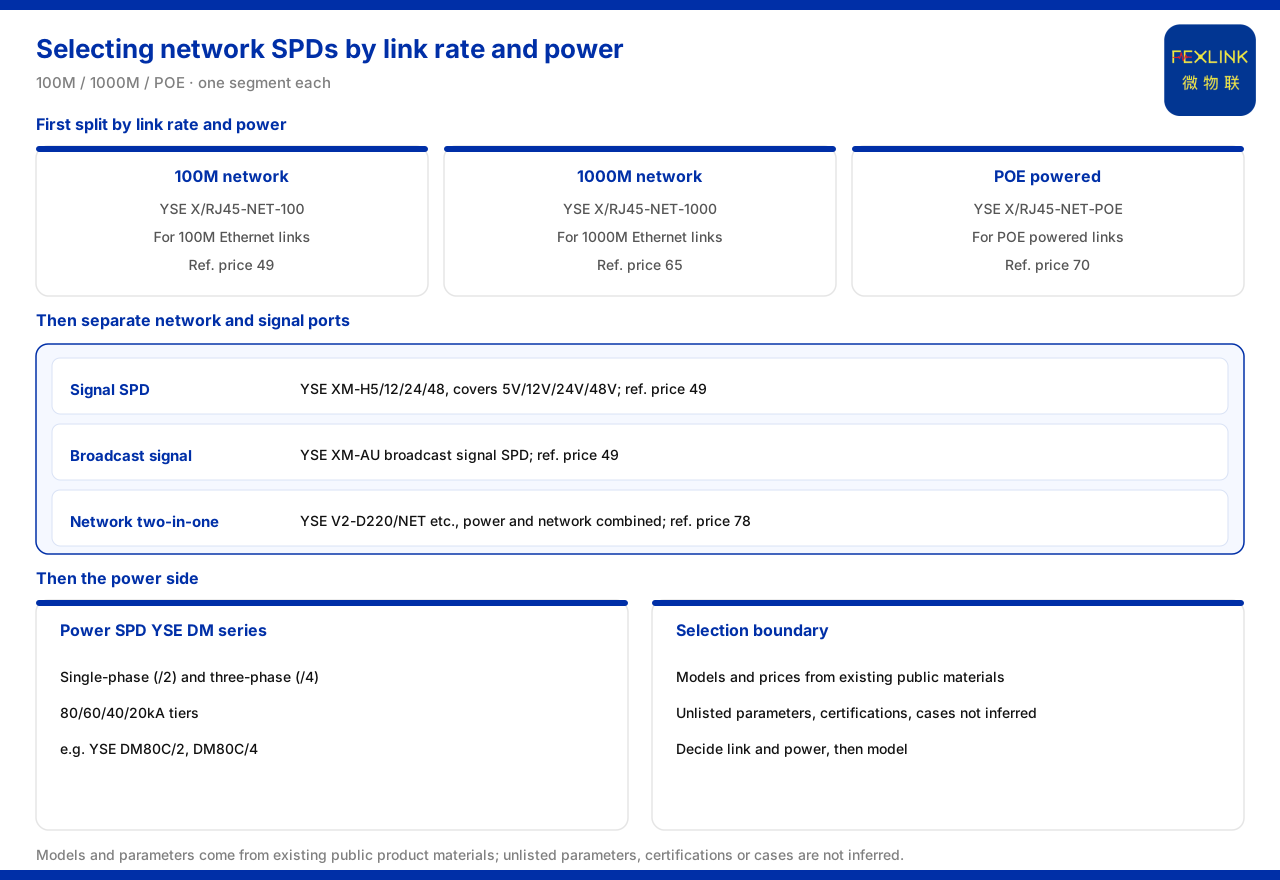
Direct answer
Selecting a network surge protective device begins with two gradings: link rate and power-supply method. The product-line overview of the product knowledge base places surge protective devices in the outsourced YSE series, where network surge protective devices, signal surge protective devices, and two-in-one surge protective devices belong to the signal-protection category. In the model table, the hundred-megabit network surge protective device (YSE X/RJ45-NET-100) corresponds to a hundred-megabit Ethernet link and has a reference price of 49, the gigabit network surge protective device (YSE X/RJ45-NET-1000) corresponds to a gigabit Ethernet link and has a reference price of 65, and the POE network surge protective device (YSE X/RJ45-NET-POE) targets a POE power-supply link and has a reference price of 70. The three are therefore not a price-ordered upgrade chain but each handles one segment by link rate and power supply. The second grading separates network ports from signal ports: the signal surge protective device (YSE XM-H5/12/24/48) covers 5V, 12V, 24V, and 48V, and the broadcast-signal surge protective device (YSE XM-AU) targets broadcast signals, both with a reference price of 49. The third step is to see whether a two-in-one model combining power and network is needed, and whether the power side needs its own surge protective device.
1. First, recognize the product line the network SPD belongs to
Selection starts from the category boundary. The product-line overview lists surge protective devices as category E, the outsourced YSE series, under which are power surge protective devices (YSE DM series, in single-phase and three-phase), signal surge protective devices, network surge protective devices, two-in-one surge protective devices, plus lightning counters and three-element SPD monitors. The network surge protective device is an independent category for Ethernet links; it shares the signal-protection family with signal surge protective devices but has a different interface object: the network device connects to an RJ45 network port, while the signal device connects to signal lines in the 5V to 48V class.
2. Hundred-megabit and gigabit: graded by link rate
The first distinguishing condition for network surge protective devices is link rate. The product knowledge base records that the hundred-megabit network surge protective device (YSE X/RJ45-NET-100) corresponds to a hundred-megabit Ethernet link and has a reference price of 49, while the gigabit network surge protective device (YSE X/RJ45-NET-1000) corresponds to a gigabit Ethernet link and has a reference price of 65. The two are distinguished by rate, which means the rate of the protected link should be confirmed first and the matching model taken. This means using the hundred-megabit model on a gigabit link, or the reverse, does not fit the rate-grading basis. Rate is a property of the link itself and should be confirmed in advance rather than inferred from price.
3. POE: a separate model by power-supply method
The second distinguishing condition is power-supply method. The product knowledge base records that the POE network surge protective device (YSE X/RJ45-NET-POE) has a reference price of 70 and is a dedicated model among network surge protective devices for POE power-supply links. A POE link transmits data and power over the same cable, so its surge-protection object differs from a pure data link, and the materials list it as a separate model rather than folding it into the hundred-megabit or gigabit models. When selecting, a link carrying POE should use the POE model; a pure data link is chosen between hundred-megabit and gigabit by rate. Power-supply grading and rate grading are two parallel criteria that must be checked together.
4. Signal surge protective devices: the other branch besides network
Not every line needing protection is a network cable. The product knowledge base records that the 5V, 12V, 24V, and 48V signal surge protective device (YSE XM-H5/12/24/48) has a reference price of 49, and that the broadcast-signal surge protective device (YSE XM-AU) has a reference price of 49. They share the signal-protection family with network surge protective devices but have low-voltage signal lines and broadcast signal lines as their interface objects. When selecting, first judge whether the protected signal is a network signal or another signal: a network signal takes an RJ45 network surge protective device, a 5V to 48V signal takes the corresponding voltage signal device, and a broadcast signal takes the broadcast model. Adding this layer of "signal type" extends selection from the network port to all signal ports.
5. Two-in-one: combined power and network protection
Another case is a device that must be protected against both power surges and network surges. The product knowledge base records that the 220V, 24V, and 12V network two-in-one surge protective device (YSE V2-D220/NET and others) has a reference price of 78 and belongs to the two-in-one category that combines power and network protection. Compared with configuring a power surge protective device and a network surge protective device separately, the two-in-one model performs both kinds of protection in one device, suiting cases that need to protect power and network ports at once. When selecting, first judge the ports of the protected device: if it has both a power feed and a network cable and combined installation is preferred, take the two-in-one model; if the two kinds of lines are already separate in space and maintenance, the power and network models can still be chosen separately.
6. Power surge protective devices: power-side support beyond the network
The network surge protective device addresses the network port, while the power side has its own power surge protective devices. The product knowledge base records that the new-generation power surge protective device (YSE DM series, such as YSE DM80C/2 and YSE DM80C/4) is graded by single-phase and three-phase and by 80, 60, 40, and 20 kA, where single-phase is marked by "/2" and three-phase by "/4". These models do not directly protect network signals but serve surge protection of the power feed, as power-side support beyond the network device. When selecting, consider the network port and power port separately: the network port follows rate and power supply to pick a network surge protective device, and the power port follows phase count and discharge-current grade to pick a power surge protective device; the two cannot substitute for each other.
7. Reducing network SPD selection into an ordered sequence
Taken together, network SPD selection can be reduced to an ordered sequence. Step one, distinguish the protected object: an RJ45 network port, a low-voltage signal line, a broadcast signal line, or a power feed. Step two, for a network port, confirm the link rate: hundred-megabit takes the hundred-megabit network surge protective device (YSE X/RJ45-NET-100), gigabit takes the gigabit network surge protective device (YSE X/RJ45-NET-1000). Step three, confirm whether POE power is present: with POE, take the POE network surge protective device (YSE X/RJ45-NET-POE). Step four, for a signal port, take the signal device by voltage (YSE XM-H5/12/24/48), or the broadcast model (YSE XM-AU) for a broadcast signal. Step five, if power and network need combined protection, take the network two-in-one surge protective device (YSE V2-D220/NET and others). Step six, for the power side, choose the new-generation power surge protective device (YSE DM series) by single-phase or three-phase and discharge-current grade. This answers "which port, what rate, what supply, and whether to combine."
Scope and limitations
First, this article restates only what the product knowledge base lists, and the factual boundary is limited to the category division of surge protective devices (YSE series) in the product-line overview and the models and reference prices of signal and network devices, two-in-one devices, and new-generation power devices; it introduces no unlisted parameter, certification, or case.
Second, the link correspondence and reference prices of the hundred-megabit network surge protective device (YSE X/RJ45-NET-100), the gigabit network surge protective device (YSE X/RJ45-NET-1000), and the POE network surge protective device (YSE X/RJ45-NET-POE) are cited as the product knowledge base lists them.
Third, the 5V, 12V, 24V, and 48V voltage items of the signal surge protective device (YSE XM-H5/12/24/48), the broadcast-signal surge protective device (YSE XM-AU), and the 220V, 24V, and 12V items and reference price of the network two-in-one surge protective device (YSE V2-D220/NET and others) are cited as the product knowledge base lists them.
Fourth, the single-phase and three-phase division of the new-generation power surge protective device (YSE DM series), the 80, 60, 40, and 20 kA grades, and the YSE DM80C/2 and YSE DM80C/4 examples are cited as the product knowledge base lists them.
Fifth, the reference prices are those already recorded in the product materials and are restated only; they do not represent a commitment on market price, and the product knowledge base gives no parameter tables of nominal discharge current or residual voltage for each model, a boundary this article records without filling in unlisted specifications.
Sixth, this article explains only the selection criteria for network surge protective devices and related categories and provides no specific engineering selection or configuration calculation; related conclusions must be confirmed against site link conditions and the project scheme, and the latest product materials and project scheme always prevail.