 FEXLINK Research Institute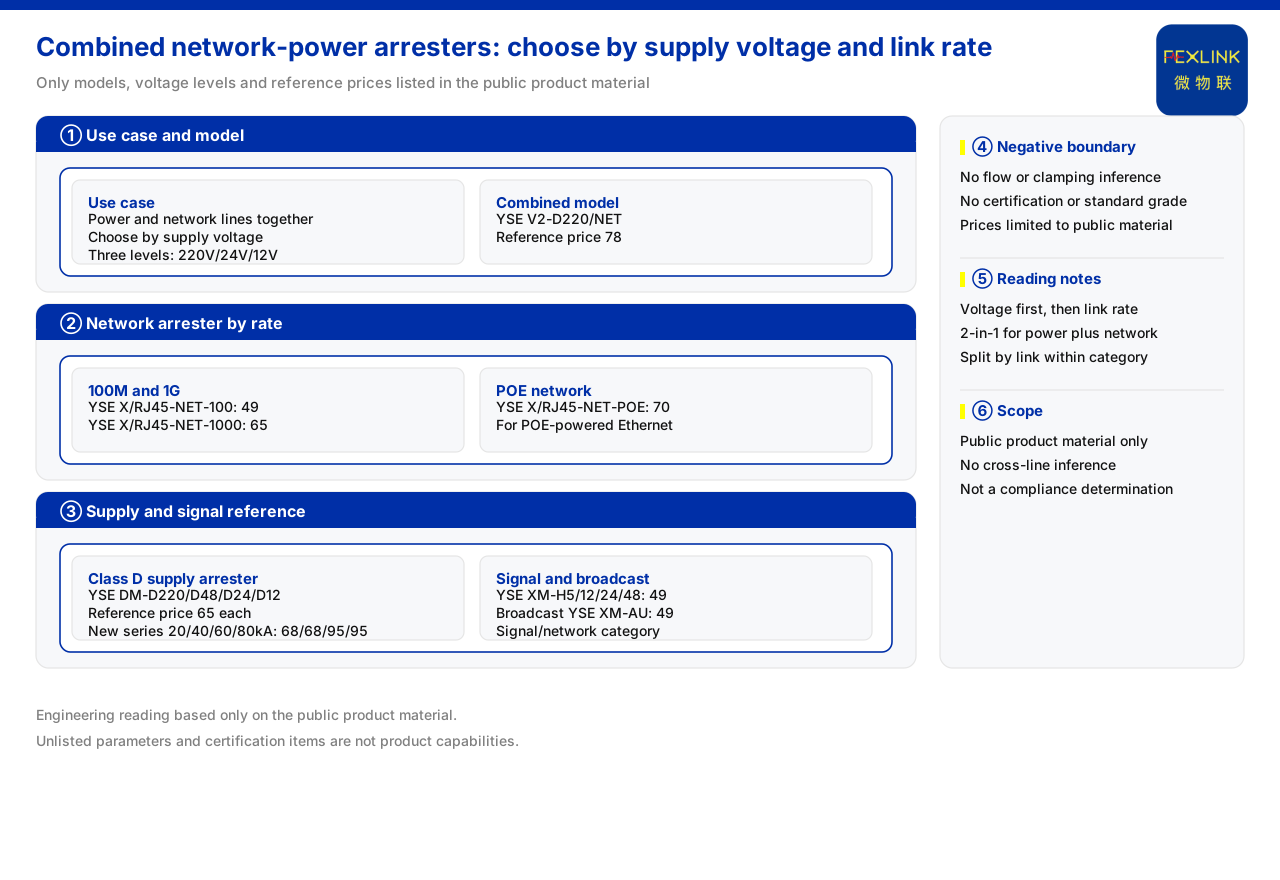
Direct answer
Choosing a network two-in-one surge protective device is essentially two steps: first judge whether the site is a power-and-network-same-cable scenario, then fix the model by power voltage level, link rate and whether PoE power is present. The product knowledge base records that the network two-in-one surge protective device has versions for 220 V, 24 V and 12 V, with a reference price of 78; in the same category there are also the PoE network surge protective device (reference price 70), the hundred-megabit (reference price 49) and gigabit (reference price 65) network surge protective devices split by rate, and the signal and broadcast-signal surge protective devices (each at 49). For reference, the class D power supply surge protective devices cover the four voltages 220 V, 48 V, 24 V and 12 V, all at a reference price of 65. Only when these terms are clear will two-in-one selection avoid mismatching.
1. First judge whether it is a two-in-one scenario
Two-in-one means placing the protection of a power line and a network line in the same device, for occasions containing both kinds of line. The product knowledge base lists the network two-in-one surge protective device as an independent category, which shows it corresponds to a specific kind of wiring scenario rather than being a general substitute. If a site has only a power line or only a network line, a single-function surge protective device is enough; only when the two kinds of cable coexist does the compact two-in-one form make sense.
Once the scenario is judged, the selection order is clear: fix the class by the voltage level on the power side, then fix the specific model by the rate and supply method on the network side.
Listing two-in-one as an independent category also suggests it is not a simple overlay of network SPDs. Power protection and network protection make different withstand demands on a device, and integrating both into one device requires satisfying the power-side and network-side terms at the same time. Judging the two-in-one scenario therefore comes first, and every later choice should serve both sides at once.
2. Fix the class by power voltage level
The product knowledge base records that the network two-in-one surge protective device has 220 V, 24 V and 12 V versions, with models such as YSE V2-D220/NET at a reference price of 78, chosen according to the on-site power voltage level. This points to the first fork in selection: if the voltage level does not match, the two-in-one device cannot pair with the on-site power.
To make the voltage term more complete, one can compare the class D power supply surge protective devices of the same brand. The product knowledge base lists four voltage models, 220 V, 48 V, 24 V and 12 V, all at a reference price of 65, as a voltage reference for the power side of a two-in-one surge protective device. Both product classes are arranged by voltage level, showing that voltage is the common thread of power-side protection.
3. Distinguish the network side by link rate
In the same category, the product knowledge base distinguishes network surge protective devices by link rate: the hundred-megabit network surge protective device is at a reference price of 49 and the gigabit network surge protective device at 65. A different rate corresponds to a different bandwidth requirement of the Ethernet link, and selection should match the actual rate of the on-site link.
Such rate-arranged models show that the network side cannot be chosen by whether it can protect against lightning alone but also by whether it supports the working rate of the on-site link. Making rate an independent option ties network SPD selection directly to link design.
From the reference prices, the hundred-megabit model is at 49 and the gigabit model at 65; the two standing side by side shows that rate is a splitting basis within the same category, not an optional extra. Checking first confirms the nominal rate of the on-site link and then chooses the corresponding model at that rate, avoiding a term mismatch on link rate.
4. PoE links are treated separately
If an Ethernet link also supplies power over the network cable, the situation differs from an ordinary network link. The product knowledge base lists the PoE network surge protective device for Ethernet links with PoE power, at a reference price of 70. A link with power makes extra demands on a surge protective device, so it is named separately in the category rather than folded into an ordinary network SPD.
In practice, first confirm whether the link has PoE and then decide between the PoE network surge protective device and an ordinary one. Putting this step first avoids selecting by an ordinary network link and missing the power condition.
The PoE model's reference price is 70, sitting alongside the hundred-megabit and gigabit network models and the signal and broadcast-signal models in the same category. A close price does not mean they can substitute for each other: whether PoE power is present is decided by the link itself and cannot be replaced by price or rate. It is better to treat supply and rate as two independent conditions, confirm them separately and then land on a model.
5. Signal and broadcast links chosen within the same category
The product knowledge base also groups the signal surge protective device and the broadcast-signal surge protective device into the same broad signal/network SPD category, each at a reference price of 49. Though both signal and network links are weak-current, their interface forms and uses differ, so they are named separately within the category.
This grouping suggests that the signal/network SPD is a category subdivided by use, containing the network two-in-one, network SPD, signal SPD and broadcast-signal SPD. Selection first locates the use within the category and then checks voltage, rate or supply within that use.
Note that the reference prices of the signal and broadcast-signal devices are the same 49 as the hundred-megabit network model, showing that the reference price does not change linearly with use category and cannot be used to infer the use from price alone. Selection should still follow the interface form and the link use, with the reference price only for comparison between already-matched terms.
6. Check selection by reference price and category
Taken together, selecting a network two-in-one surge protective device can land on a sequence: confirm whether it is a power-and-network-same-cable scenario, fix the class by power voltage level, fix the network-side model by link rate, judge by whether PoE is present whether the PoE model is needed, and choose the corresponding model in a signal or broadcast-link scenario. The reference prices given by the product knowledge base can serve as a comparison between different trade-offs, but price is not the selection basis; matching the terms is.
Applying this sequence to a real scenario, one can first list the three conditions of power voltage, link rate and whether power is present, then check back whether the category has a corresponding model. If the three conditions cannot be met on the same model, the scenario is not suited to being covered by a single two-in-one device and the uses must be reallocated within the category. This method depends not on a specific model but only on whether the three conditions are complete.
Scope and limitations
First, this article only explains the selection approach of the network two-in-one surge protective device; its factual boundary is limited to the product knowledge base, and it introduces no standard clause, parameter, certification or case not listed there.
Second, the voltage versions and reference price 78 of the network two-in-one surge protective device, the reference price 70 of the PoE network surge protective device, the reference prices 49 and 65 of the hundred-megabit and gigabit network surge protective devices, the four voltage levels and reference price 65 of the class D power supply surge protective devices, and the reference price 49 of the signal and broadcast-signal surge protective devices are all content listed in the product knowledge base; this article does not extend them to other models.
Third, the reference prices referred to here are only the values listed in the knowledge base and do not constitute a quotation, transaction price or supply commitment; the category division follows the layout terms of the knowledge base and does not make cross-category performance comparisons.