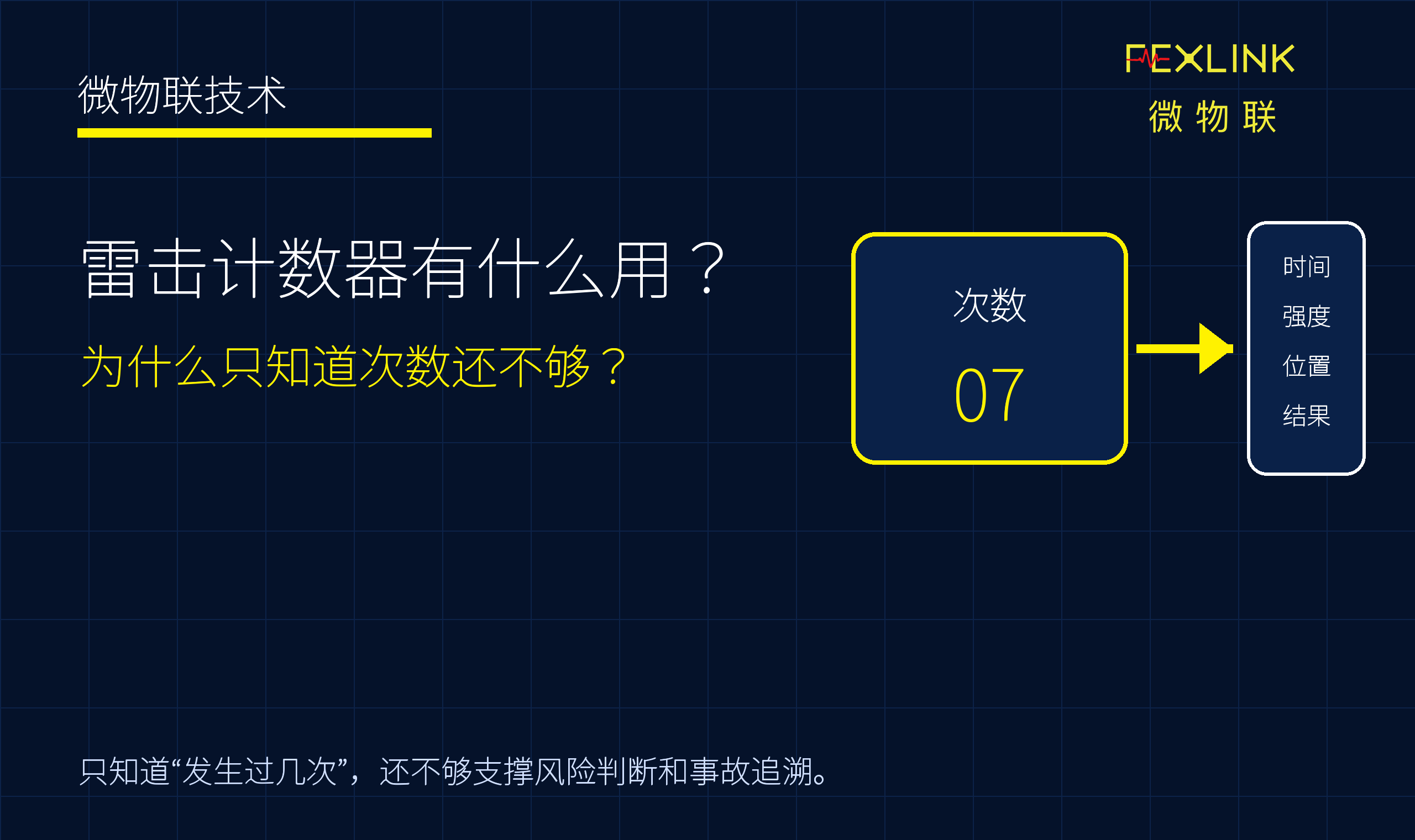
1. What a lightning strike counter solves — and what it cannot
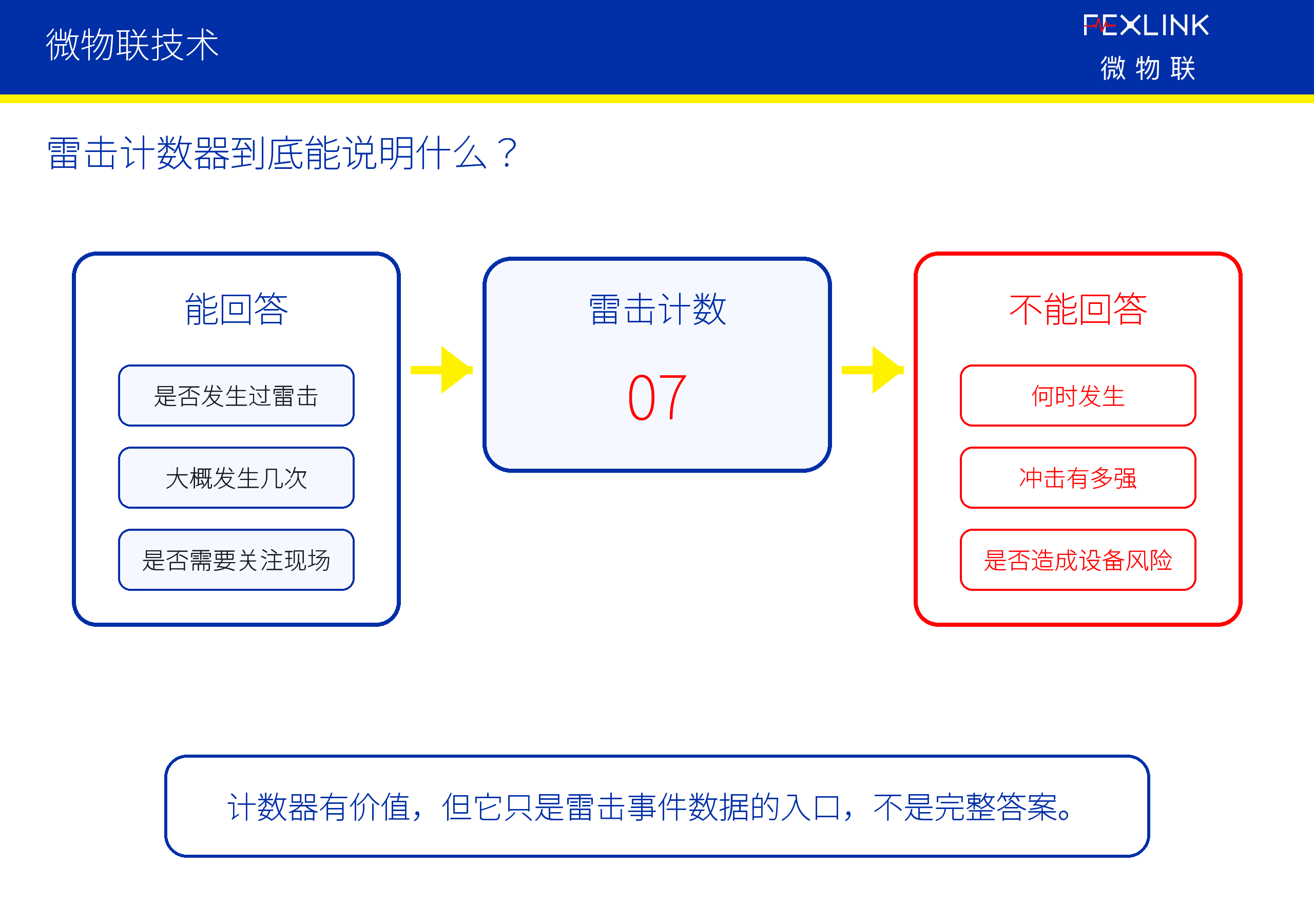
Lightning strike counters are not without value. It can at least tell the operation and maintenance personnel: This location has experienced lightning strikes or surge events within a certain period of time, and how many times lightning strikes have occurred. This kind of information is helpful for basic inspections and accident reviews.
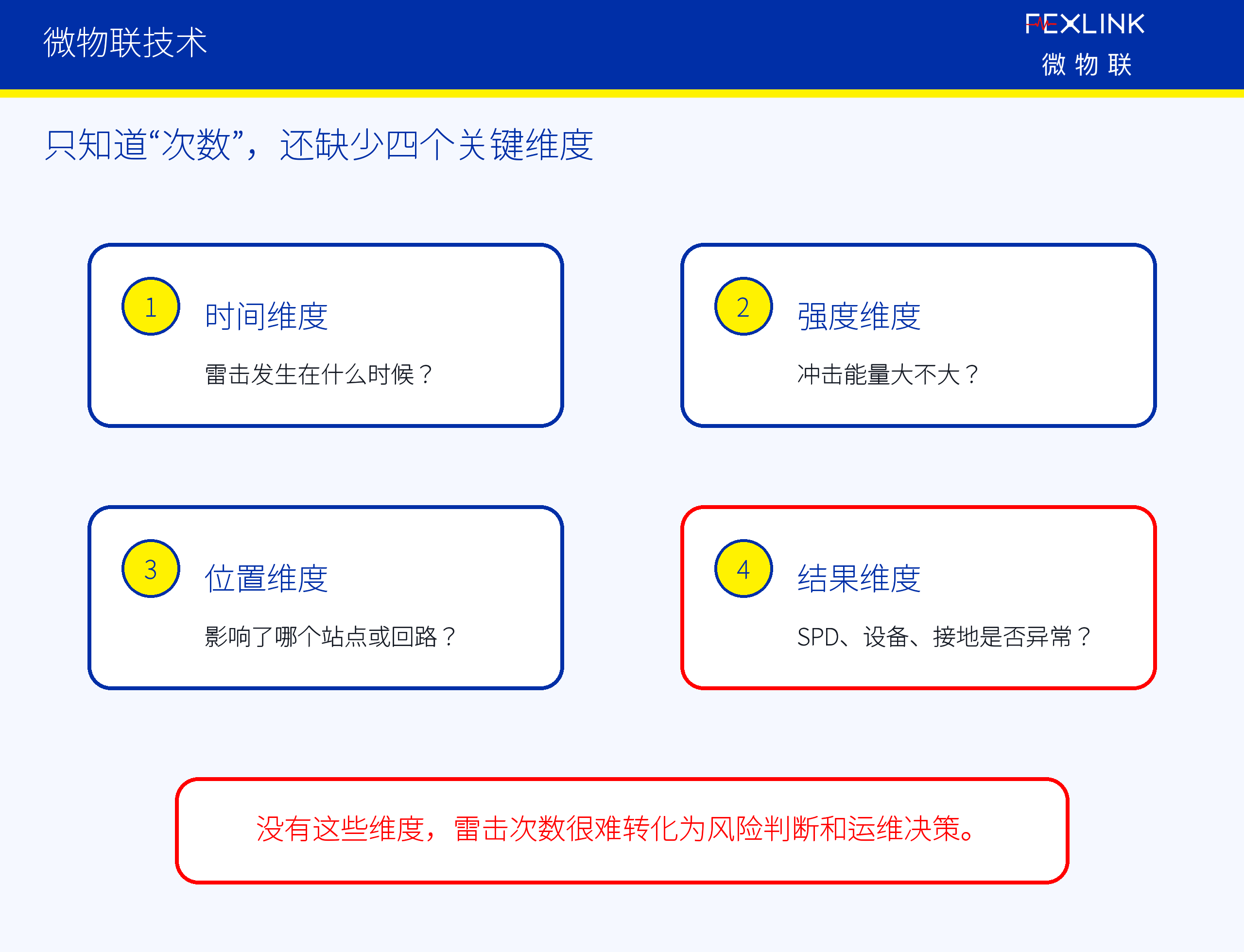
But the problem is that the "number of times" can only indicate whether it has occurred, but not the strength, duration, and scope of the event itself. For the same lightning strike, the peak size, rising speed, duration and energy are very different, and the impact on the SPD, grounding system and back-end equipment is also completely different.
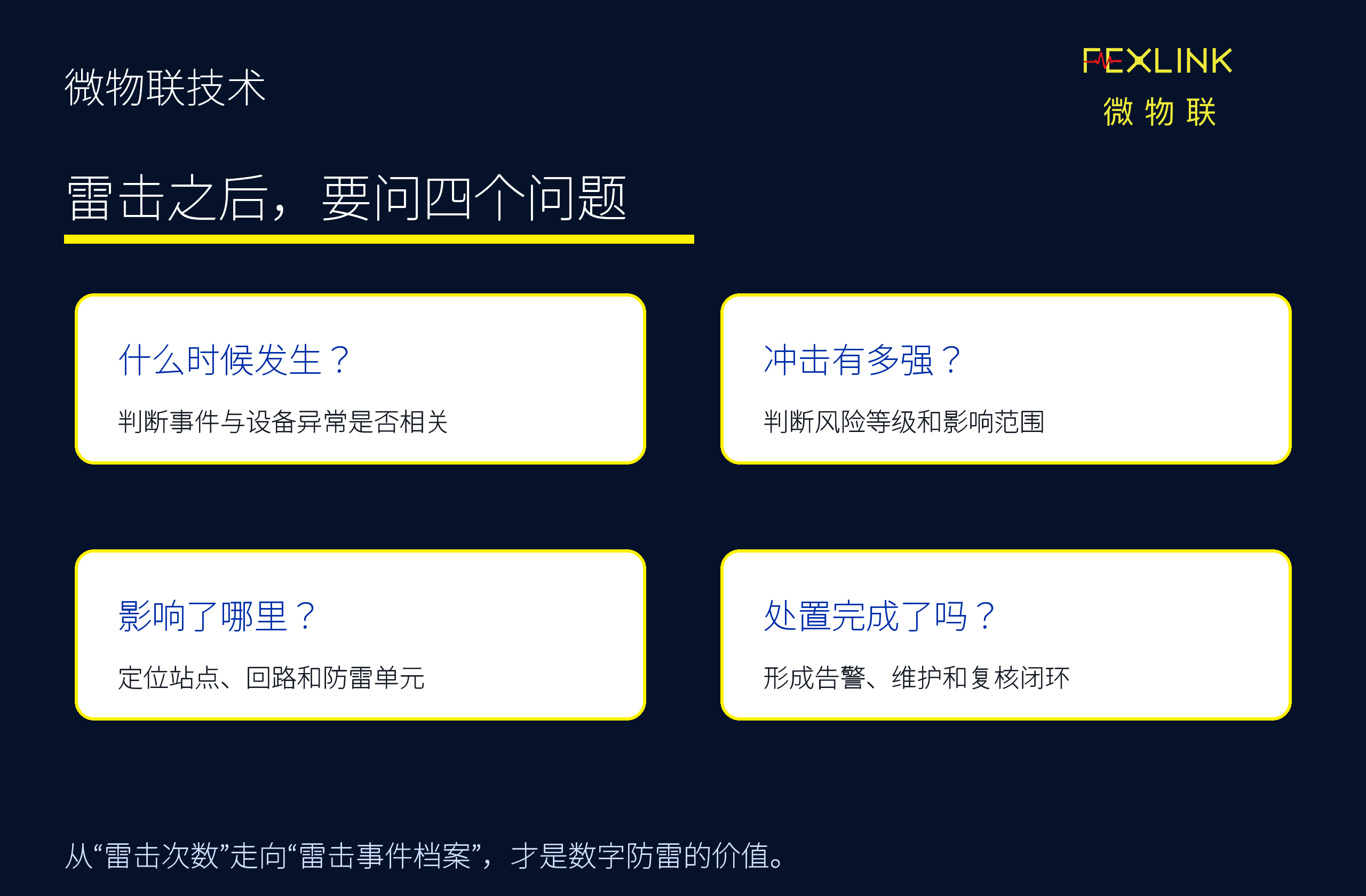
If the system only records "+1", it will still be difficult to answer when subsequent equipment abnormalities occur: Is this abnormality related to a lightning strike? Was the impact strong enough to cause damage? Where is the impact? Do I need to review SPD and grounding immediately? This is the boundary of the lightning strike count.
2. What exactly does lightning current monitoring monitor?
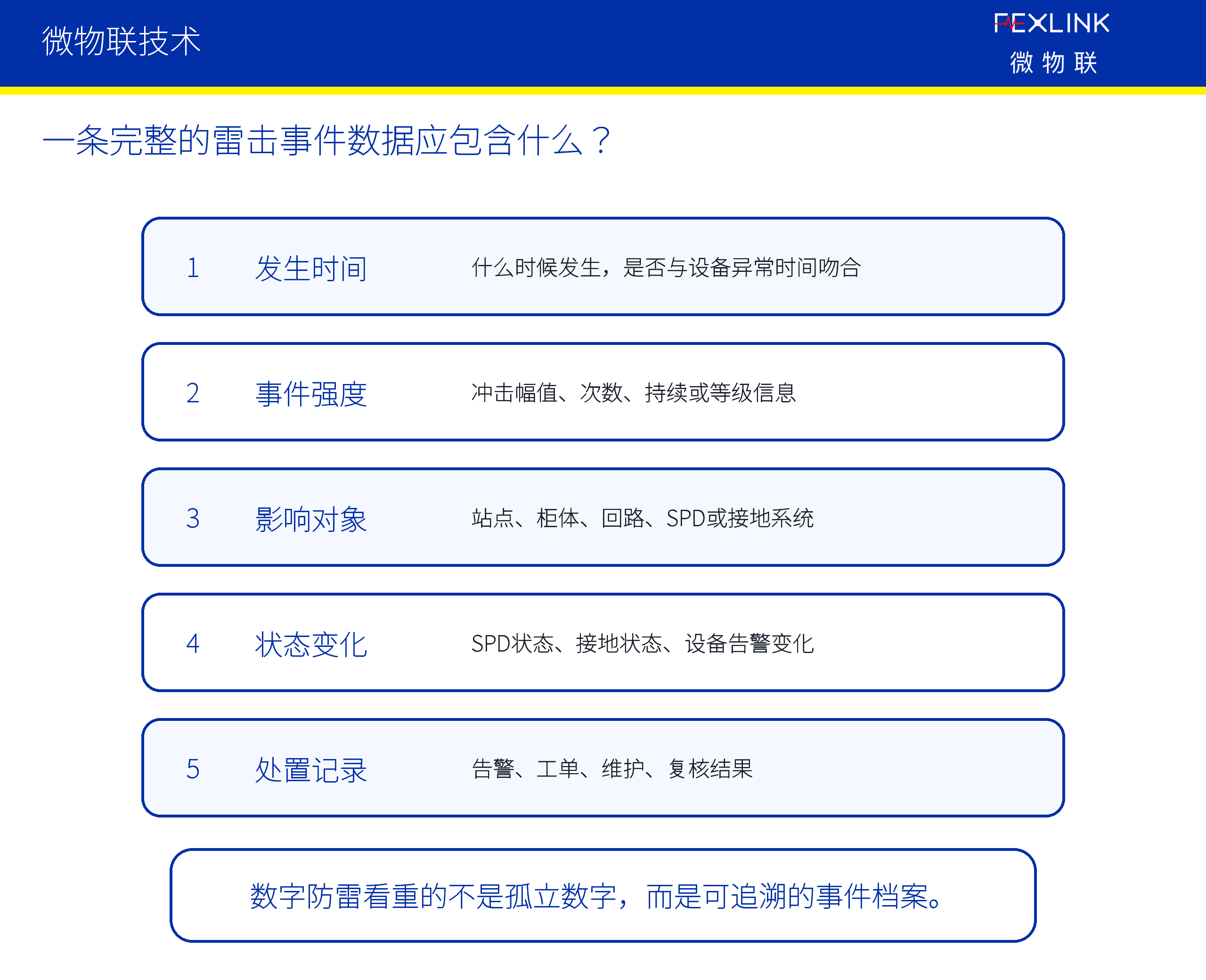
Lightning current monitoring focuses on the complete current characteristics of a lightning event. It not only records the number of occurrences, but also includes information such as peak current, rise time, duration, waveform shape, charge amount, unit energy, polarity and occurrence time.
Taking the example waveform as an example, the peak current is 14.3 kA, the wave impedance is 50 Ω, and the corresponding peak voltage is about 715 kV; the duration is about 522 μs, the rise time is about 22.9 μs, the charge amount is about 3.74 C, the unit energy is about 28.6 kJ/Ω, and the polarity is positive.
Each of these data has meaning. The peak current reflects the impact intensity, the rise time reflects the impact steepness, the duration reflects the action process, the charge amount and unit energy reflect the possible thermal effect and damage capability, and the polarity and occurrence time provide the basis for accident tracing.
3. Why is waveform data important for digital lightning protection?
Waveform is the most intuitive expression of lightning current events. Through the waveform, operators can see how quickly the lightning current rises, when it reaches its peak, how it decays, and how long the entire event lasts.
For digital lightning protection, waveform data can help determine the impact of lightning strikes or surges on the system. Simply knowing that a lightning strike has occurred is not enough to determine whether maintenance is required; but if you know the peak value, duration, and energy, you can make a more informed decision whether to review SPD, check grounding, or troubleshoot equipment abnormalities.
This is also the core value that distinguishes lightning current monitoring from traditional lightning strike counting: it does not just record events, but interprets events.
4. How does lightning current data enter the intelligent lightning protection system?
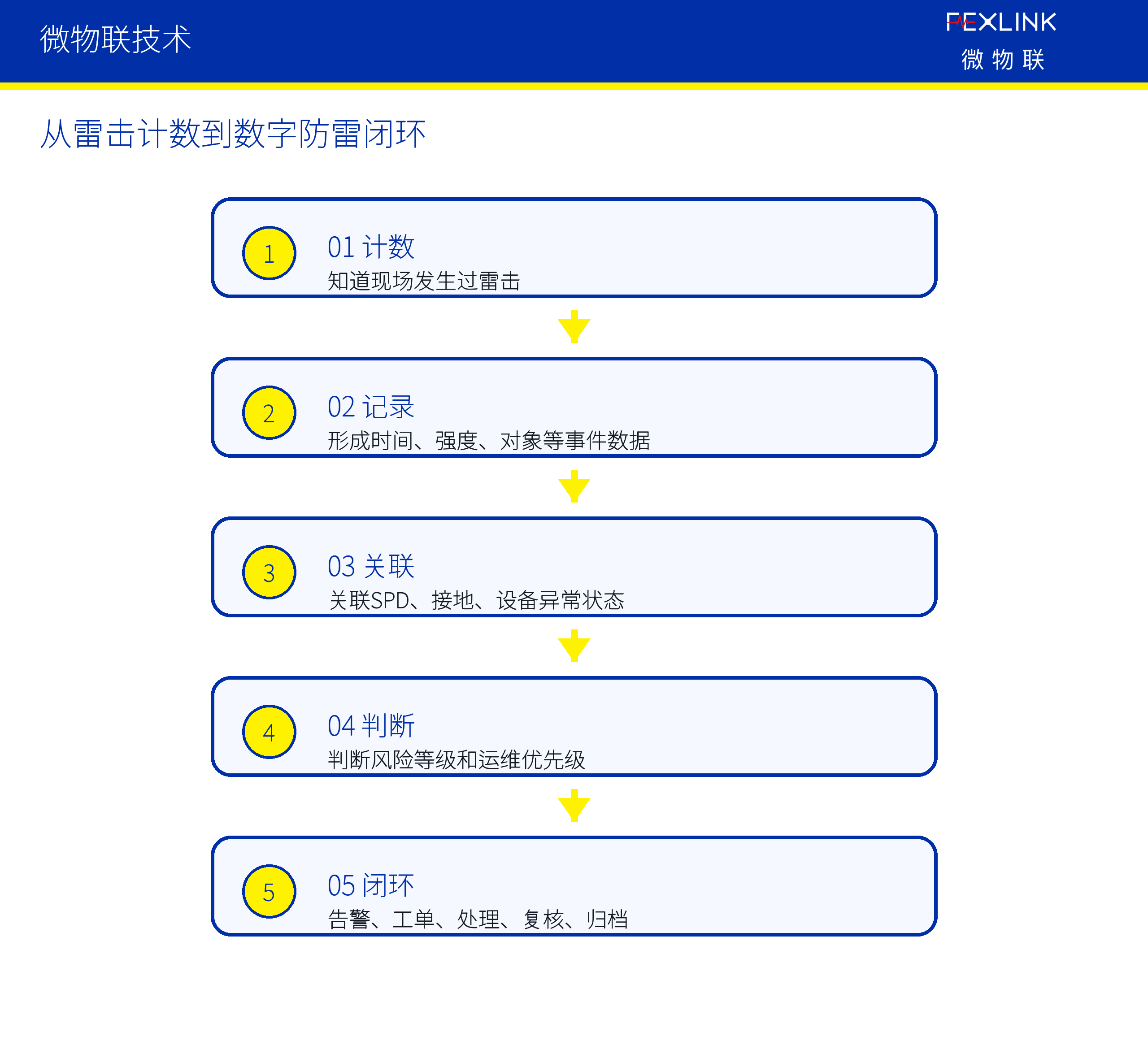
In a complete intelligent lightning protection system, lightning current monitoring is between "lightning invasion" and "protection effect judgment". It is responsible for answering: whether lightning enters the system, how big the impact is, when it occurs, and whether it may affect the lightning protection device and discharge path.
This data should then be correlated with SPD status, forward disconnect devices, lightning discharge paths, grounding status and equipment alarms. Only in this way can the system move from single-point recording to full-process judgment.
In other words, lightning current monitoring is not an isolated function, but a key data entrance that connects "generation, protection, discharge, grounding and operation and maintenance" in digital lightning protection.
5. Why are location positioning and predictive maintenance important?
In the past, many lightning protection operations and maintenance were done in hindsight: when the equipment was abnormal, we would check back to see if a lightning strike had occurred; when the SPD was damaged, we would judge whether it needed to be replaced; when there was a grounding problem, we would trace back whether the lightning current discharge was abnormal.
The value of lightning current monitoring is to turn this hindsight into timely processing. Through the occurrence time, intrusion channel, monitoring point location and associated alarms, the system can assist in determining the location where lightning current may be affected, and prompt operation and maintenance personnel to quickly review relevant lightning protection devices, grounding paths and equipment status.
This is the meaning of predictive maintenance: instead of waiting for equipment to break down and then dealing with it, once a strong impact event or abnormal trend is discovered, timely detection, maintenance, and review are carried out to avoid continued accumulation of risks.
6. Why do different scenarios require different product forms?
Sites for lightning current monitoring vary widely. Indoor rail-type lightning current monitors suit power distribution cabinets, while outdoor waterproof versions are required for pole towers, down conductors, base stations, chimneys or outdoor boxes. Explosion-proof designs may also be required for oil tank areas and hazardous areas.
At the same time, different projects also have different requirements for communication and power supply. Some only require local viewing, some require RS485 access, and some require Ethernet/MQTT, Zigbee, 4G/5G or third-party platform access. The power supply method may also involve AC220V, DC power supply, solar energy or battery solutions.
Therefore, lightning current monitoring is not a single product, but an event data collection system for multiple scenarios, multiple installation methods, multiple communication methods and multiple protection levels.
Conclusion: From “recording times” to “explaining events”
Lightning strike counting addresses whether it has occurred, while lightning current monitoring addresses what happened, how strong it is, what the waveform is like, where it is affected, and whether it needs to be dealt with.
What digital lightning protection really needs is not a single number, but a lightning current event file that can support judgment, location positioning, risk tracing and predictive maintenance. To see how event diagnosis works in practice, read from lightning strike counting to lightning current event diagnosis.
FEXLINK technology will continue to focus on intelligent lightning protection, early warning for electrical safety and digital power distribution, sharing how electrical signals are transformed into data, risk and value.
Where there is electricity, there is FEXLINK.