Many sites share a common question: the distribution cabinet already has an SPD installed, so why does equipment still get damaged after thunderstorms?
This question is not rare. Because an SPD is not a "install once and forever effective" component, but a critical link in the lightning protection chain.
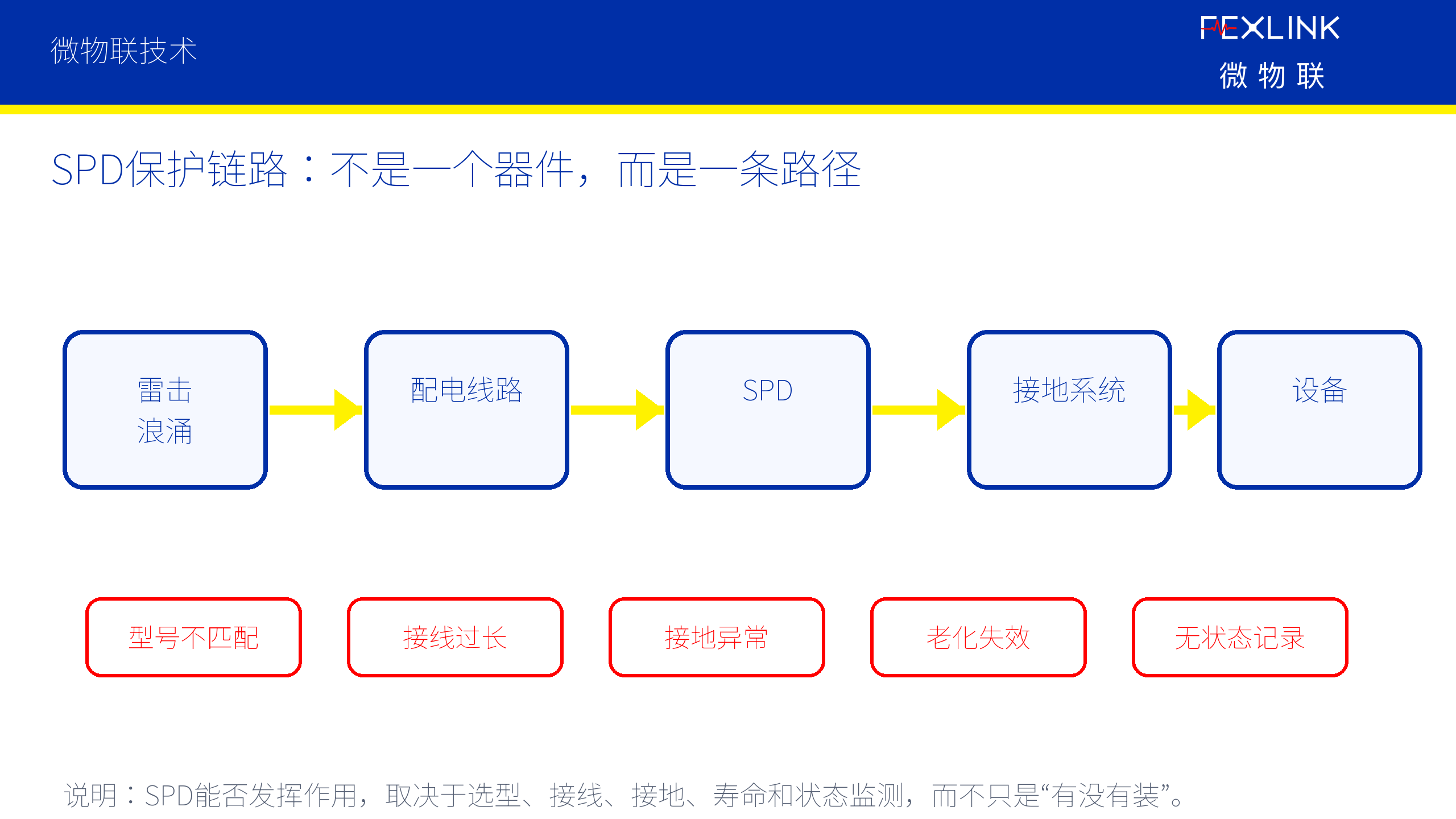
What truly works is not a single device, but the complete path from surge entry, SPD operation, energy discharge, grounding release, to equipment withstand voltage. Any abnormality in any link can turn "SPD installed" into "looks protected, but risk still exists".
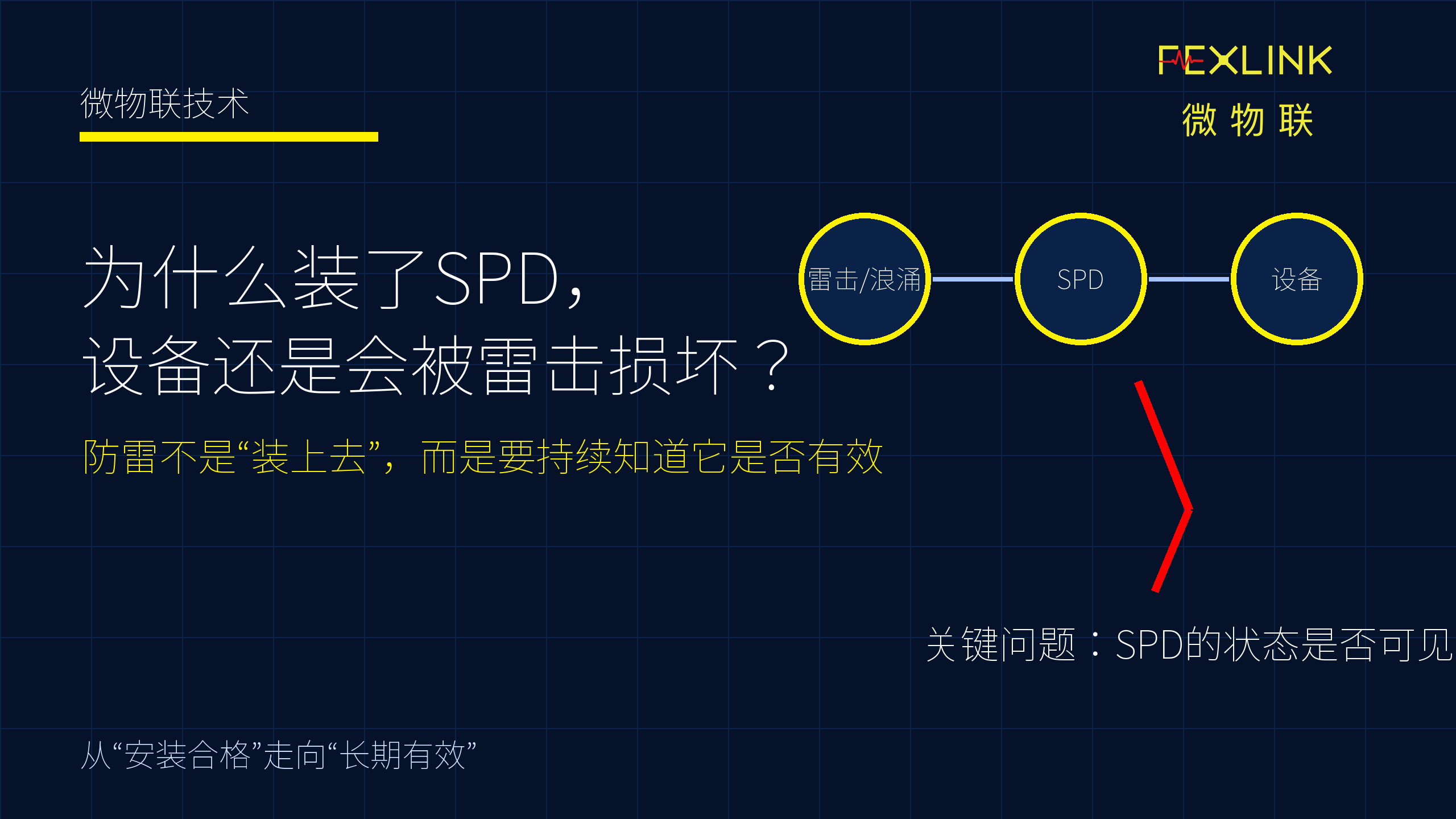
1. SPD protects not the equipment itself, but a discharge path
The role of an SPD is to conduct quickly when surge voltage appears, limiting overvoltage to within the equipment's withstand range, and discharging part of the energy through the grounding system.
So for an SPD to work, it depends on at least three things: the SPD's own status must be normal, the wiring must be standardized, and the grounding system must be reliable.
If the SPD selection is inappropriate, or the wiring is too long, or the grounding connection is abnormal, the residual voltage at the equipment end may still be too high.
This is why after equipment damage, on-site personnel only see "the SPD is still in the cabinet", but cannot easily determine whether the SPD was truly in an effective state before the accident.
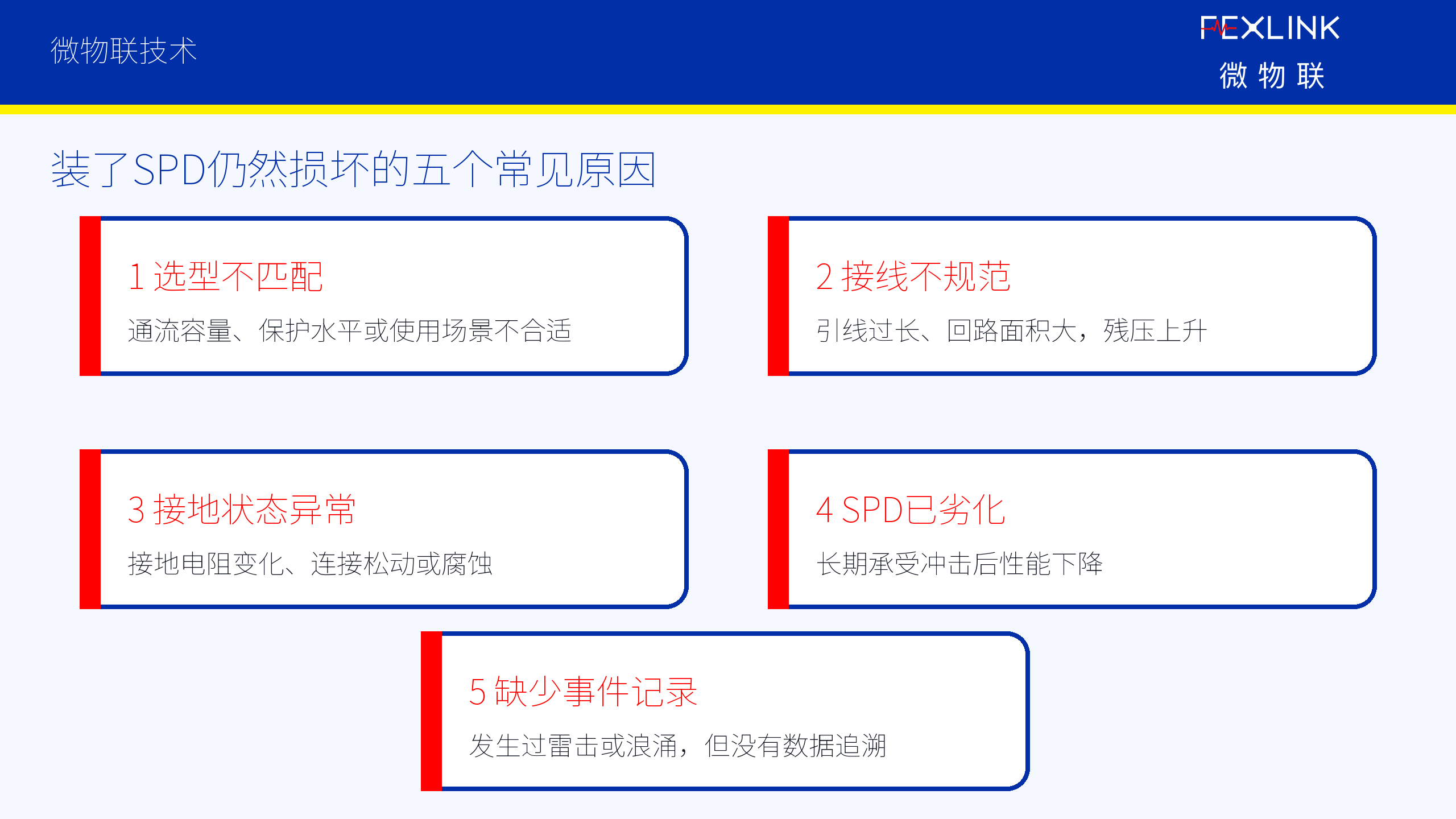
2. Common causes of damage despite SPD installation
First, SPD selection may not match. Different system voltages, distribution levels, lightning exposure levels, and equipment tolerance levels all have requirements for SPD's current capacity, protection level, and installation location.
Second, wiring may not be standardized. The longer the SPD installation leads, the higher the additional voltage on the line during a surge, and the higher the voltage the equipment actually bears.
Third, grounding status may change. Loose grounding connections, corrosion, construction damage, or environmental changes can all affect the energy discharge path.
Fourth, the SPD may have degraded. After long-term surge impacts, internal components may gradually age, reducing protection capability.
Fifth, on-site lightning and surge event records are often missing. In many cases, after equipment damage, it's impossible to clarify whether lightning occurred before the damage, how many surge impacts happened, and whether the SPD had abnormalities.
3. The problem with traditional lightning protection: invisible status
Traditional lightning protection often focuses on "whether it's installed", but struggles to continuously answer "whether it's always effective".
Inspections and tests can explain the status at a certain moment, but cannot fully cover every lightning strike, every surge, every degradation, and every grounding status change during long-term operation.
For communication base stations, wind farms, photovoltaic power stations, data centers, charging stations, and park distribution scenarios, lightning protection systems operate in complex environments for long periods. Relying solely on manual inspection makes it difficult to detect status changes in time.
Therefore, lightning protection systems need to upgrade from "device existence" to "status awareness".
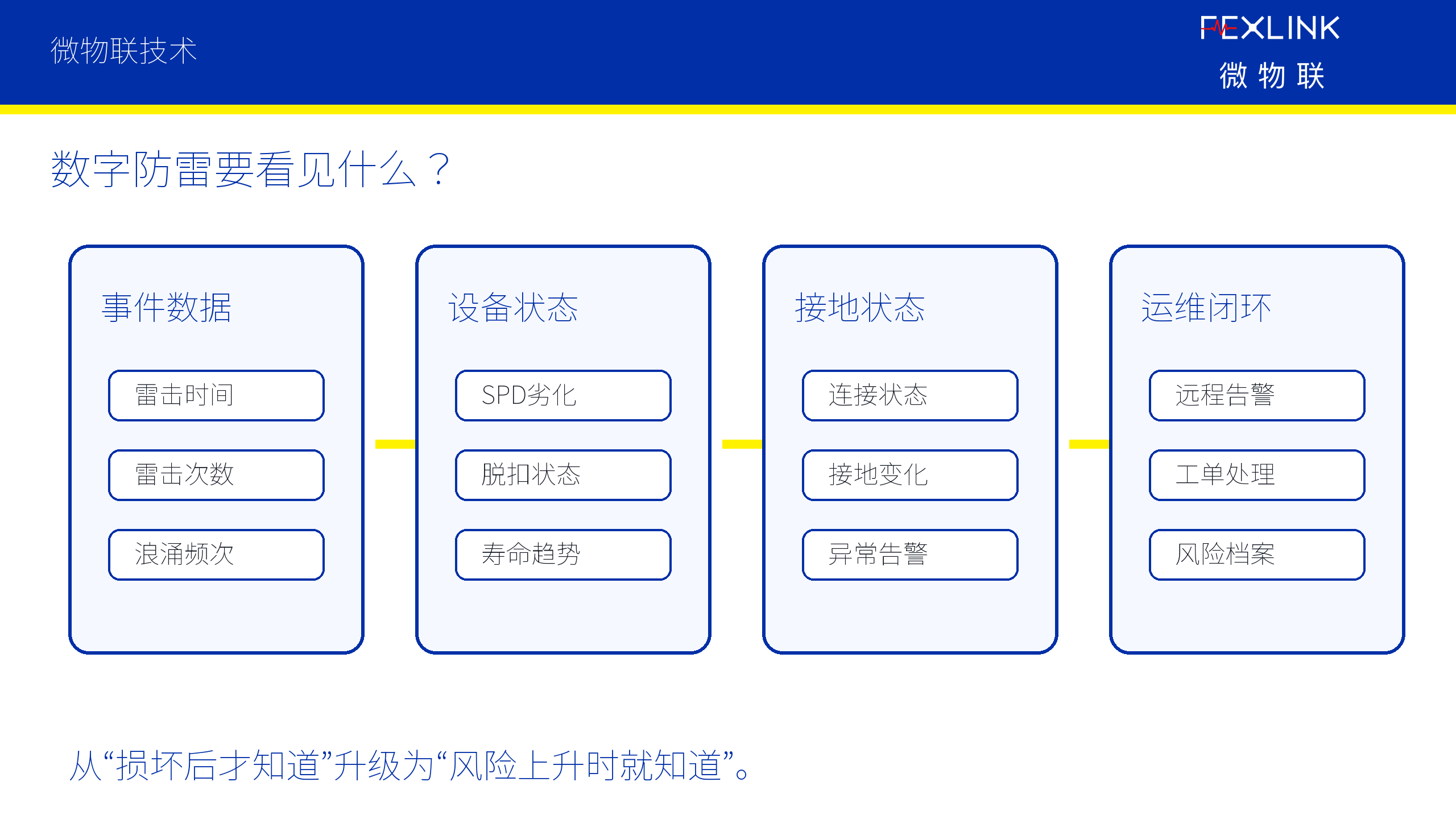
4. What should digital lightning protection see?
Digital lightning protection is not about replacing SPDs with more complex devices, but about turning the key status of lightning protection systems into data.
At least four types of information should be continuously visible: lightning and surge event data, SPD's own status data, grounding status data, and alarm and maintenance loop data.
When this data is continuously recorded, the lightning protection system is no longer just a component in a cabinet, but a monitorable, recordable, early-warning, and traceable safety system.
This is also the core value of digital lightning protection over traditional: making risk changes traceable.
5. How FEXLINK understands SPD online monitoring
FEXLINK believes that the value of SPD online monitoring is not just remotely seeing a switch status, but building a long-term operational data archive around the lightning protection system.
This archive should include lightning events, surge impacts, SPD status, grounding status, abnormal alarms, maintenance records, and risk trends.
With this data, on-site maintenance is no longer just "periodic checks", but can be more targeted based on risk changes.
The lightning protection system is also no longer just a one-time engineering delivery, but a system that continuously produces safety data.
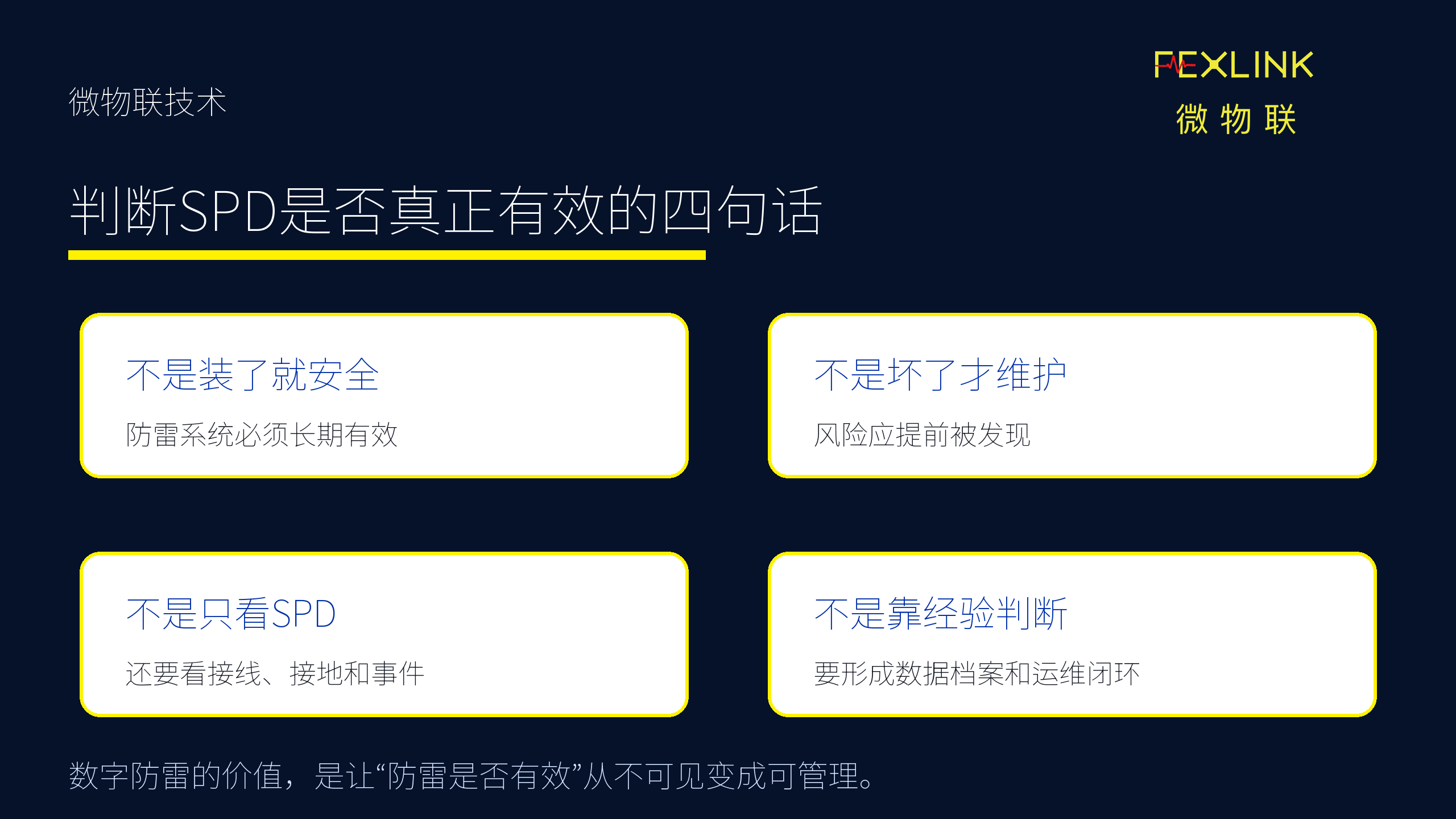
Conclusion: Lightning protection is not a one-time installation, but long-term effectiveness
Installing an SPD does not mean the lightning protection system is forever effective.
What truly matters is: whether the SPD matches the site, whether wiring is standardized, whether grounding is reliable, whether the device has degraded, whether lightning and surges are recorded, and whether maintenance can respond in time.
Traditional lightning protection solves "whether it's installed". Digital lightning protection solves "whether it's always effective".
FEXLINK will continue to share content on smart lightning protection, early warning of electrical safety, digital distribution, energy supervision, and industrial IoT.
FEXLINK — reconstructing energy efficiency and electrical safety with data.
Where there's electricity, there's FEXLINK.