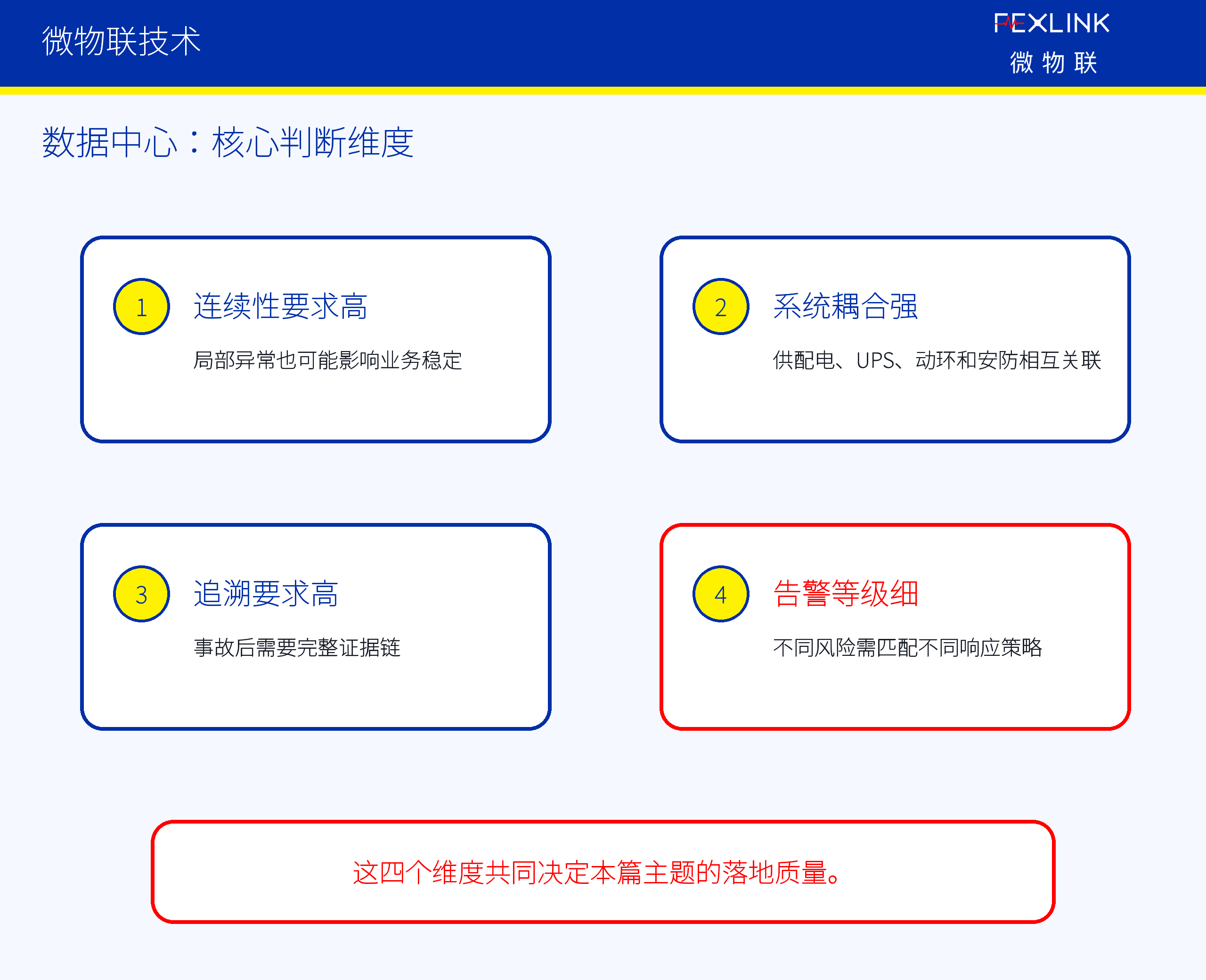
Data centers have extremely high requirements on power supply continuity and equipment reliability. Effective data center lightning risk management should not treat the lightning protection system in isolation: it must cooperate with power distribution, UPS, environment, security and O&M systems to form unified monitoring of lightning surge events, lightning protection status, grounding status and equipment alarms.
Lightning protection in data centers should not just stop at the construction acceptance stage. For high-reliability scenarios, the status of the lightning protection system during operation is equally important.
Surge events, SPD degradation, and grounding changes may not cause an immediately obvious failure, but they can affect the long-term reliability of the protected link.
1. Why data center lightning risk management requires unified infrastructure monitoring
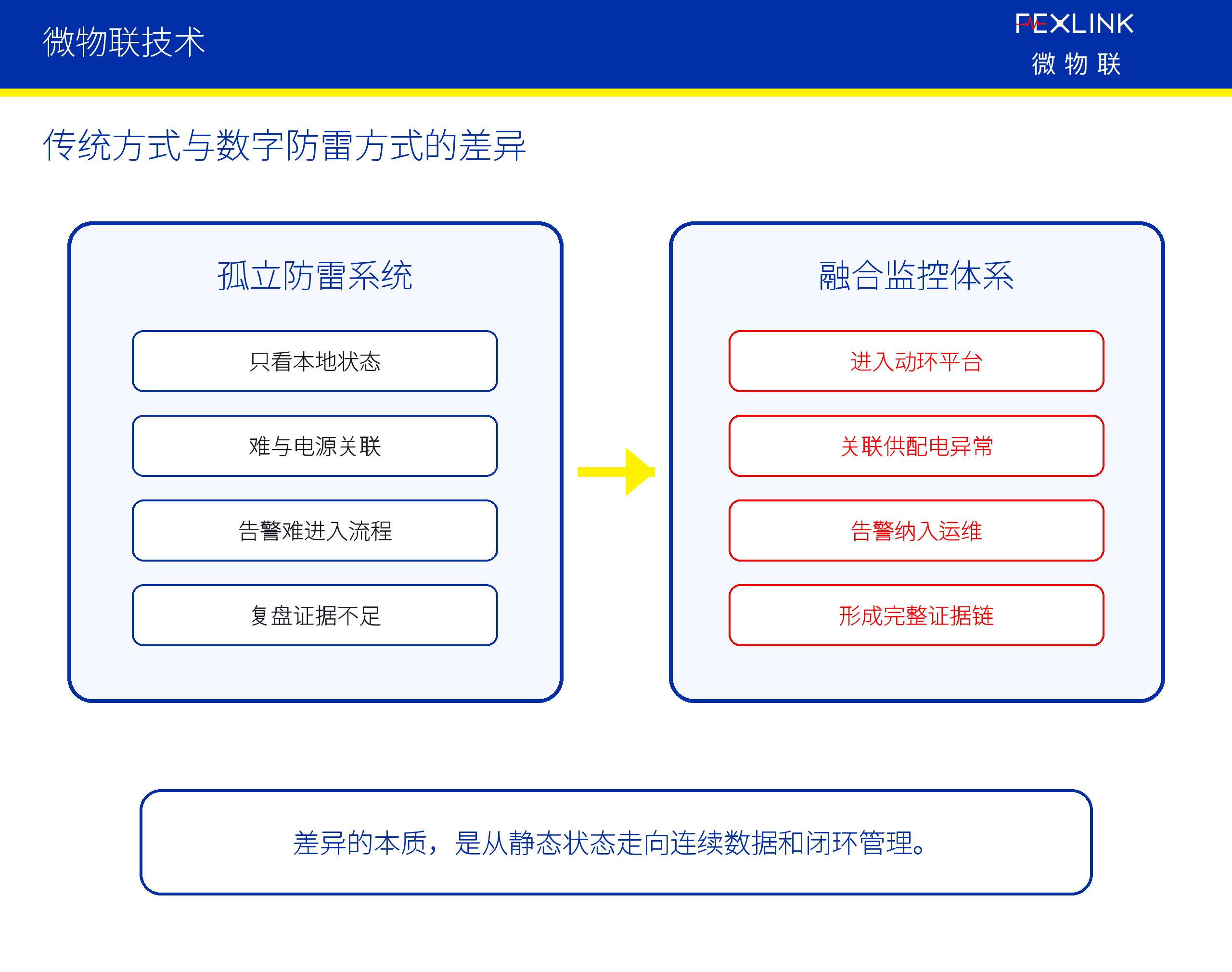
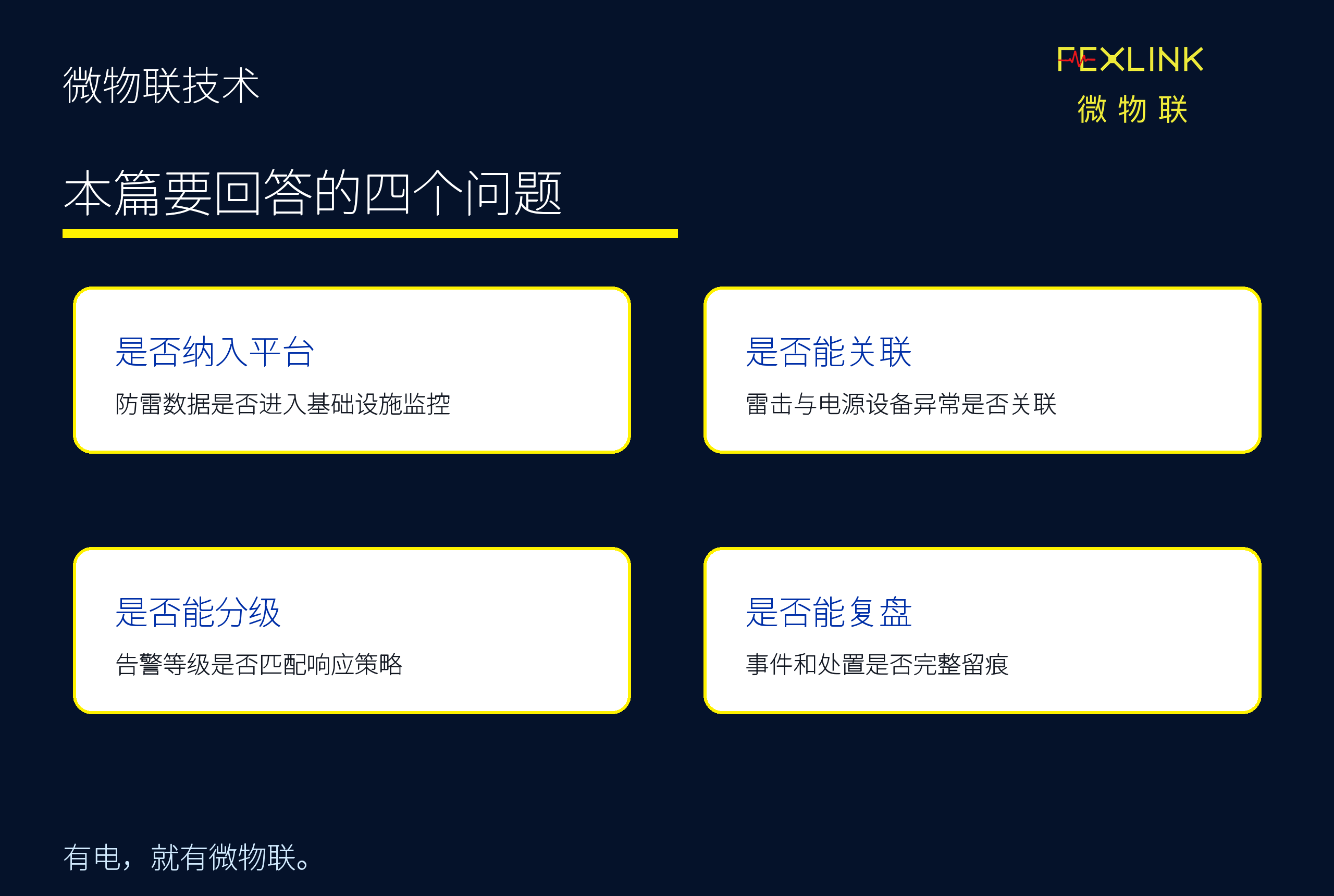
The data center already has power supply and distribution, UPS, dynamic environment, fire protection, security and operation and maintenance platforms. If the lightning protection system exists in isolation, it will be difficult to correlate lightning surge events with power supply abnormalities, equipment alarms and environmental changes.
Only after lightning protection data enters unified monitoring can it become part of the reliability analysis.
2. What lightning protection data should data centers monitor?
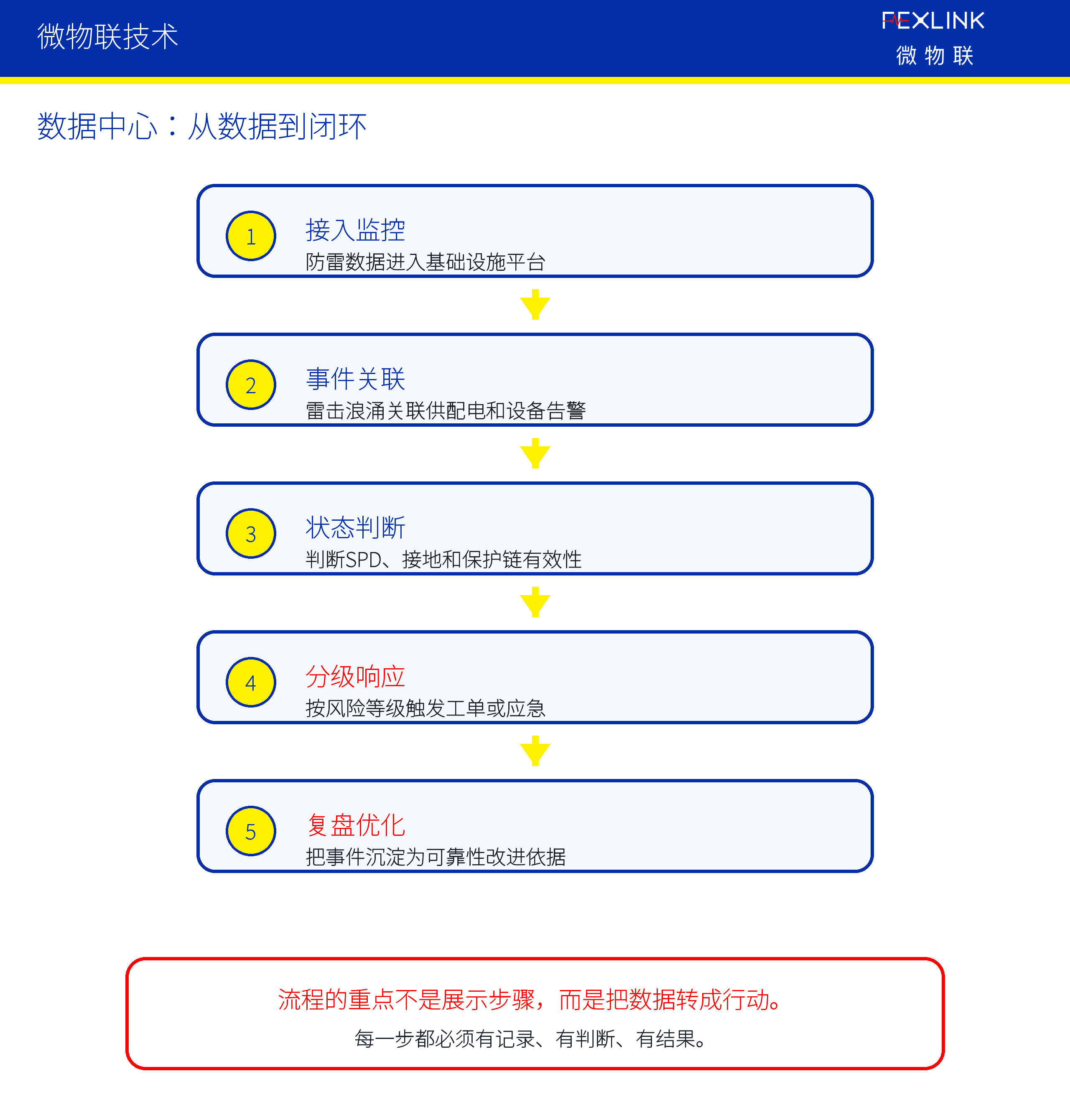
Key data include lightning surge events captured by lightning current monitors, SPD status tracked through smart SPD online monitoring, grounding status measured by grounding resistance monitors, plus power distribution abnormalities, cabinet environment and operation and maintenance disposal records.
Together, these data answer the question: whether the lightning protection chain remains effective in long-term operation.
3. Alarm strategies cannot be one-size-fits-all
Data center lightning protection alarms should be graded. Slight fluctuations can be observed, high-intensity lightning strikes or SPD abnormalities should generate work orders, and serious abnormalities should trigger emergency responses.
If all alarms are handled the same, it will ultimately reduce the credibility of the platform.
4. How lightning protection data serves reliability management
Long-term data can help determine which areas have more surges, which SPDs degrade faster, and which grounding conditions fluctuate significantly.
These results can optimize maintenance cycles, spare parts reserves, retrofit plans and risk reviews.
5. How does FEXLINK understand data center lightning protection monitoring?
FEXLINK believes that data center lightning protection is not an independent subsystem, but a part of infrastructure reliability data. FEXLINK digital lightning protection should be linked with power supply and distribution, dynamic environment and operation and maintenance systems. For the full monitoring scope, see the data center lightning monitoring vertical, or the data center monitoring case study for a real deployment.
Only by incorporating lightning protection status into a unified view can lightning surge risks be truly managed.
Conclusion: Data center lightning protection should move from acceptance items to operational data
In high-reliability scenarios, you can’t just ask “whether it’s installed”, but also ask “whether the status is continuously reliable.” Digital lightning protection allows the lightning protection system of the data center to enter an operating system that can be monitored, alarmed, and reviewed.
FEXLINK technology will continue to share content related to intelligent lightning protection, early warning of electrical safety, digital power distribution, energy supervision and industrial Internet of Things.
FEXLINK/FEXLINK uses data to reconstruct energy efficiency and electrical safety.
Where there is electricity, there is FEXLINK.