[Digital Lightning Protection] Wind turbine blade lightning intrusion monitoring, why should we move from "lightning strike counting" to event diagnosis?
Abstract: Wind turbine blades are one of the most vulnerable parts of wind turbines to lightning strikes. Traditional lightning strike counting can only tell us "how many lightning strikes have occurred", but it is difficult to determine which blade the lightning entered from, the intensity of the impact, the waveform process, how long it lasted, whether there were multiple impacts, and whether it affected the cabin electrical system, tower discharge path and grounding system. The value of wind turbine blade lightning intrusion monitoring is not to simply replace lightning strike counting, but to transform each lightning strike into event data that can be analyzed, traced, associated, and guided for operation and maintenance.
Lightning protection of wind turbine blades has always been a key issue in wind farm operation and maintenance. The blades are at high altitudes and rotating for a long time. The blade tips, air terminals, blade surfaces and internal lightning protection channels may become paths for lightning intrusion. A lightning strike is not just as simple as "the blade is hit." It may be transmitted step by step along the air-termination device, the internal downdraft channel of the blade, the hub, the nacelle, the tower and the grounding system, and in the process affect the sensors, control systems, communication systems, converters, box-type transformers and booster station equipment.
In the past, many wind farms paid more attention to lightning strike counts: how many times a certain wind turbine was struck by lightning in a year, and whether a certain area was a high-risk lightning strike point. This data is meaningful, but not sufficient. For large wind turbines, especially offshore wind power, mountain wind power and wind farms in areas with high thunderstorms, what really matters is which blade the lightning struck entered, how strong it was, what the impact process was like, whether it caused an abnormality in the protection chain, and whether it is necessary to arrange blade inspection or shutdown review.
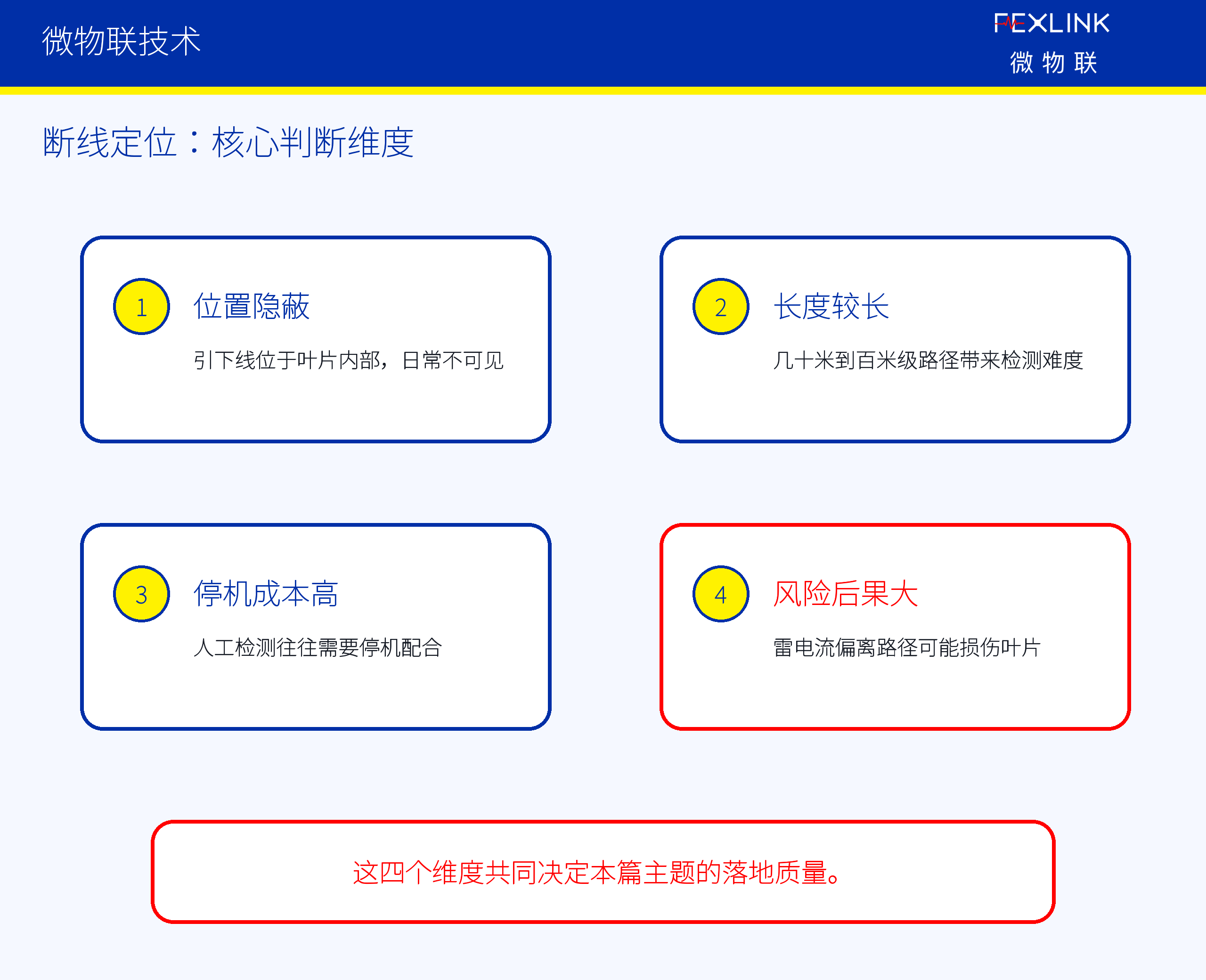
Therefore, this article does not discuss the "online positioning of blade down-conductor breakage", which is still at a high cutting-edge and engineering verification stage. Instead, it focuses on "wind turbine blade lightning intrusion monitoring" which is more suitable for the current technical route. Its core is not to determine whether a certain wire is broken, but to turn the blade lightning invasion process into data that can be accumulated over a long period of time.
1. Why can’t lightning strike counting satisfy wind turbine lightning protection operation and maintenance?
Lightning strike counting solves the problem of "has it happened?" but cannot solve the problem of "what happened." For the same lightning strike, the peak current may be very different; for the same intrusion, the waveform rise speed, duration, energy level and multiple impacts may also be completely different. By just looking at the number of times, it is easy to regard events with different risk levels as the same type of event.
The lightning strike risk of wind turbines also has significant blade differences. The three blades are in different angles, rotational speeds, windward conditions and electric field environments. A certain blade may be more susceptible to lightning strikes in the long term, or abnormal waveforms, abnormal voltages or abnormal propagation paths may occur after a certain lightning strike. Without blade data, operation and maintenance personnel can only know "this wind turbine has been struck by lightning", but it is difficult to know "which blade deserves special attention."
Lightning strike counting also cannot determine the effects of lightning strikes. Whether a lightning intrusion causes SPD action, whether it causes cabin communication alarms, whether it causes a sudden change in grounding status, whether it is related to abnormalities in pitch, yaw, sensors or control systems, all need to be analyzed on the same timeline as lightning intrusion data and other status data.
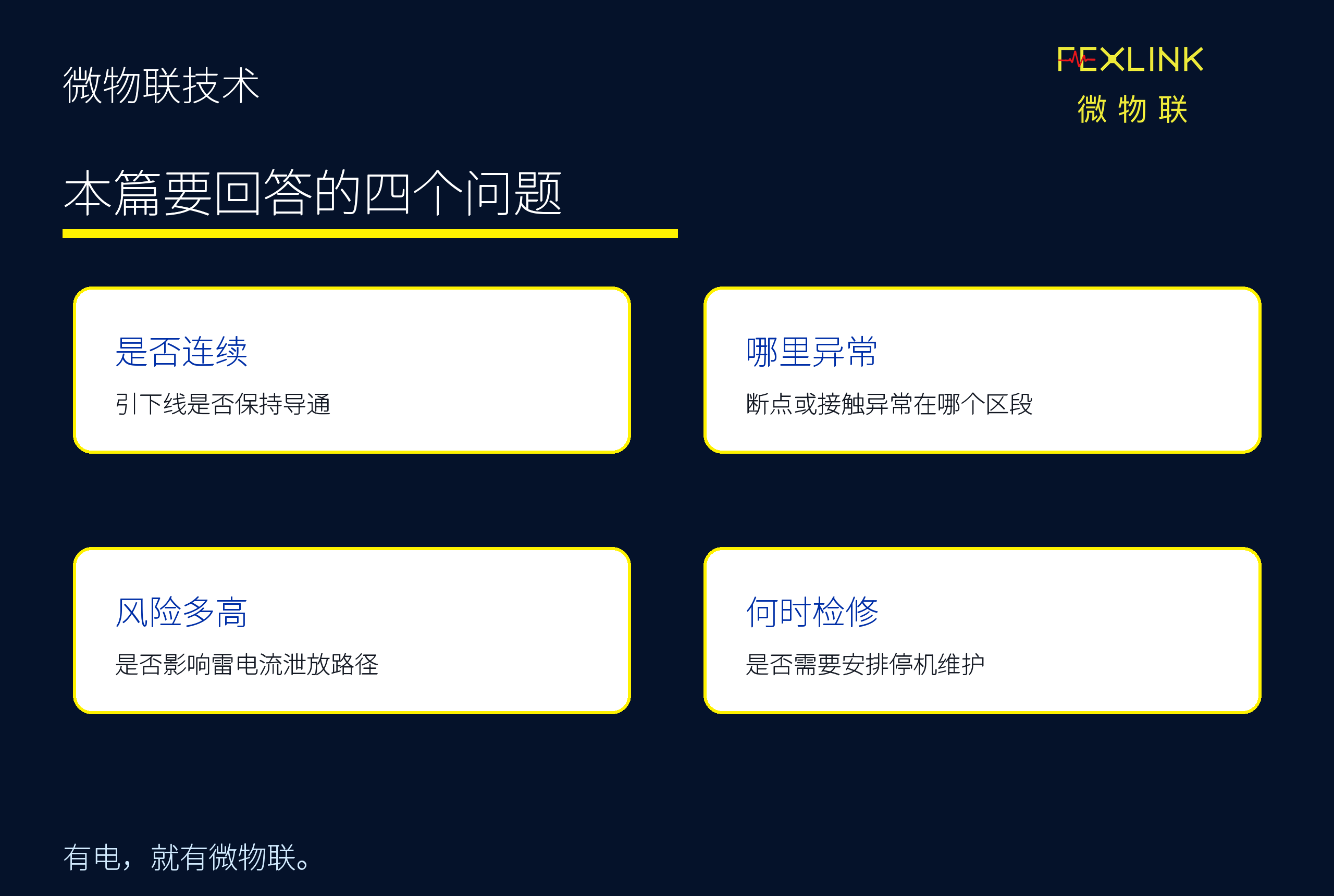
2. What data should we look at for lightning intrusion monitoring on wind turbine blades?
The first type of data is the lightning intrusion events of each blade. The system should try to distinguish which blade the invasion occurred, when it occurred, how long the event lasted, and whether there were continuous impacts or multiple impacts. For three-blade wind turbines, blade-level event data is more valuable for operation and maintenance than the total count of a single wind turbine.
The second type of data is lightning current characteristics, including peak current, polarity, rise time, duration, waveform shape, frequency, charge amount and energy, etc. The peak value reflects the impact intensity, the rise time reflects the transient change speed, and the duration and energy level are closer to the basis for judging the impact on protective channels and equipment.
The third type of data is peak voltage and intrusion path related characteristics. Lightning intrusion not only manifests as electric current, but may also form a transient potential difference between the blades, hub, nacelle, tower and grounding system. For electrical and control systems, abnormal peak voltages, propagation delays, and overvoltage coupling may be more of a concern than a simple count.
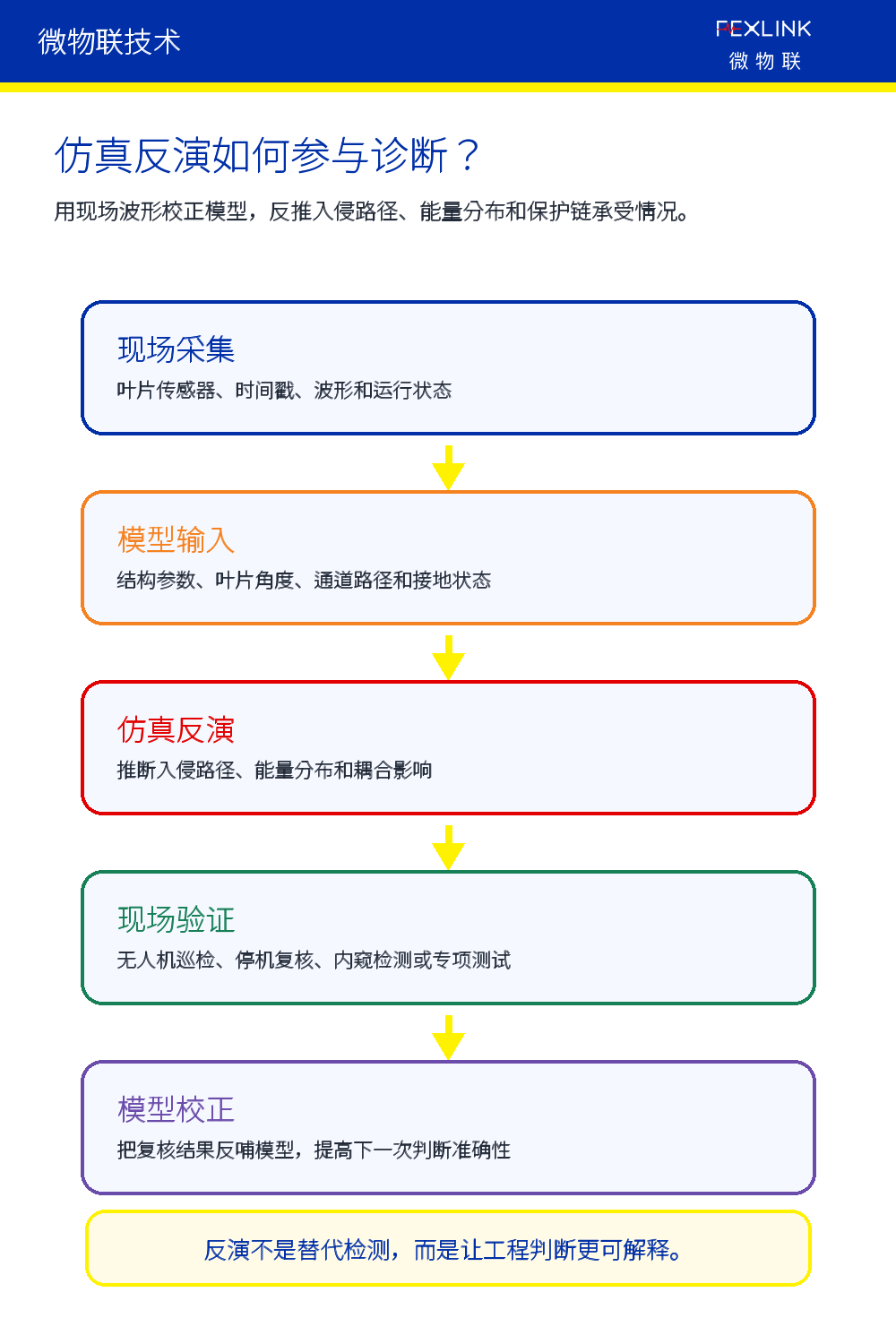
The fourth type of data is waveform and simulation inversion data. Through the collected waveform, timestamp, installation position, blade angle, wind turbine operating status and grounding status, combined with electromagnetic transient simulation or data model, the lightning invasion path, energy distribution, protection chain tolerance and potential high-risk locations can be deduced. The "inversion" here is not to judge out of thin air, but to use field data to correct the model to make the simulation closer to the field.
3. Why do we need to conduct “each blade” lightning data analysis?
Fan blades are not a uniform whole. The blade tip air terminal, blade internal lightning protection channel, diversion connection, hub interface, nacelle transition path and tower discharge path jointly determine how lightning current enters and discharges. Different blades may have differences in manufacturing, installation, operating attitude, surface condition and historical lightning strike records.
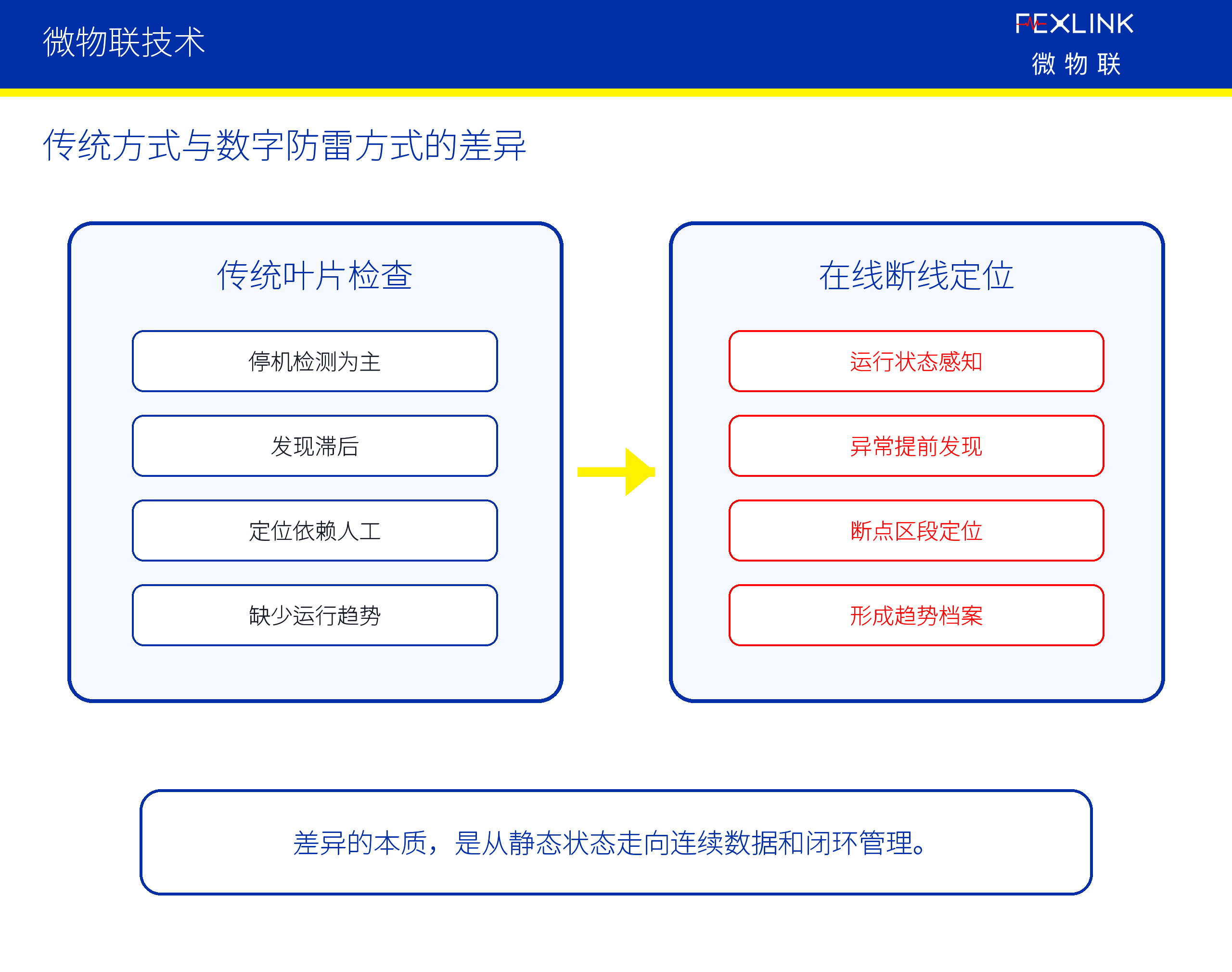
If a lightning event file can be established for each blade, the differences between the three blades can be compared: which blade has a higher frequency of lightning strikes, which blade has a higher peak value, which blade has more abnormal waveforms, and which blade is more likely to be accompanied by equipment alarms after a lightning strike. Over the long term, these data can form a blade-level risk profile.
Blade-level data can also be used to guide inspection priorities. The traditional method is often to conduct unified inspections after thunderstorms or judge based on experience, while the data-based method can prioritize blades with high peak values, high frequencies, abnormal waveforms, abnormal peak voltages, and alarms after lightning strikes as priority review targets. This can not only reduce blind downtime, but also reduce the probability of hidden dangers being missed.
4. How does lightning intrusion monitoring relate to down conductors, ground grids and engine room systems?
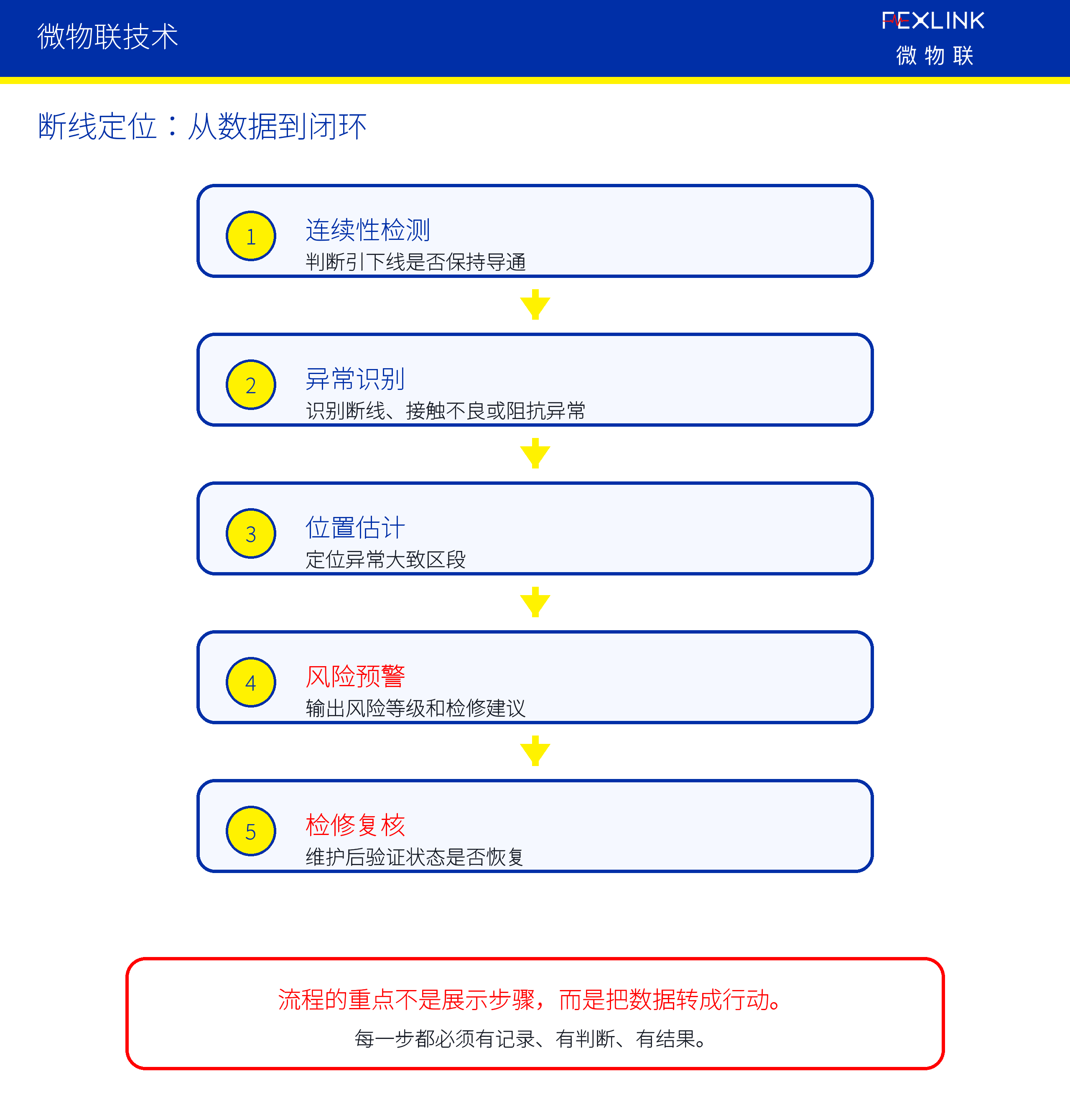
Blade lightning intrusion monitoring cannot just look at the blade itself. After lightning enters the blade, whether it can be discharged along the preset path is closely related to the internal lightning protection channel of the blade, hub connection, cabin grounding, tower discharge path and ground grid status. Therefore, the blade monitoring data should be analyzed simultaneously with the downdraft, tower grounding and ground grid status.
For example, a high peak lightning current occurs on a certain blade, and at the same time, the grounding status of the tower bottom suddenly changes, and a short-term communication abnormality occurs in the cabin control system. This is not a simple lightning strike counting event, but a complete lightning intrusion impact chain. The platform should identify this as a high priority review event.
For another example, if a wind turbine has multiple moderate-intensity lightning intrusions, but each time is accompanied by a certain type of cabin alarm or pitch system abnormality, then the platform should pay attention to the time correlation between lightning intrusion and equipment abnormalities, rather than just treating these alarms as isolated events.
For lightning protection channels such as down conductors, this article recommends expressing it in terms of "channel status correlation analysis" instead of directly committing to online breakpoint positioning. That is to say, through waveform propagation characteristics, peak attenuation, time delay, ground network response and accompanying alarms, it is judged whether there are abnormal clues in the lightning protection channel, and then cooperate with on-site inspection, drone inspection and shutdown review verification.
5. What is the value of simulation inversion in wind turbine blade lightning intrusion monitoring?
The structure of wind turbines is complex, with long blades, high towers, and densely packed nacelle equipment. After lightning current enters from the blades, it will form coupling effects on multiple paths. It is difficult to fully understand the intrusion process by relying only on the value of one sensor. The value of simulation inversion is to put the field data into the wind turbine structure and electromagnetic transient model to deduce the possible invasion path and energy distribution.
Simulation inversion can serve three goals. First, determine whether the lightning intrusion conforms to the expected discharge path; second, identify whether certain blades, cabins, or grounding paths have long-term abnormal performance; third, precipitate lightning strike events, equipment alarms, and on-site detection results into model calibration data, so that subsequent risk judgments will become closer and closer to the real situation on site.
It should be emphasized that simulation inversion is not to deify the system capabilities, but to improve the interpretability of engineering judgments. It cannot replace on-site inspection, but it can help operation and maintenance personnel quickly determine where it is worth checking, why and what to check.
6. What is the final output of wind turbine lightning intrusion monitoring?
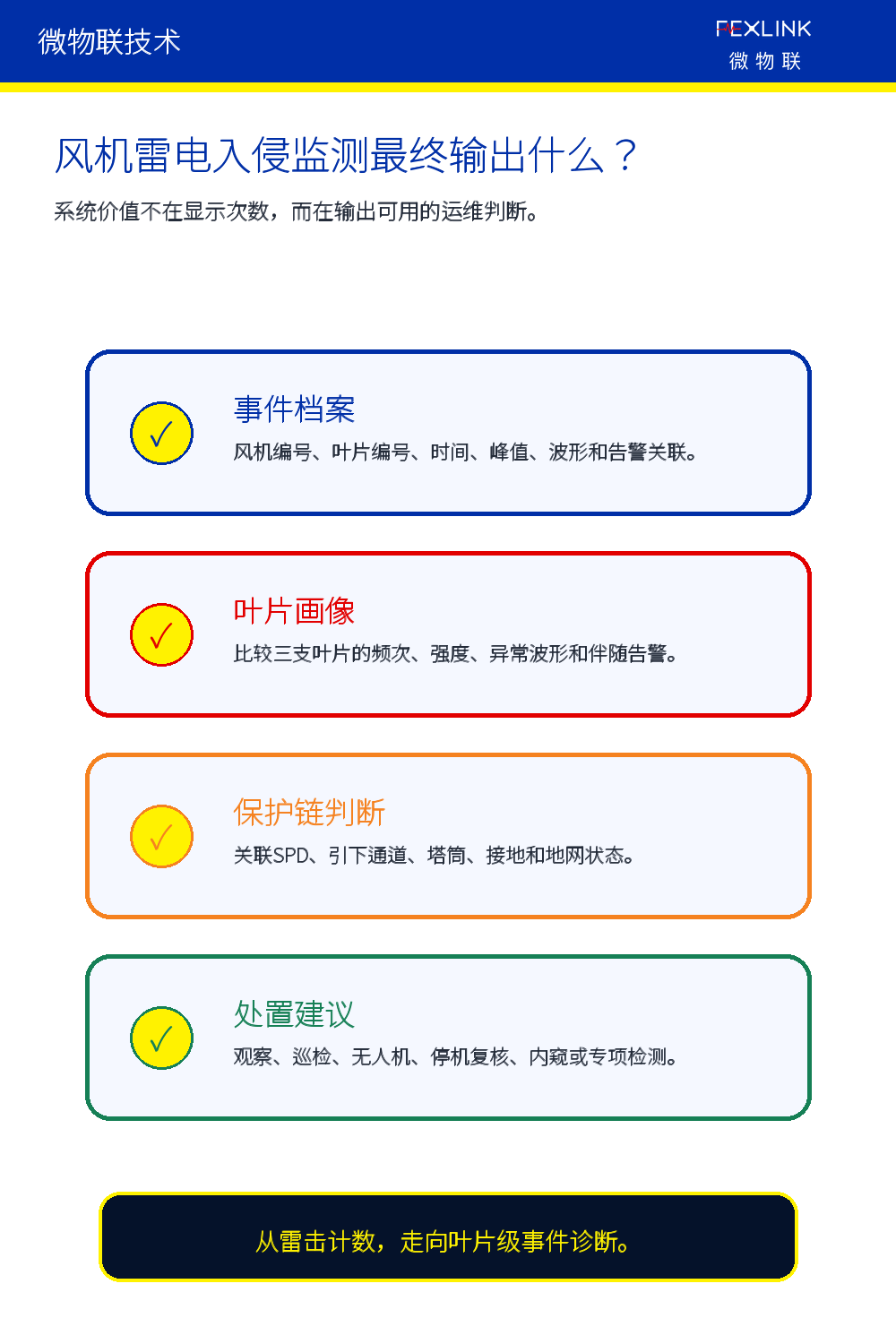
First, output the lightning intrusion event file. Each event should record the fan number, blade number, occurrence time, peak current, peak voltage, duration, waveform characteristics, frequency, whether there are multiple impacts, and whether it is associated with equipment alarms.
Second, output a blade-level risk profile. The platform should compare the lightning strike frequency, intensity, waveform anomalies and accompanying alarms of three blades over a long period of time, and identify blades with high lightning strikes, blades with high abnormality and blades that require priority inspection.
Third, output protection chain status judgment. Lightning intrusion events should be correlated with SPD status, engine room electrical status, tower discharge path, grounding status and ground grid changes to determine whether the protection chain is still reliable after a lightning strike.
Fourth, output operation and maintenance disposal suggestions. The platform can recommend observations, planned inspections, drone inspections, shutdown reviews, blade inspections or special inspections based on the event level, instead of simply popping up a lightning strike record.
7. How does FEXLINK understand wind turbine blade lightning intrusion monitoring?
FEXLINK believes that wind turbine blade lightning intrusion monitoring is not simply about upgrading the lightning strike counter, but about advancing the wind turbine lightning protection system from "count statistics" to "event diagnosis." The truly valuable data is not just how many times it occurred, but where each lightning strike came from, how strong it was, what the process was like, which systems were affected, and whether it needs to be reviewed.
FEXLINK digital lightning protection system hopes to organize lightning current, peak voltage, invasion time, frequency, waveform, SPD, grounding, equipment alarm and work order data into the same risk chain. Through multi-source feature analysis and long-term model accumulation, the platform can not only record lightning strikes, but also gradually form a lightning protection health portrait at the blade level, unit level and station level.
This is also a more reasonable development direction for wind power intelligent lightning protection in the future: instead of blindly promising overly cutting-edge single-point functions, we first collect real, continuous, and explainable lightning intrusion data, and use the data to support inspections, reviews, maintenance, and risk warnings.
Conclusion: Wind turbine lightning protection should move from "how many times it was struck by lightning" to "how lightning affects the system"
The key to lightning intrusion monitoring on wind turbine blades is not to display the number of lightning strikes on the platform, but to turn each lightning strike into an analyzable event. For wind farms, lightning strikes are not isolated events. They may affect blades, downdrafts, cabin electrical, tower discharge, ground grid status, and site operation and maintenance.
When each blade has lightning event data, and when lightning peak value, peak voltage, duration, invasion time, frequency, waveform and simulation inversion can be associated with other status data, wind power lightning protection can truly move from empirical judgment to data judgment.
FEXLINK technology will continue to share content related to intelligent lightning protection, early warning of electrical safety, digital power distribution, energy supervision and industrial Internet of Things.
FEXLINK/FEXLINK uses data to reconstruct energy efficiency and electrical safety.
Where there is electricity, there is FEXLINK.