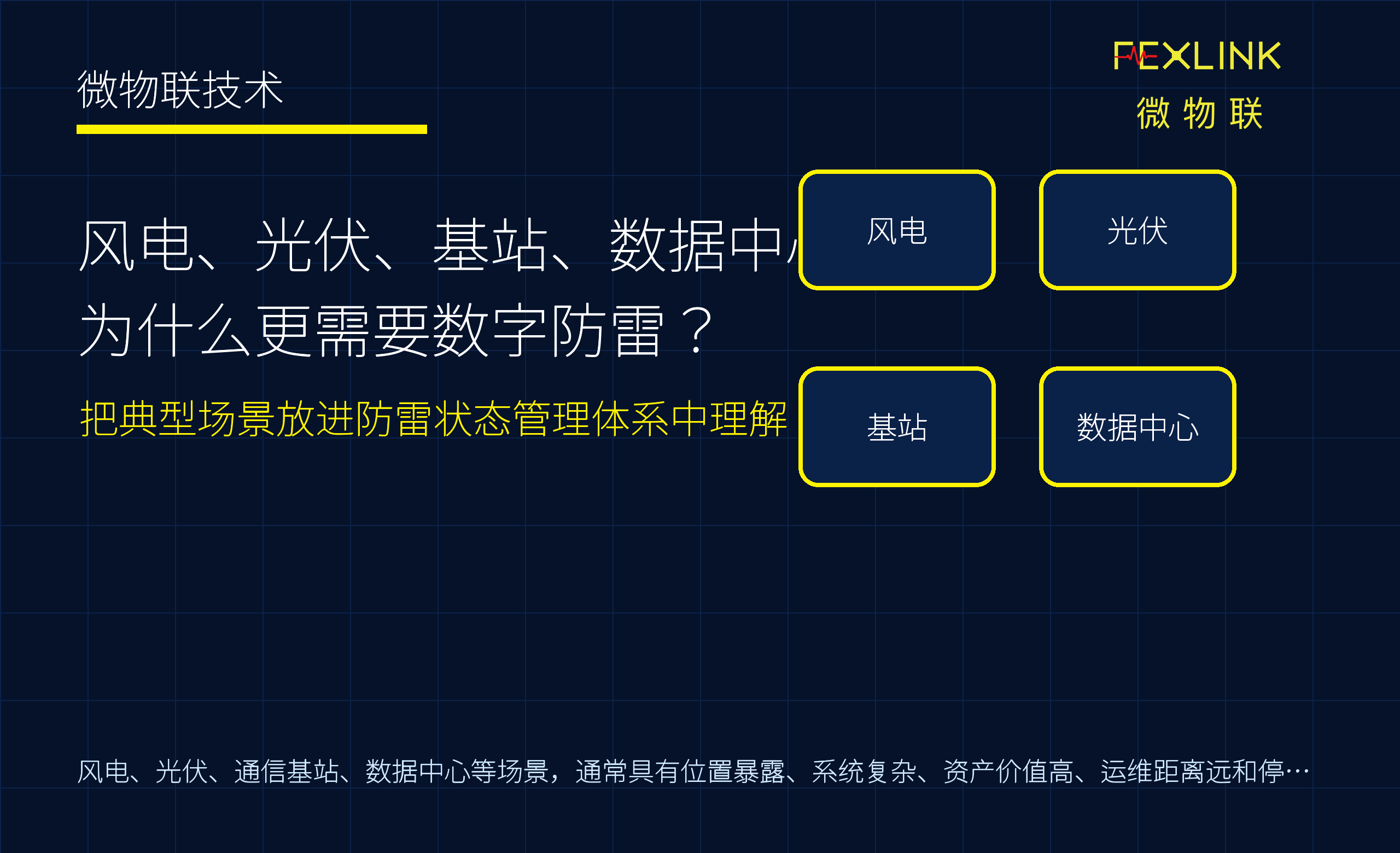
Abstract: Wind power, photovoltaic, communication base stations and data centers all have one thing in common: important assets, complex environments, and long operation and maintenance distances. Once lightning strikes, surges, SPD degradation, or grounding anomalies are not discovered in time, the impact may not be on a single device, but on site operations, equipment reliability, and business continuity.
Not all scenarios have the same demand for digital lightning protection. Some ordinary buildings can meet basic requirements through standardized design, regular testing and manual inspection. However, in scenarios such as wind power, photovoltaic, communication base stations and data centers, relying solely on traditional methods is often not enough.
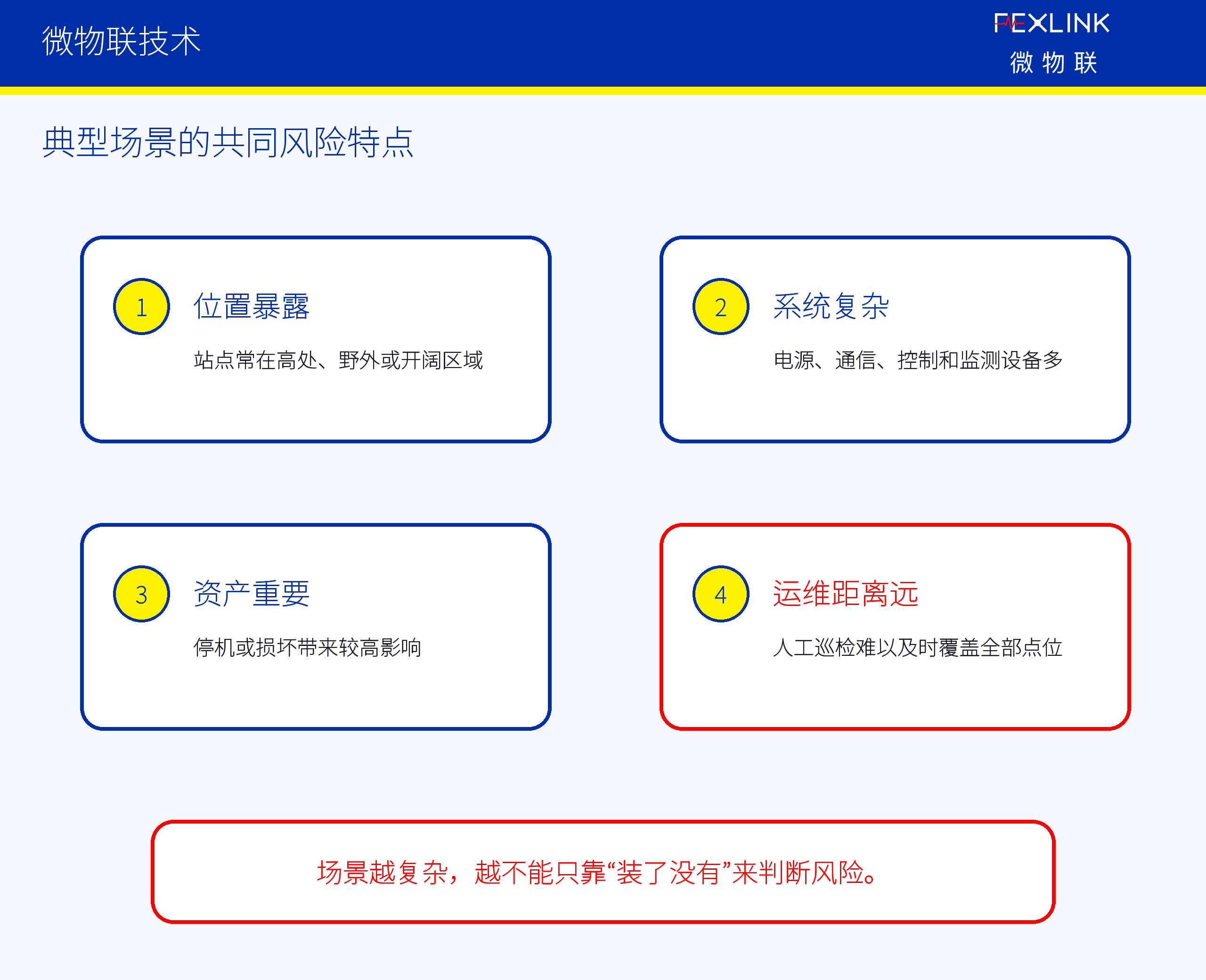
These scenarios have obvious common characteristics: exposed locations, scattered equipment, high asset value, difficult operation and maintenance, and high downtime costs. The value of digital lightning protection is to make lightning strikes, protection status, and operation and maintenance processes visible in these complex scenarios.
1. Why are the risks more prominent in these scenarios?
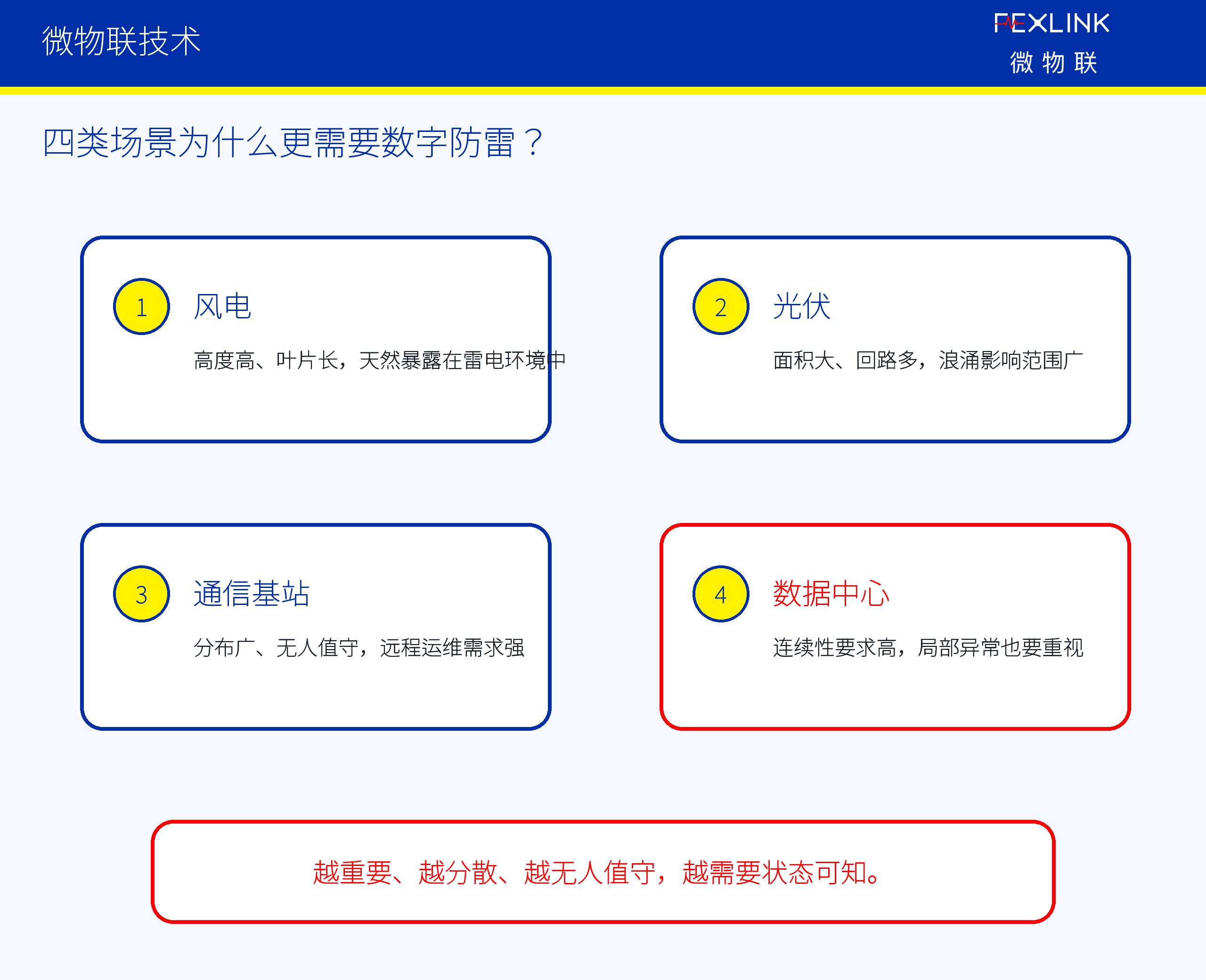
Wind turbines are high and the blades and towers are naturally exposed to lightning. The photovoltaic power station has a large area, and the DC side, AC side and communication links are widely distributed. There are a large number of communication base stations and their locations are scattered, and many sites are unattended. Data centers are densely equipped and have extremely high requirements for power supply continuity and environmental stability.
Once lightning strikes or surges occur in these scenarios, problems may quickly extend from lightning protection devices to business systems. Equipment damage, communication interruptions, loss of power generation, maintenance downtime and liability tracing will all bring higher costs.
2. Why is it difficult for traditional inspections to cover these scenarios?
Manual inspection is suitable for regular inspections, but it is difficult to cover scattered assets and random lightning strikes. The wind turbines are at high altitude, there are many photovoltaic points, the base stations are widely distributed, and the data center system is complex, any link may become a blind spot.
Especially in unattended or sparsely attended scenarios, if there is no online record of lightning strikes, whether the SPD operates, and whether the grounding status changes, the operation and maintenance personnel can often only wait for the equipment to become abnormal before tracing.
3. The monitoring focus in different scenarios is not the same.
Wind power pays more attention to blade lightning protection channels, lightning current events and grounding paths; photovoltaic pays more attention to the zoning risks of array areas, combiner boxes, inverters, box-type transformers and grid-connected cabinets; base stations pay more attention to remote lightning strike records, SPD status and grounding trends; data centers pay more attention to the linkage between lightning protection status and power supply and distribution, UPS, and dynamic ring systems.
Therefore, digital lightning protection does not simply copy the same set of equipment to all scenarios, but selects monitoring objects, communication methods, alarm strategies, and operation and maintenance processes based on scenario risks.
4. What actual value can digital lightning protection bring?
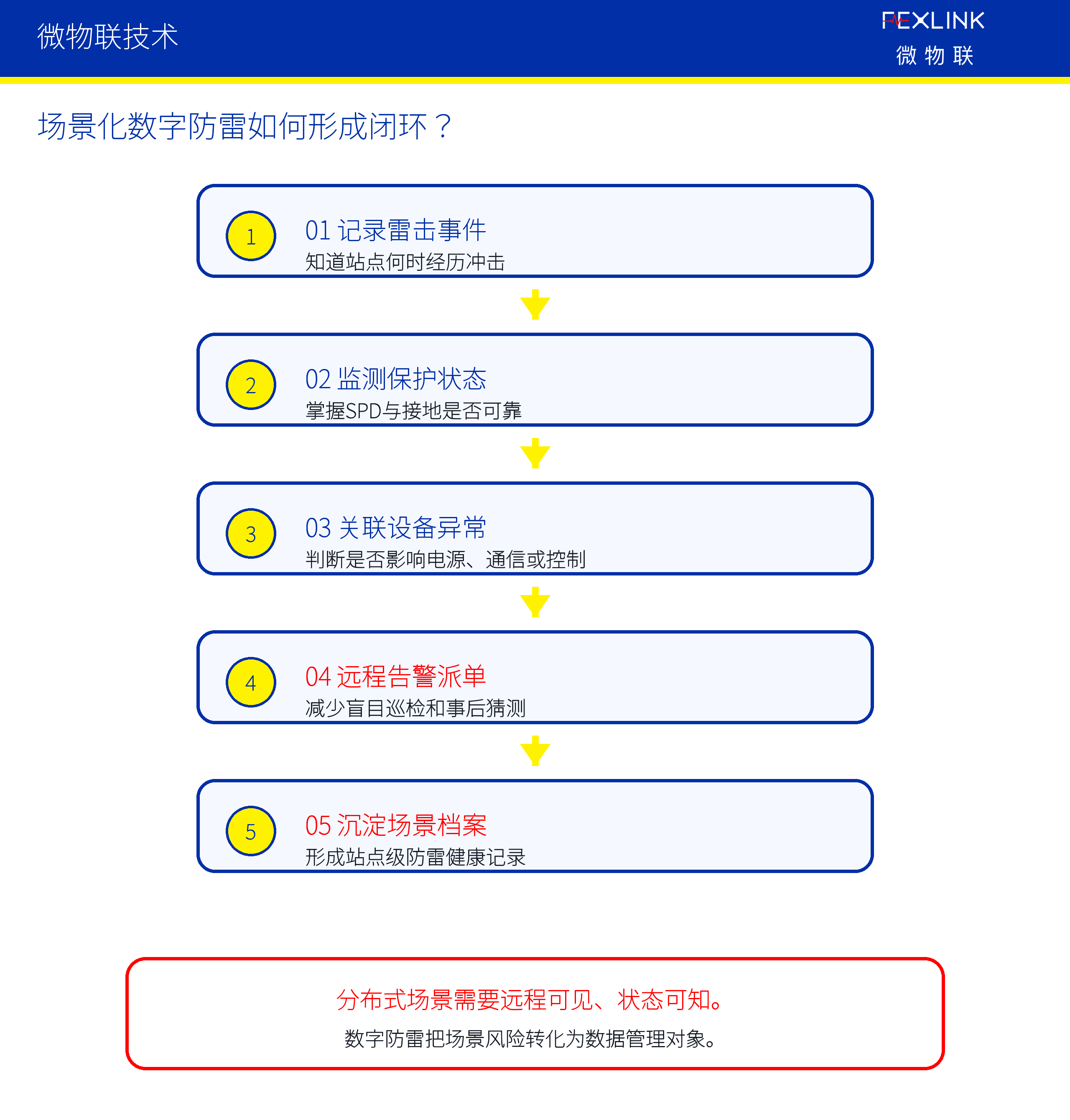
First, it allows lightning strikes and surge events to be recorded, eliminating the need to guess afterwards. Second, it enables remote visibility of SPD, ground and guard link status. Third, it can arrange inspections and maintenance according to risk levels, reducing blind dispatch of orders. Fourth, it can accumulate site files and provide a basis for subsequent transformation and responsibility tracing.
For these high-value, decentralized and continuous operation scenarios, digital lightning protection is not the icing on the cake, but a basic capability to reduce operational uncertainty.
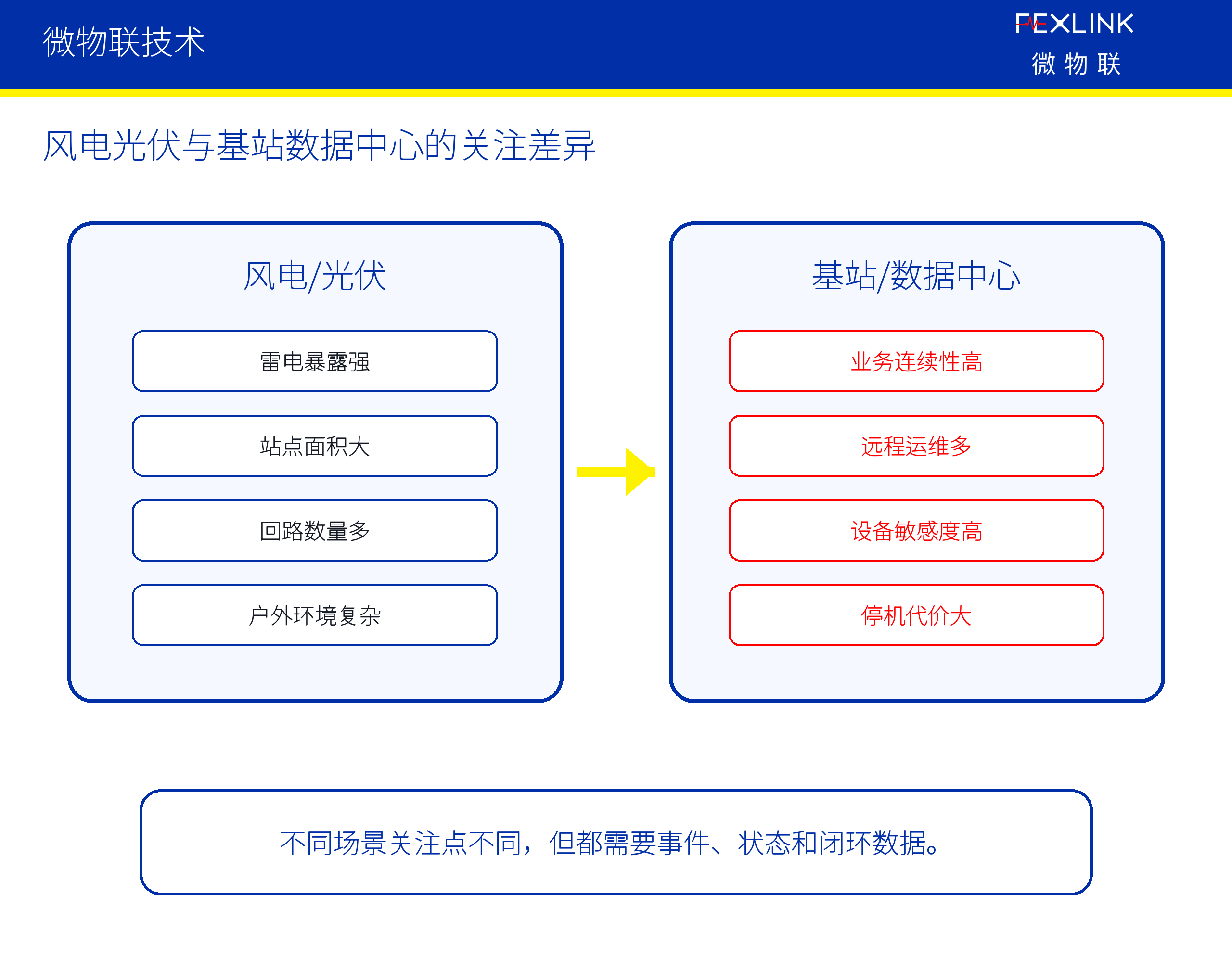
5. How does FEXLINK understand scenario-based digital lightning protection?
FEXLINK believes that digital lightning protection must start from the scene, not the device. Different scenarios have different lightning exposure, equipment sensitivity, operation and maintenance distance, and downtime costs, and the monitoring systems should also be different.
The goal of the FEXLINK digital lightning protection system is to combine lightning strike events, SPD status, grounding status, equipment alarms and operation and maintenance records to form long-term risk files for wind power, photovoltaic, base stations, data centers and other scenarios.

Conclusion: The more important the scene, the more the status needs to be known
When the asset value is high, the locations are scattered, and operation and maintenance are difficult, the lightning protection system cannot just remain "installed". It must continually demonstrate whether it remains reliable.
What digital lightning protection really solves is on-site uncertainty. It establishes data connections between lightning strikes, protection, grounding, and operation and maintenance, allowing lightning protection management in complex scenarios to move from experience to evidence.
FEXLINK technology will continue to share content related to intelligent lightning protection, early warning of electrical safety, digital power distribution, energy supervision and industrial Internet of Things.
FEXLINK/FEXLINK uses data to reconstruct energy efficiency and electrical safety.
Where there is electricity, there is FEXLINK.