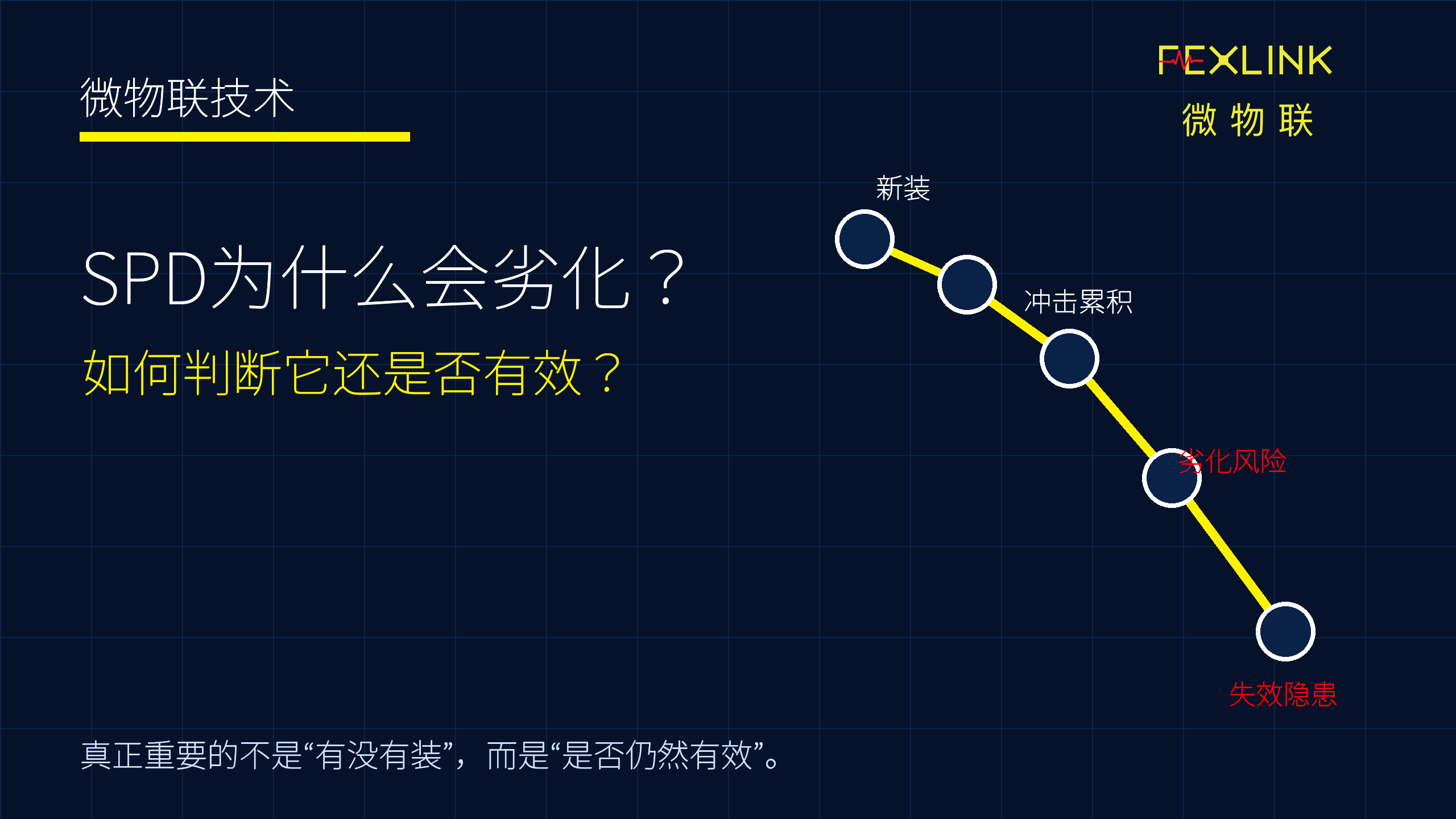
Many people's understanding of SPD is still that "a lightning protector is installed in the distribution cabinet".
But SPD is not a device that will be effective forever after being installed. During long-term operation, it will continue to withstand lightning strikes, operating overvoltage, induced surges and environmental influences.
These effects will not cause the SPD to be damaged immediately every time, but will continue to consume its protection margin.
Therefore, to judge whether SPD is reliable, we should not just look at "whether it is installed", but also look at "whether it is still valid".
1. What is SPD degradation?
SPD degradation can be understood as the process of gradual decline in the performance of the SPD's internal protection devices.
When newly installed, the SPD has a certain current flow capacity and protection level, and can act quickly when a surge occurs to limit the overvoltage within the equipment's tolerable range.
However, as lightning strikes and surge impacts continue to occur, the performance of the internal components of the SPD will change. In the short term, it may not have completely failed; in the long term, its protective capabilities may have declined.
The most troublesome thing about this type of change is that it may not be as obvious as a tripping switch, nor may it be discovered in time by manual inspections.
2. Why does SPD deteriorate?
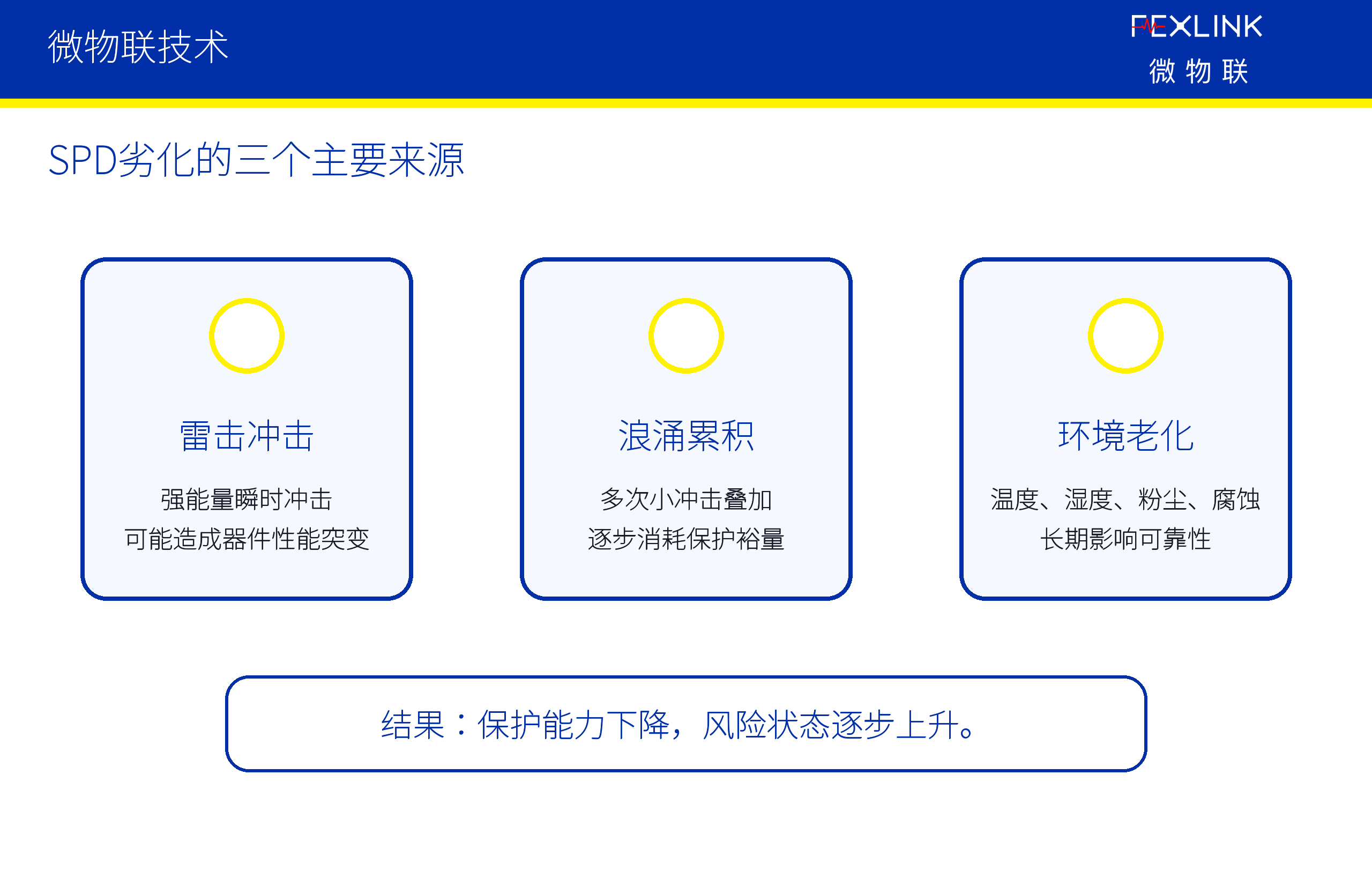
SPD degradation usually comes from three aspects.
The first is lightning strike impact. The surge energy caused by a strong lightning strike may have a significant impact on the SPD.
The second is surge accumulation. Many sites may not always encounter direct lightning strikes, but long-term small surges, operating overvoltages and induced shocks will gradually consume the life of SPDs.
The third is environmental aging. Factors such as temperature, humidity, dust, corrosion, loose terminals, etc. will also affect the long-term reliability of SPD.
Therefore, SPD does not only have two states: "good" and "bad", but there is also a process of gradual deterioration and rising risks.
3. What risks will arise after SPD deteriorates?
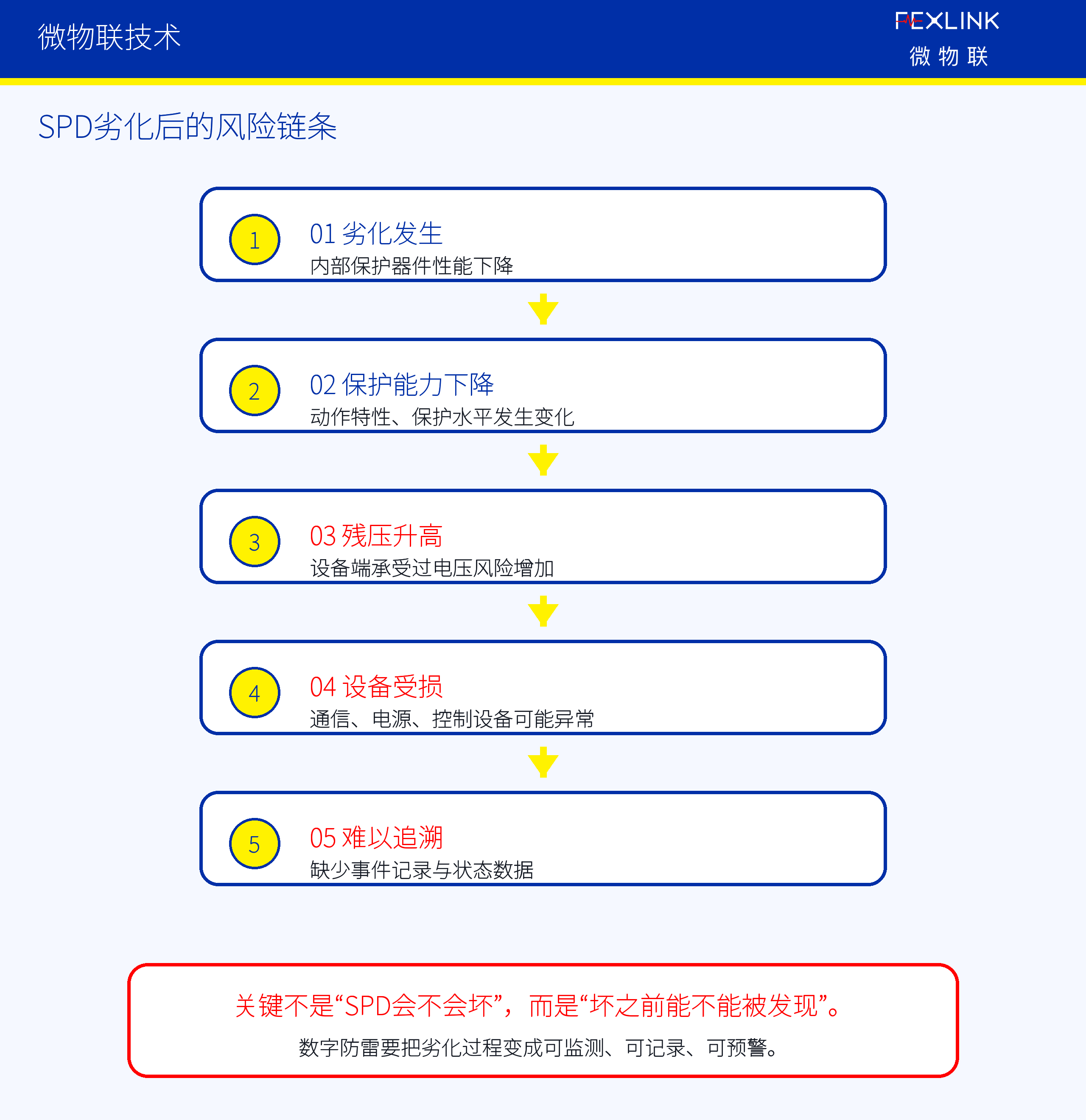
After the SPD deteriorates, the first thing that is affected is the protection ability.
When the SPD protection capability decreases, the actual residual voltage endured by the equipment may increase, making sensitive equipment more susceptible to surge effects.
This risk requires particular attention in scenarios with a large number of communication, power, control, monitoring and automation equipment.
More importantly, without event records and status data, it is difficult to tell clearly after the equipment is damaged: Did it experience a lightning strike before the damage? Has the SPD deteriorated? Is the grounding status normal?
This is the traceability problem that traditional lightning protection often encounters.
4. Why is it difficult for traditional inspections to detect in time?
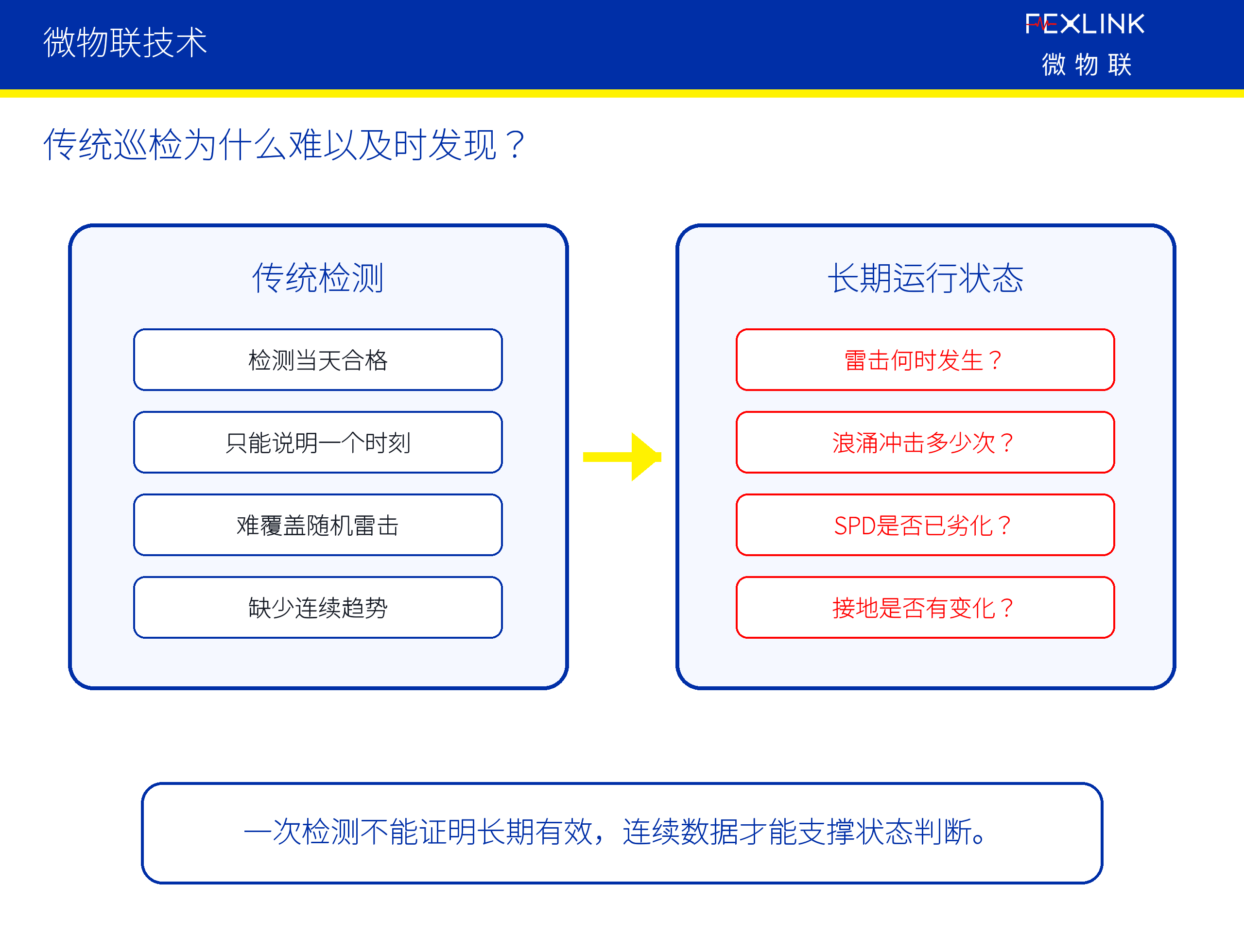
Traditional inspections and periodic inspections are valuable, but they more reflect the status of a certain moment.
Passing the test on the day does not mean that it will still pass after every subsequent lightning strike and surge.
The problem at many sites is not “no detection at all” but rather that the detection frequency cannot cover random lightning strikes and surge events.
If an SPD deteriorates between inspections and there is no online condition monitoring on site, the risk may remain invisible for a long time.
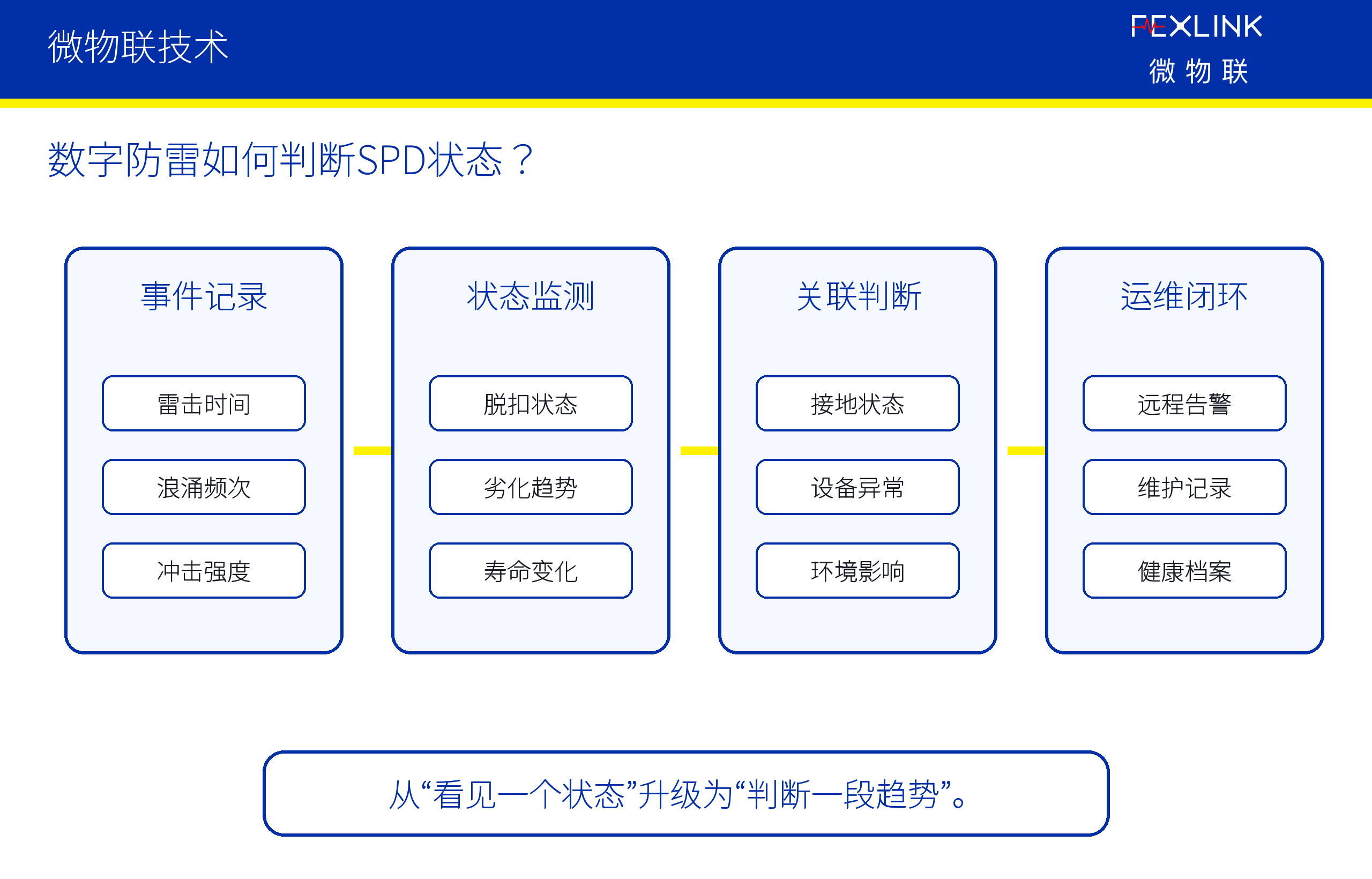
5. How to judge SPD status in digital lightning protection?
The core of digital lightning protection is not to simply install an additional display module, but to establish a data system for SPD status and lightning protection events.
At least four types of information need to be recorded: lightning strikes and surge events, SPD's own status, related status such as grounding and environment, as well as alarm handling and operation and maintenance records.
In this way, the site no longer just sees the result of "whether there is a trip or not", but can judge whether the risk is rising based on events, status and trends.
From a management perspective, the value of SPD online monitoring is to upgrade the lightning protection system from one-time detection results to long-term operation files.
6. How does FEXLINK understand SPD health records?
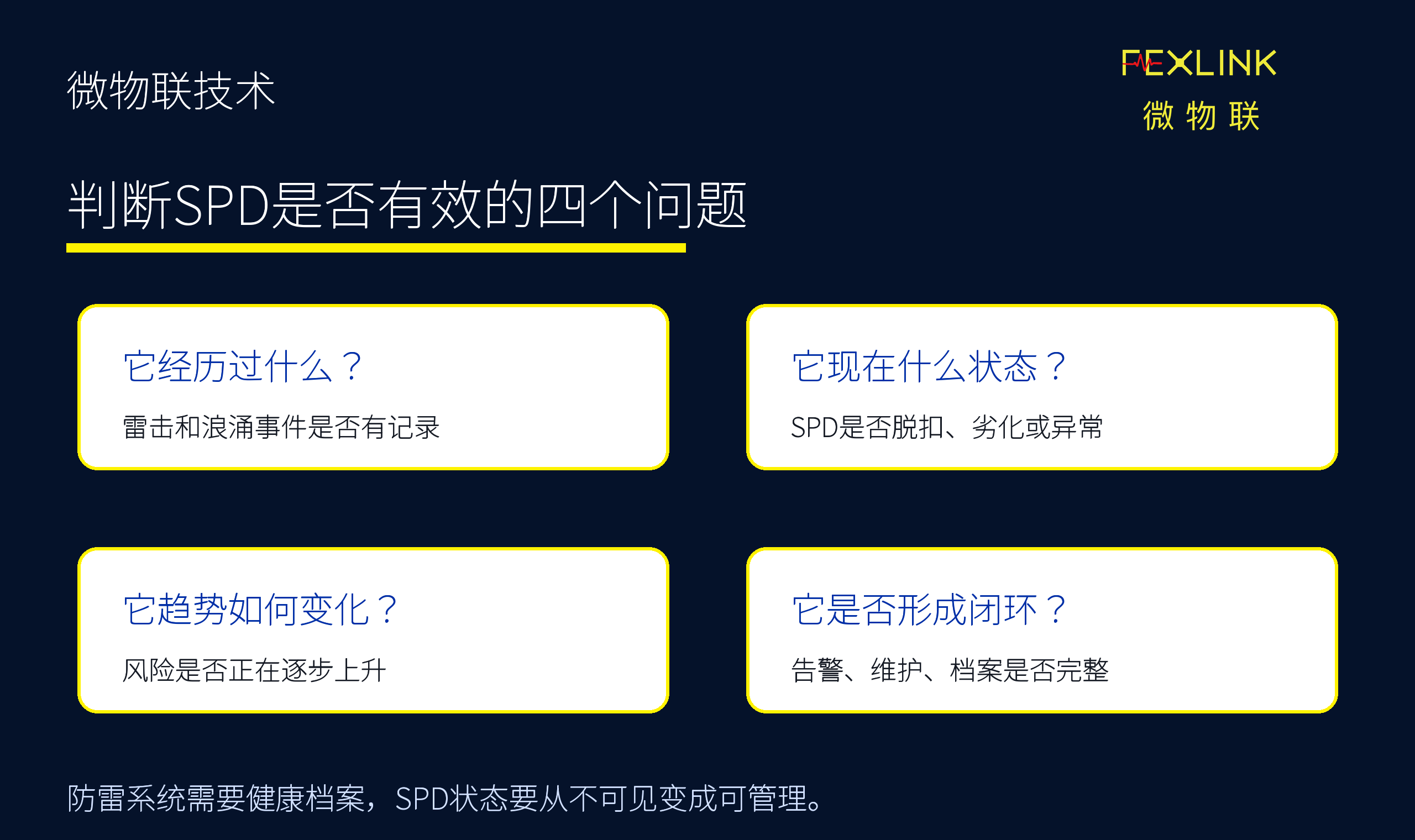
FEXLINK believes that SPD online monitoring should not just stop at “seeing a state”, but should form a traceable health record.
This file should record what the SPD has experienced, what its current status is, how risk trends have changed, and whether a closed loop of alarms and operation and maintenance has been formed.
With this data, lightning protection operation and maintenance can move from "taking a look at it regularly" to "dealing with it in a timely manner when risks change."
This is also the long-term value of digital lightning protection: allowing the lightning protection system to continuously produce data and making the risk status manageable.
Conclusion: SPD requires not just installation records, but health records
SPD will degrade, this is a normal engineering fact.
The real question is not whether the SPD will age, but whether the deterioration process is visible, whether the rising risk can be discovered, and whether the operation and maintenance handling is based on evidence.
Traditional lightning protection focuses on "whether it is installed", while digital lightning protection pays more attention to "whether it is still effective".
In the future, lightning protection systems need to move from equipment lists to status files, and from manual experience to data judgment.
FEXLINK technology will continue to share content related to intelligent lightning protection, early warning of electrical safety, digital power distribution, energy supervision and industrial Internet of Things.
FEXLINK/FEXLINK uses data to reconstruct energy efficiency and electrical safety.
Where there is electricity, there is FEXLINK.