Abstract: After a lightning strike, operation and maintenance personnel should not only check whether the equipment is damaged, but should immediately check the lightning strike event, SPD status, grounding status, equipment alarms and operation and maintenance disposal records. Only by stringing together these data can we judge the risk impact and next-step processing priorities.
After a lightning strike, two misjudgments are most likely to occur at the scene: one is to see that the equipment is not broken for the time being, and it is believed that there is no impact; the other is to directly determine that the equipment is abnormal and is damaged by lightning strikes. To make a truly reliable judgment, you should first look at the data link.
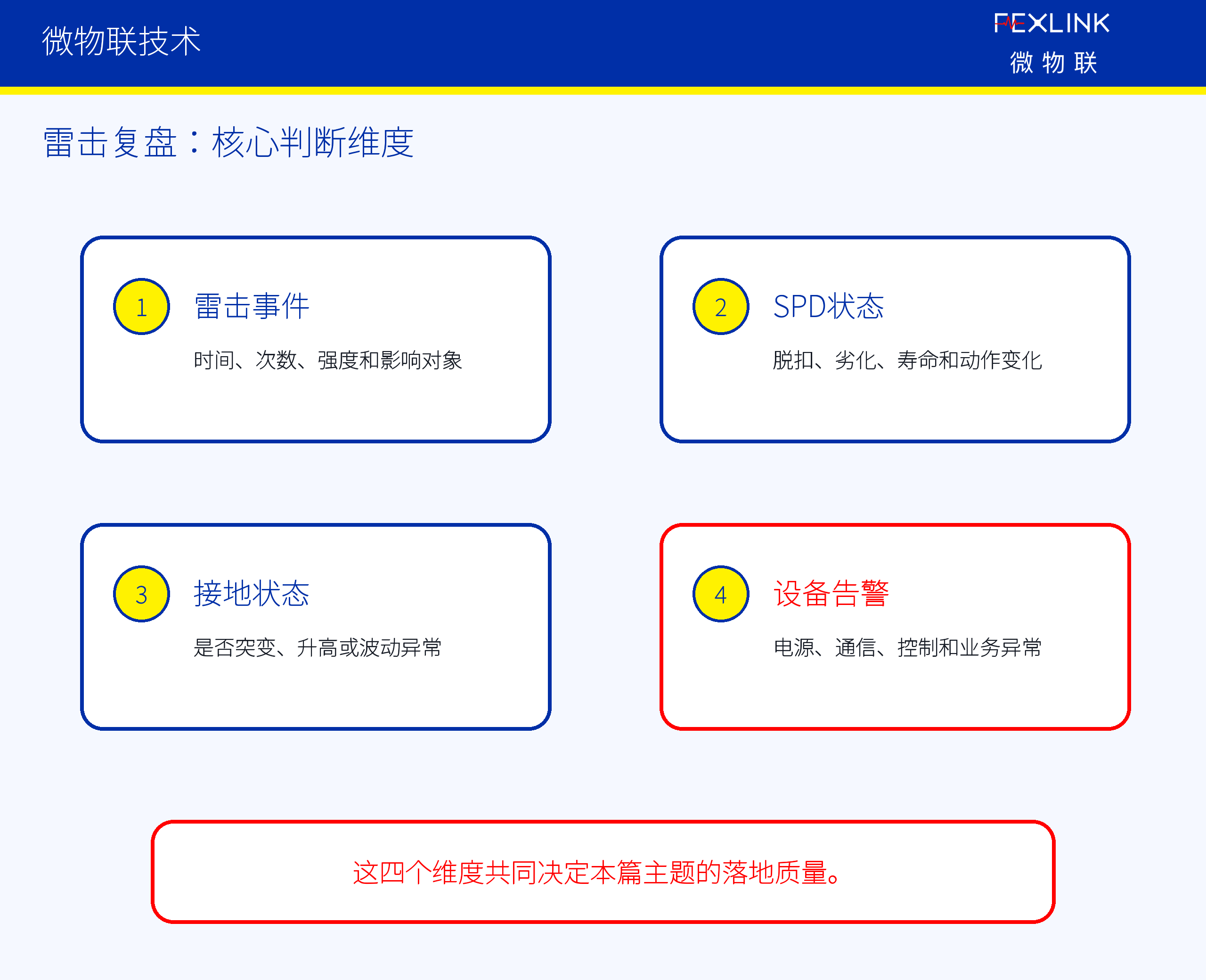
This data link at least includes lightning strike time, impact intensity, SPD status, grounding changes, equipment alarms and maintenance records. Only by putting this information together can we judge whether the lightning strike had any impact, where it was affected, and whether it needs to be dealt with immediately.
1. First, let’s look at the lightning strike incident itself.
Lightning strike event data is the starting point for review. Operation and maintenance personnel should first look at the event occurrence time, number, peak value or intensity level, and whether it is concentrated at a certain site or a certain downline.
If the abnormal time of the equipment is highly consistent with the lightning strike event, you need to continue to check the protective link; if the time does not match, you need to make careful judgments to avoid attributing all problems to lightning strikes.
2. Check whether the SPD status has changed.
After a strong impact, the SPD may not have completely failed, but the protective capability may have been reduced. It is not enough to just look at whether it has tripped. We also need to look at the deterioration trend, historical impact, temperature rise and alarm records.
If the lightning strike intensity is high and the SPD status is abnormal, the site should prioritize review to determine whether it needs to be replaced or further tested.
3. Synchronously check whether the grounding state is stable
The grounding system is the lightning current discharge path. After a lightning strike, if the grounding status suddenly changes, fluctuates, or rises abnormally, it indicates that there may be a problem with the discharge path.
Abnormal grounding may not necessarily cause equipment damage immediately, but it will reduce the system protection margin. For important sites, it is critical to review the grounding status after a lightning strike.
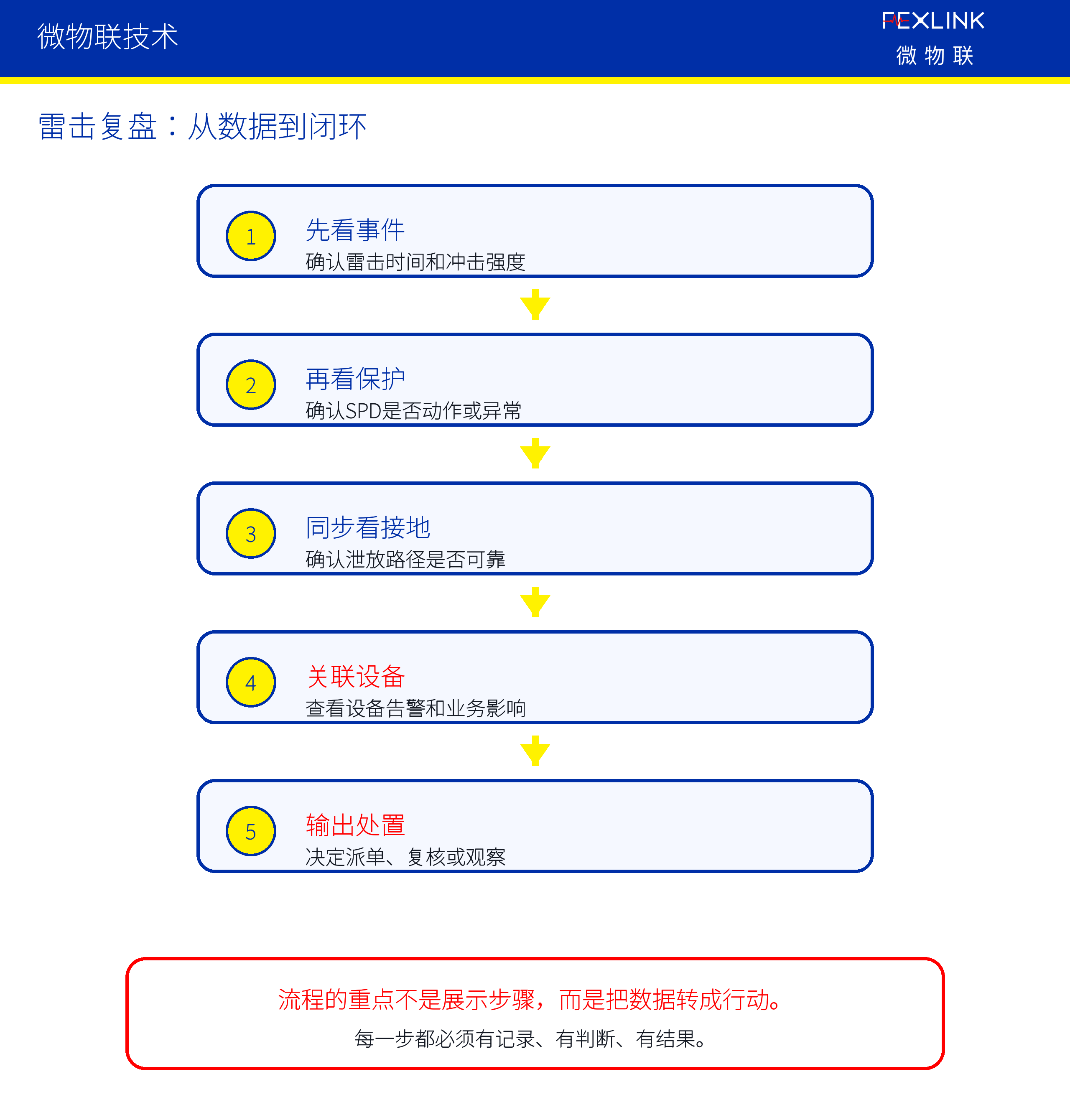
4. Final associated equipment alarm and disposal records
Lightning surges can affect power, communications, control and security equipment. The platform should align lightning protection events with equipment alarm timelines to determine whether there is a correlation.
If lightning strikes, SPD abnormalities, grounding abnormalities and equipment alarms occur at the same time, priority should be given to dispatching orders; if there are only minor events and the status is normal, observation and file recording can be entered.
5. How does Micro-IoT understand data review after lightning strikes?
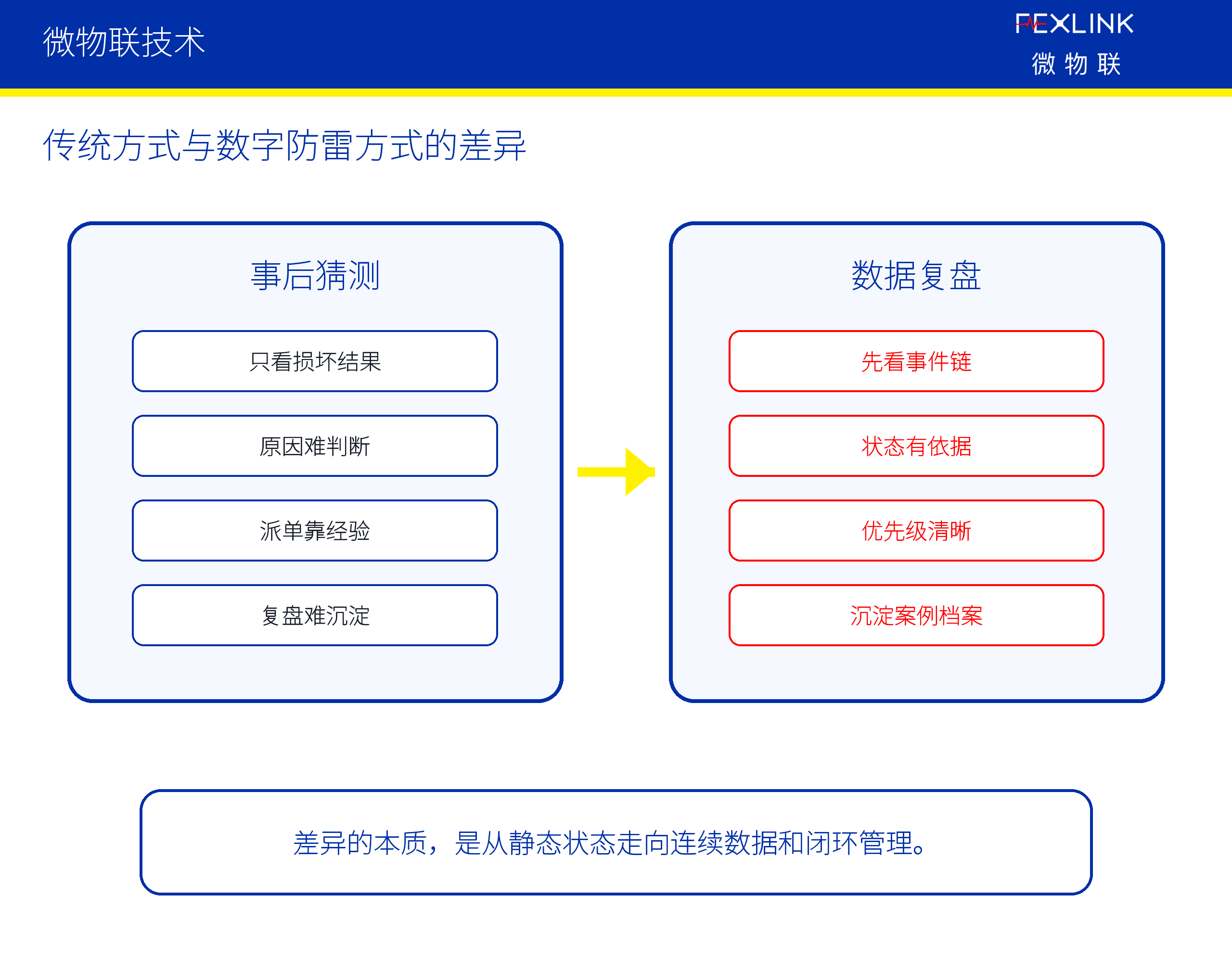
Micro-IoT believes that after a lightning strike, we should not only look at the results, but also look at the entire process of incident, protection, release, impact and disposal. FEXLINK digital lightning protection system hopes to enable every lightning strike to be explained through event files.
The value of lightning review is not to pursue accountability itself, but to help determine risks on site, optimize operations and maintenance, and improve the protection system.

Conclusion: After a lightning strike, look at the data first and then make a judgment
Lightning strikes are not an isolated number, but the starting point of a risk chain. Only by correlating lightning strikes, SPD, grounding, equipment and operation and maintenance records can we truly move from second-guessing to data review.
FEXLINK technology will continue to share content related to intelligent lightning protection, early warning of electrical safety, digital power distribution, energy supervision and industrial Internet of Things.
FEXLINK/FEXLINK uses data to reconstruct energy efficiency and electrical safety.
Where there is electricity, there is FEXLINK.