Abstract: Traditional lightning protection operation and maintenance often encounters a problem: after the equipment is damaged, it is difficult to tell clearly what happened before the accident, what state the lightning protection system was at that time, and whether the scene has been processed. Digital lightning protection requires the establishment of event files and a closed loop of operation and maintenance, so that every lightning strike, every abnormality, and every disposal is recorded.
Many lightning protection problems are not caused by the lack of equipment installed, but by unclear explanations after the accident. Was there a lightning strike before the equipment was damaged? Has the SPD deteriorated? Is the grounding abnormal? Has the alarm been handled? In the absence of event files, these issues can often only be judged by experience.
What digital lightning protection needs to solve is not only to detect anomalies, but also to turn anomalies into a traceable, disposable, and reviewable management process.
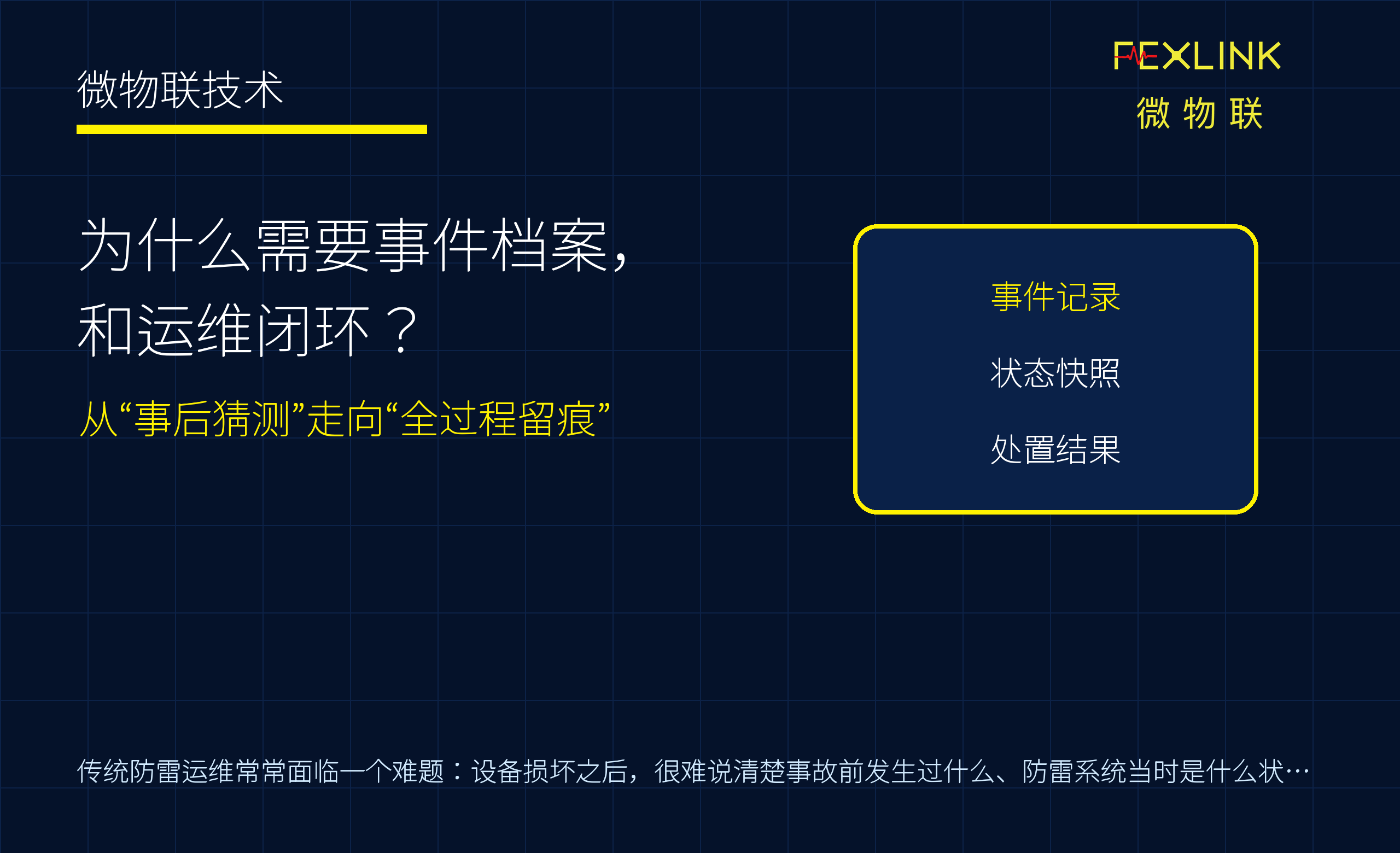
1. Why is it often difficult to explain clearly after an accident?
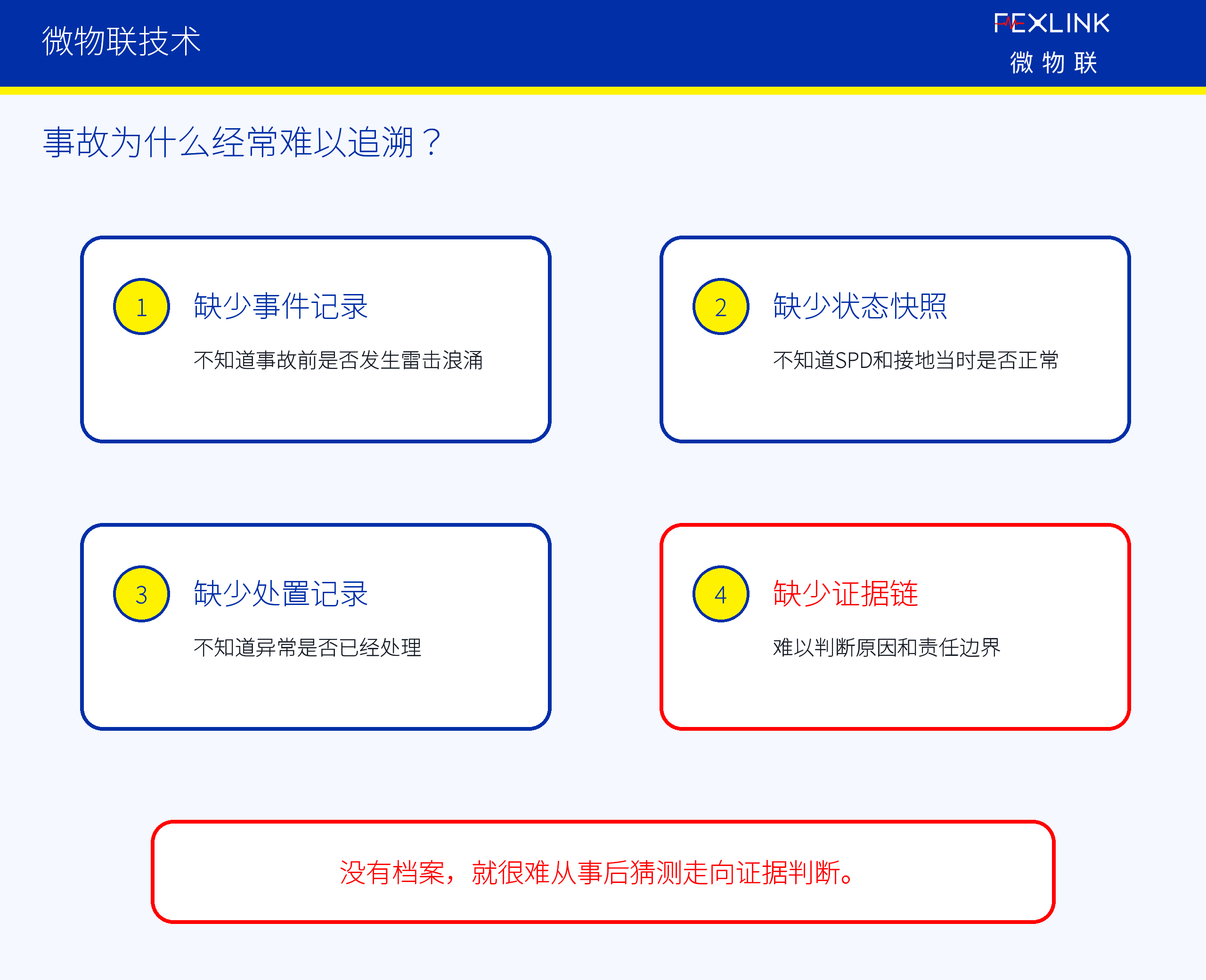
After an accident, the most common problem at the scene is an incomplete chain of evidence. There is no record of lightning strike events, no snapshot of SPD status, no trend in grounding changes, equipment alarms and lightning protection events cannot be corresponded, and there is no closed loop of maintenance actions.
In this case, it is difficult to define responsibilities, analyze the causes, and make rectifications likely to remain at the level of experience. Even if the SPD is changed or tested again, it is difficult to summarize why the problem occurred.
2. What should be recorded in event files?
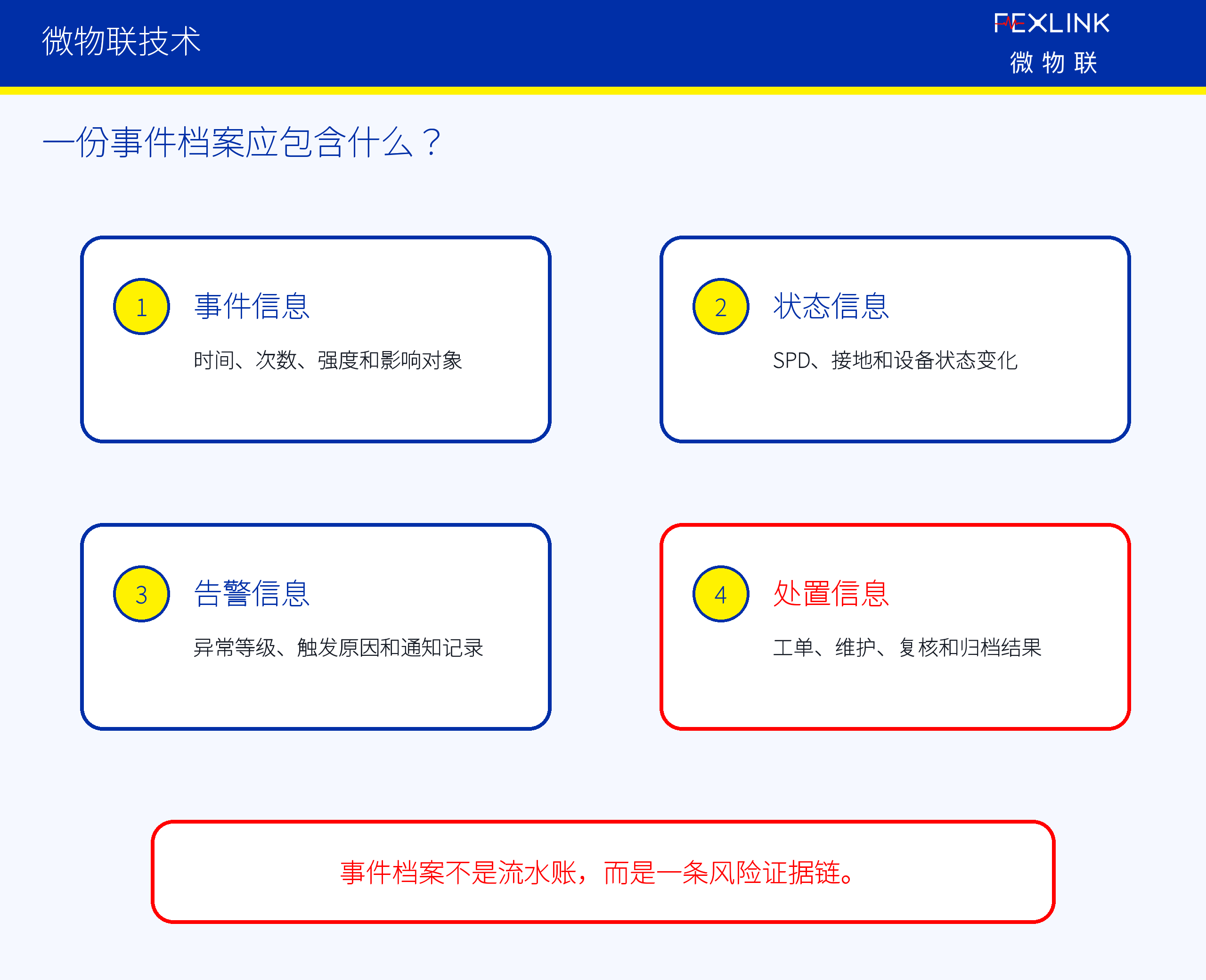
The event file must first record lightning strikes and surge events, including time, number, intensity, affected objects and sustained characteristics. Secondly, record the SPD status, grounding status, equipment alarms and platform notifications before and after the event.
A more complete file should also include the on-site handling process: who received the alarm, when it was handled, what measures were taken, whether it was reviewed, and whether the results were archived.
3. Why is closed loop more important than alarm?
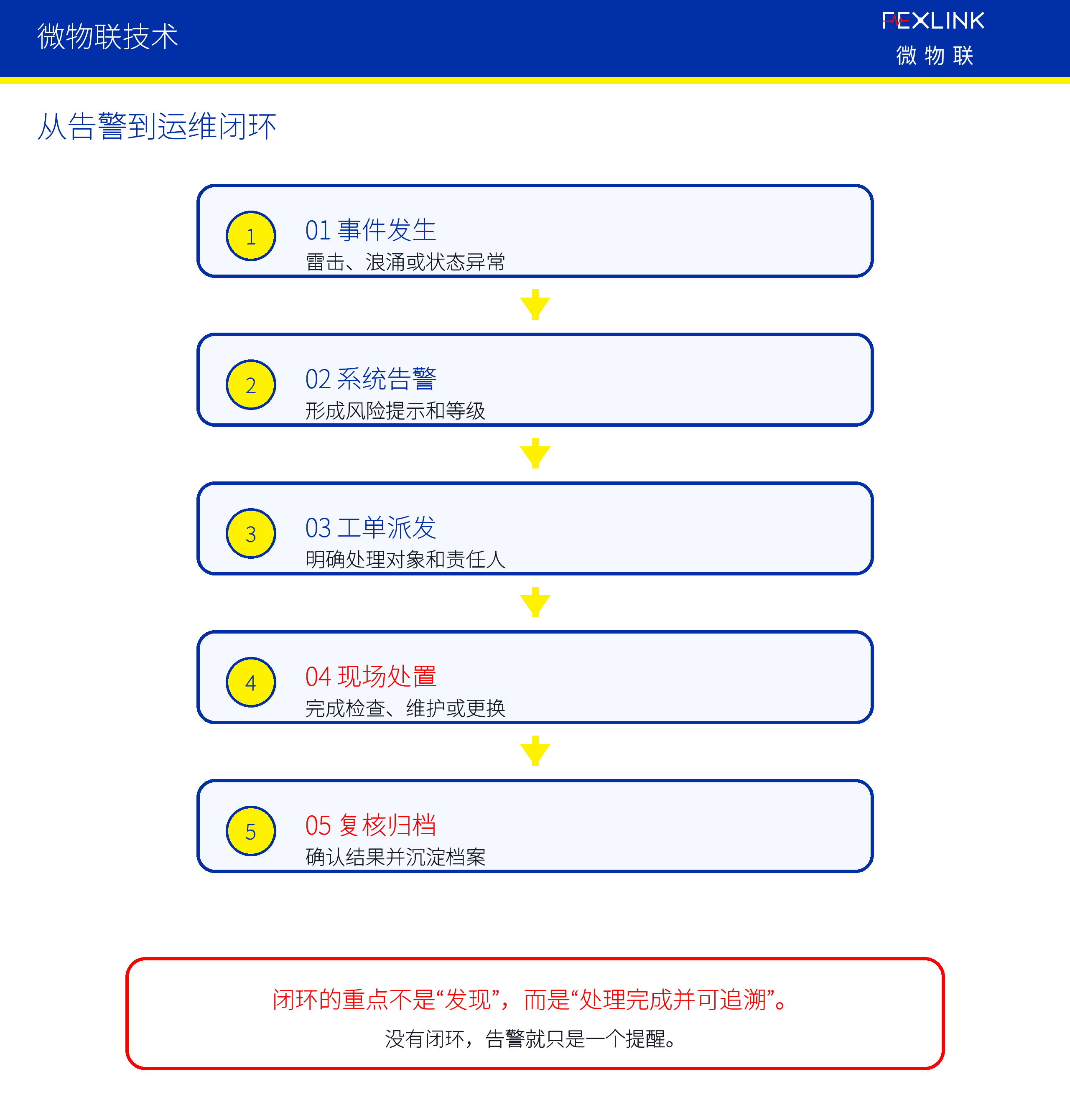
Alarms are just the starting point, not the end. If the platform only pushes exceptions but does not have work orders, responsible persons, processing time limits and review results, risks are not truly managed.
The value of closed loop lies in turning "finding problems" into "dealing with problems and leaving evidence". For large-scale sites, there is no closed loop. The more alarms there are, the more chaotic the management will be.
4. How to reversely optimize operation and maintenance of event files?
Long-term files can help managers identify high-lightning strike sites, high-degradation SPD, high-fluctuation grounding grids, and high-frequency dispatch areas.
This information can reversely optimize inspection plans, spare parts configuration, rectification priorities and site transformation strategies. The event file ultimately becomes the health history of the lightning protection system.
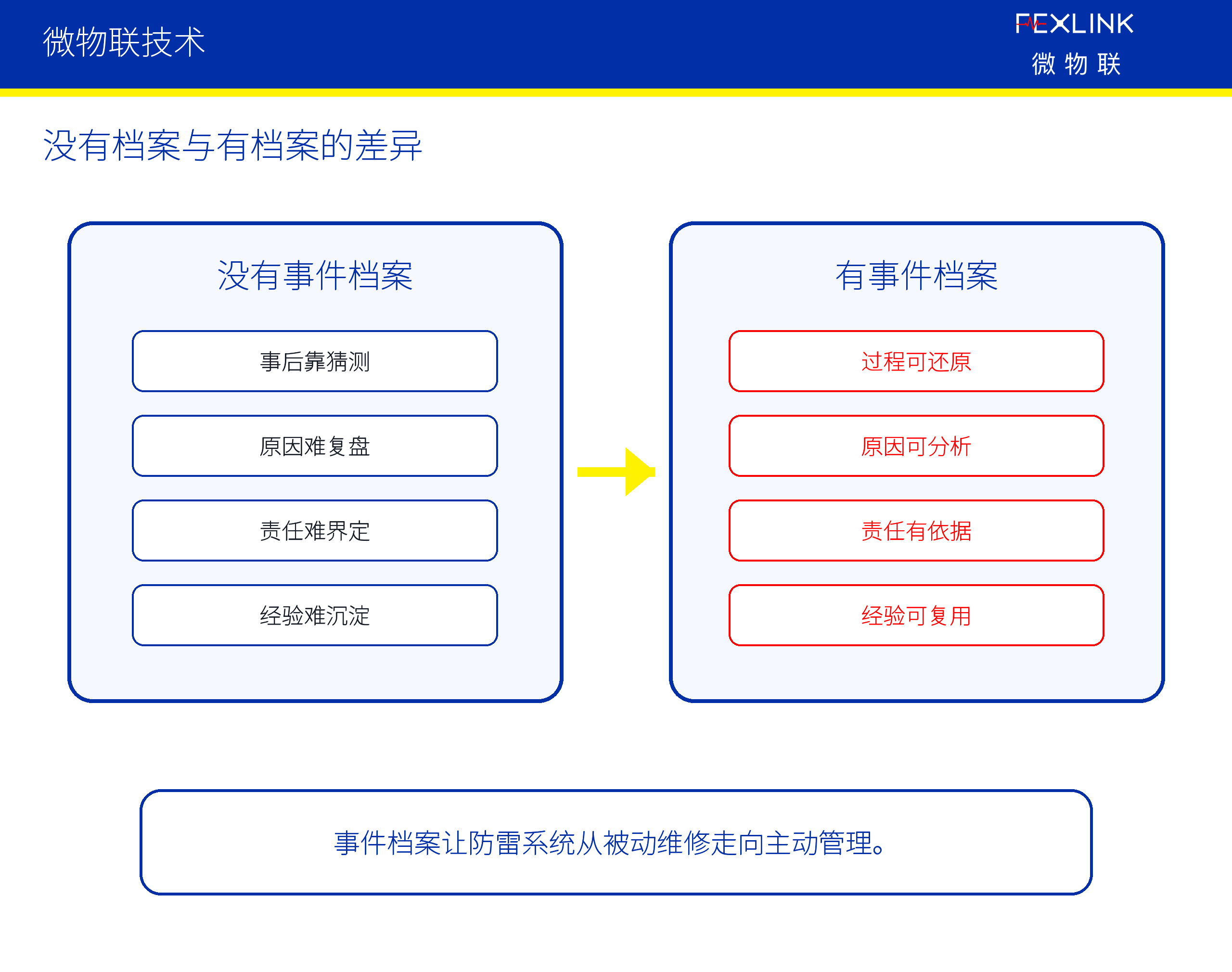
5. How does FEXLINK understand event files and operation and maintenance closed loops?
FEXLINK believes that the digital lightning protection platform cannot just stop at data display. A truly valuable platform should connect event recording, status judgment, alarm classification, work order dispatch, on-site processing and review and archiving.
FEXLINK digital lightning protection system emphasizes "data turns into action". Only when the alarm enters a closed loop can the lightning protection system move from passive maintenance to active management.
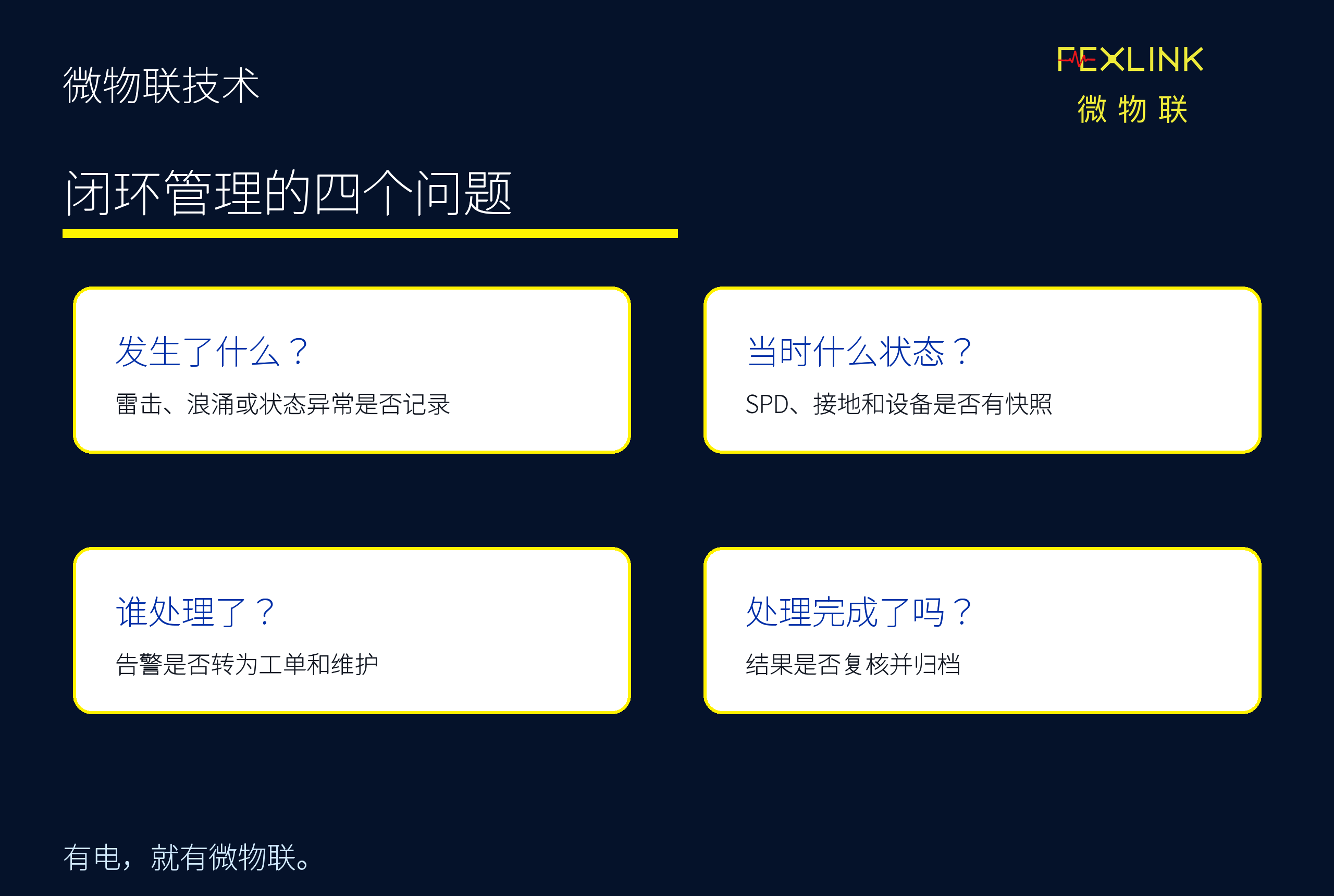
Conclusion: Without files, it is difficult to trace; without closed loop, it is difficult to manage
During the long-term operation of the lightning protection system, any key events should not remain in the on-site memory. Lightning strikes, surges, SPD abnormalities, grounding changes and maintenance actions should all become traceable data.
Event files allow accidents to be reviewed, and closed-loop operations and maintenance allow risks to be managed.
FEXLINK technology will continue to share content related to intelligent lightning protection, early warning of electrical safety, digital power distribution, energy supervision and industrial Internet of Things.
FEXLINK/FEXLINK uses data to reconstruct energy efficiency and electrical safety.
Where there is electricity, there is FEXLINK.