Introduction
In the past, understanding lightning protection mainly revolved around three questions: Is there a lightning rod? Is there grounding? Are SPDs (Surge Protective Devices (SPDs)) installed? These are certainly important. But today, merely answering "is it installed?" is no longer enough. Because what truly determines whether a lightning protection system is reliable is not just the devices themselves, but whether these devices remain in an effective state throughout their long-term operation.
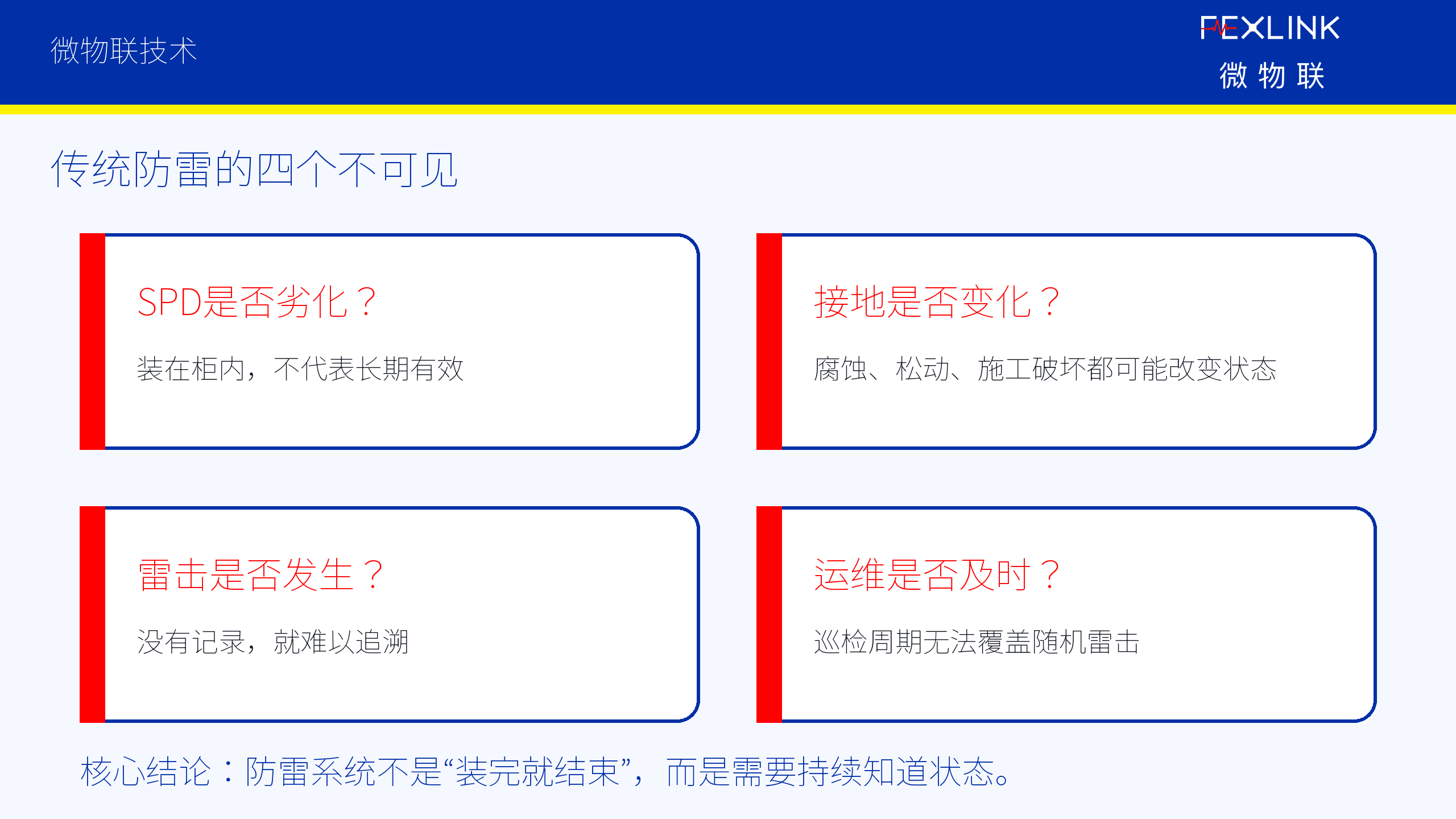
For example: Has the SPD degraded? Has the grounding status changed? Has the site experienced lightning strikes? How many surge impacts have occurred? Has the lightning protection system issued timely alarms? Do maintenance personnel know that risks are rising?
These questions are difficult for traditional lightning protection to answer. And this is exactly what digital lightning protection aims to solve — the problems that were previously "invisible, unquantifiable, and unmanageable."
1. What Does Traditional Lightning Protection Solve?
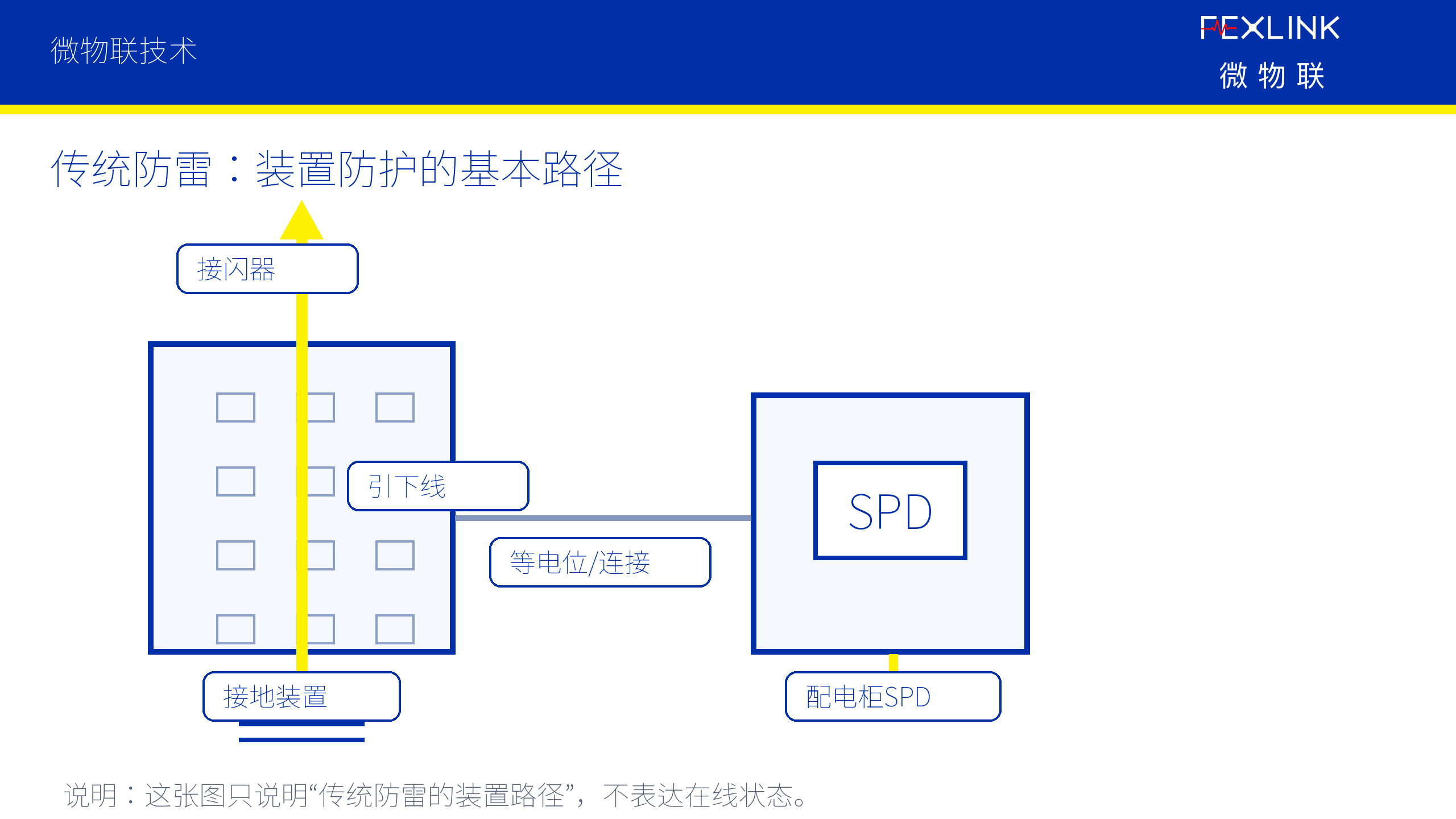
Traditional lightning protection is not without value. On the contrary, it is the foundation of lightning protection engineering. A complete lightning protection system typically includes: air termination systems, down conductors, grounding systems, equipotential bonding, SPDs (SPDs), and lightning protection inspection and maintenance. These components work together to reduce the harm caused by lightning to buildings, personnel, equipment, and electrical systems. What traditional lightning protection solves is a critical question: when lightning strikes, does the system have basic protective capability? However, the problem is that many lightning protection systems enter a long-term "invisible" operating state after construction. The system may have been compliant at project handover. It may have been compliant on inspection day. But after one year, three years, or five years of operation, whether the system remains reliable is not necessarily known in a timely manner. This is the limitation of traditional lightning protection.
2. What Is the Biggest Blind Spot of Traditional Lightning Protection?
The biggest blind spot of traditional lightning protection is not "not installed," but "status invisible." Many sites appear to have complete lightning protection systems: SPDs installed, grounding done, inspection reports available, and protection modules visible in distribution cabinets. But this does not mean the system is always effective. After long-term exposure to lightning strikes and surge impacts, internal components of SPDs may gradually degrade. Grounding connection points, long exposed to complex environments, may experience loosening, corrosion, or contact abnormalities. The site may have experienced lightning strikes, but no event records were generated. As a result, a typical phenomenon occurs in many scenarios: on the surface, lightning protection is installed, but in reality, the risk status is unclear. Traditional lightning protection solves the problem of "device existence." But it does not adequately solve the problem of "continuous status awareness."
3. What Is Digital Lightning Protection?
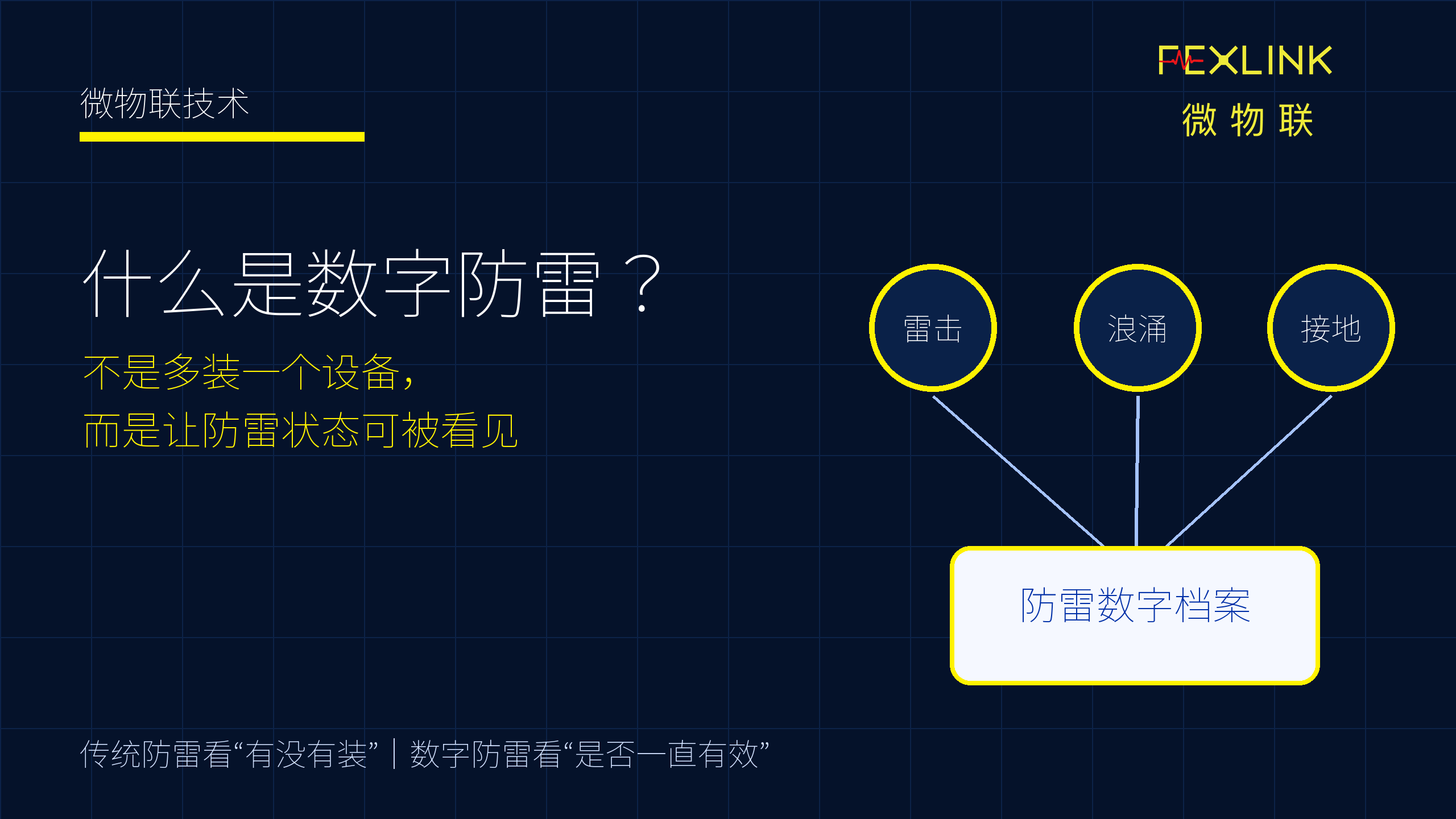
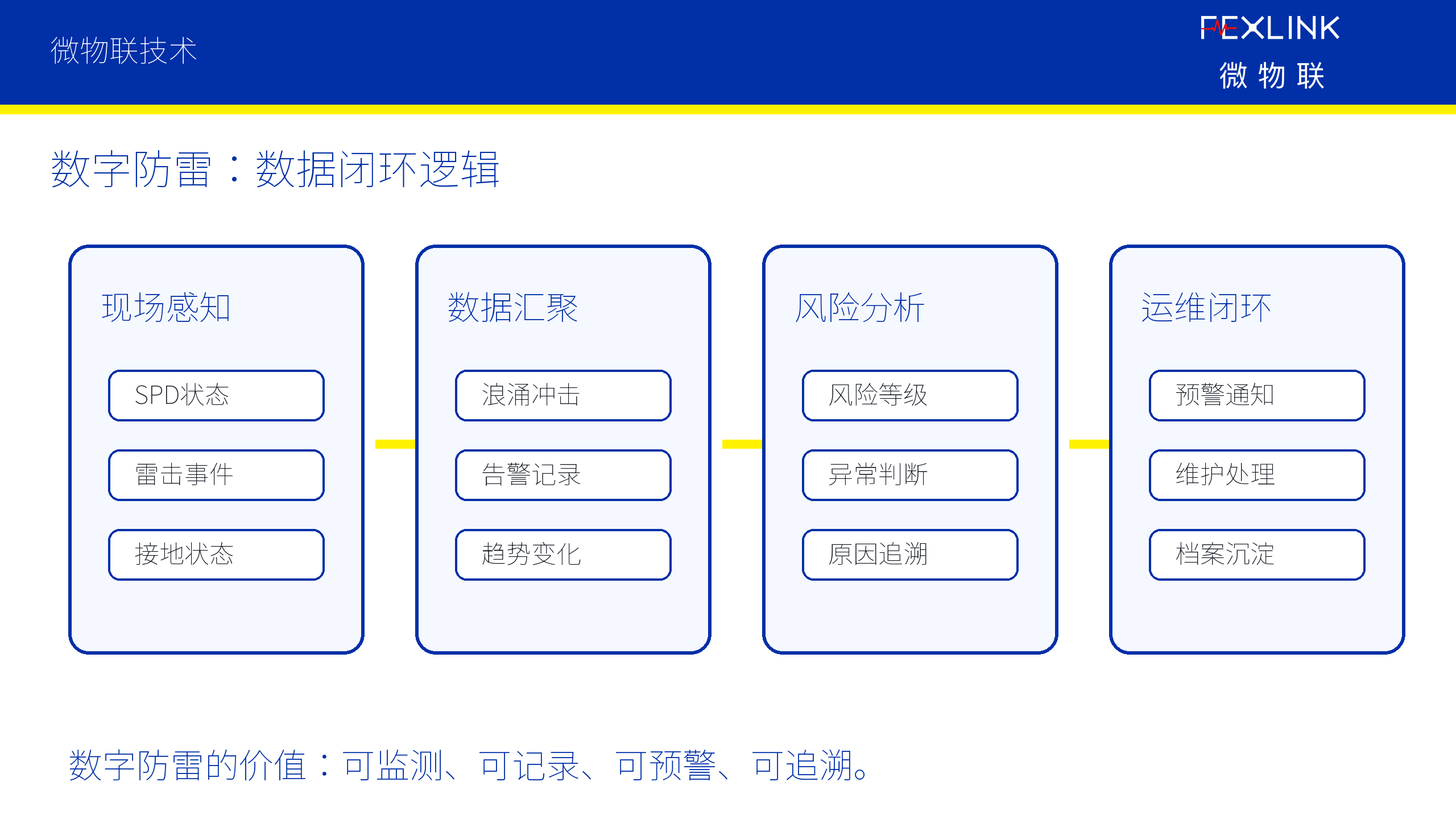
Digital lightning protection is not simply replacing traditional lightning protection devices with electronic devices. The core of digital lightning protection is transforming the operating status of lightning protection systems into data. Traditional lightning protection focuses on devices; digital lightning protection focuses on status. Traditional lightning protection focuses on project delivery; digital lightning protection focuses on full-lifecycle effectiveness. Digital lightning protection continuously captures these data points: lightning strike time, lightning strike count, surge impacts, SPD status, grounding status, alarm records, equipment status, maintenance records, and risk trends. As these data accumulate continuously, they form a "digital archive" of the lightning protection system. This digital archive can answer many questions that traditional lightning protection struggles with: Was there a lightning strike before equipment damage? Is the SPD abnormal? Has the grounding status changed? Which sites have higher risks? Which maintenance is more necessary? Digital lightning protection is not meant to replace traditional lightning protection, but to make traditional lightning protection systems perceivable, recordable, alarmable, and traceable.
4. Why Must We Pay Attention to Digital Lightning Protection Now?
An increasing number of scenarios require higher standards for continuous operation, online safety, and asset protection. Wind power, photovoltaics, communication base stations, data centers, energy storage, charging stations, and industrial park power distribution all need to more clearly understand the long-term status of their lightning protection systems. When problems occur, the impact is not just on a single lightning protection device, but on the operation, assets, maintenance, and liability traceability of the entire system. Therefore, the lightning protection industry is gradually shifting from "device-based protection" to "status-based protection," "data-based protection," and "intelligent protection." In the future, lightning protection systems must not only be "installed" but also "visible."
5. What Value Can Digital Lightning Protection Bring?
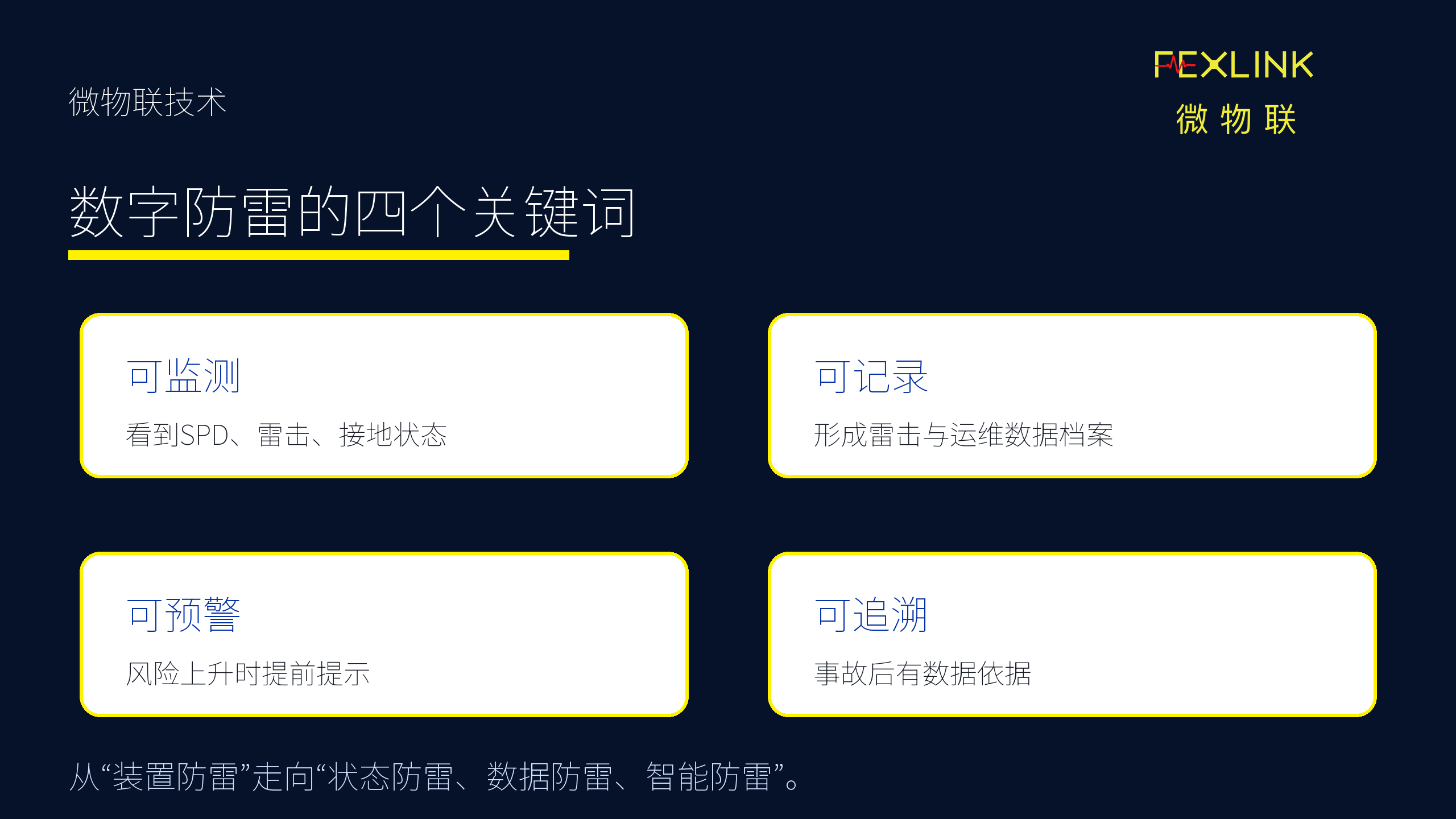
1. Enabling Early Risk Detection
When SPD status is abnormal, grounding status changes, lightning strike frequency increases, or surge events occur densely, the system can issue timely alarms.
2. Upgrading Maintenance from Manual Inspection to Online Perception
Digital lightning protection can continuously perceive lightning protection system status in unattended, remote sites, and complex scenarios, allowing limited human resources to be used where they are truly needed.
3. Providing Data-Based Evidence for Incident Traceability
After equipment damage, digital lightning protection can record lightning strike events, surge impacts, equipment status, and alarm information, providing a basis for incident analysis and liability traceability.
4. Building Long-Term Digital Archives for Lightning Protection Systems
A single inspection result only reflects the status at a particular moment, while digital archives can record long-term trends.
5. Moving Lightning Protection from Experience-Based Management to Data-Driven Management
As lightning protection systems continuously produce data, management approaches shift from "judging after problems occur" to "early warning when risks rise."
6. How Does FEXLINK Understand Digital Lightning Protection?
FEXLINK believes that the future core competitiveness of the lightning protection industry is not about how many lightning protection devices are installed, but about who can continuously see risks, identify risks, and proactively address risks. The FEXLINK digital lightning protection system is built around SPD online monitoring, lightning strike event recording, grounding status perception, surge risk identification, remote alarms, maintenance closed-loop, and lightning protection digital archives. The goal of these capabilities is not to make lightning protection more complex, but to make it clearer. Lightning protection should not be just a one-time project delivery. It should become a safety system that continuously produces risk data.
Conclusion: The Lightning Protection Industry Is Entering the Data Era
In the past, lightning protection focused on "whether devices are installed." Now, lightning protection must focus on "whether the status is effective." In the future, lightning protection must further focus on: whether risks can be forewarned, whether processes can be traced, whether maintenance can be optimized, and whether data can generate value. This is exactly what digital lightning protection aims to solve. The core of this phase is not just lightning protection products, but lightning protection data. FEXLINK will continue to share content related to intelligent lightning protection, electrical safety early warning, digital power distribution, energy monitoring, carbon efficiency, industrial intelligent control, and IoT solutions. We start from electrical signals, produce data, identify risks, and drive intelligence. FEXLINK — reconstructing energy efficiency and electrical safety with data. Where there is electricity, there is FEXLINK.