Abstract: It is important to pass the lightning protection test, but it can only prove the status at a certain detection moment. In real engineering sites, lightning strikes, surges, SPD degradation, ground connection changes, construction disturbances and environmental changes may all occur between two inspections. Online monitoring is not intended to replace lightning protection detection, but to supplement the operating process that cannot be covered by detection, so that the lightning protection system can move from "one pass" to "knowable long-term status".
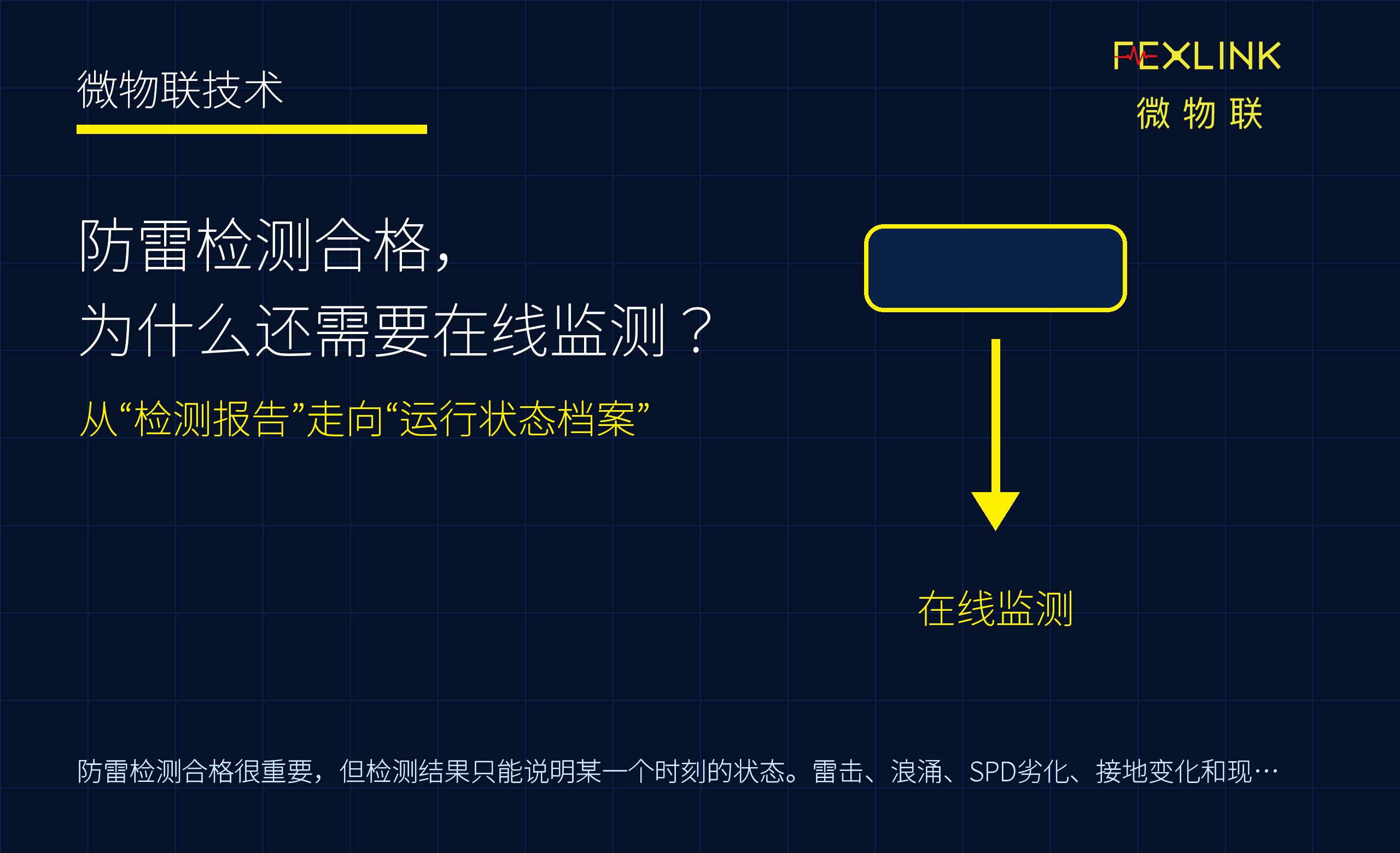
After many projects complete lightning protection testing, they will naturally feel a sense of security: if the report is qualified, does it mean that there will be no problems in the next period of time? This question is very common and very critical.
Lightning protection detection is of course important. It can confirm whether the lightning connection, downlinking, grounding, equipotential connection, SPD configuration and installation quality meet the requirements. It is an important basis for project acceptance, periodic review and safety management. Without detection, it is difficult to judge the basic reliability of the lightning protection system.
But lightning protection systems are not static. The test report proves the status on the day of the test, the test conditions and the test method, rather than proving that lightning strikes will not occur, the SPD will not deteriorate, the grounding will not change, and the equipment will not be affected by surges in the next year.
Therefore, passing the lightning protection test is not the end, but the starting point of operation management. What digital lightning protection wants to solve is the problem of whether the long-term operation process is visible after detection.
1. What does it mean to pass the lightning protection test?
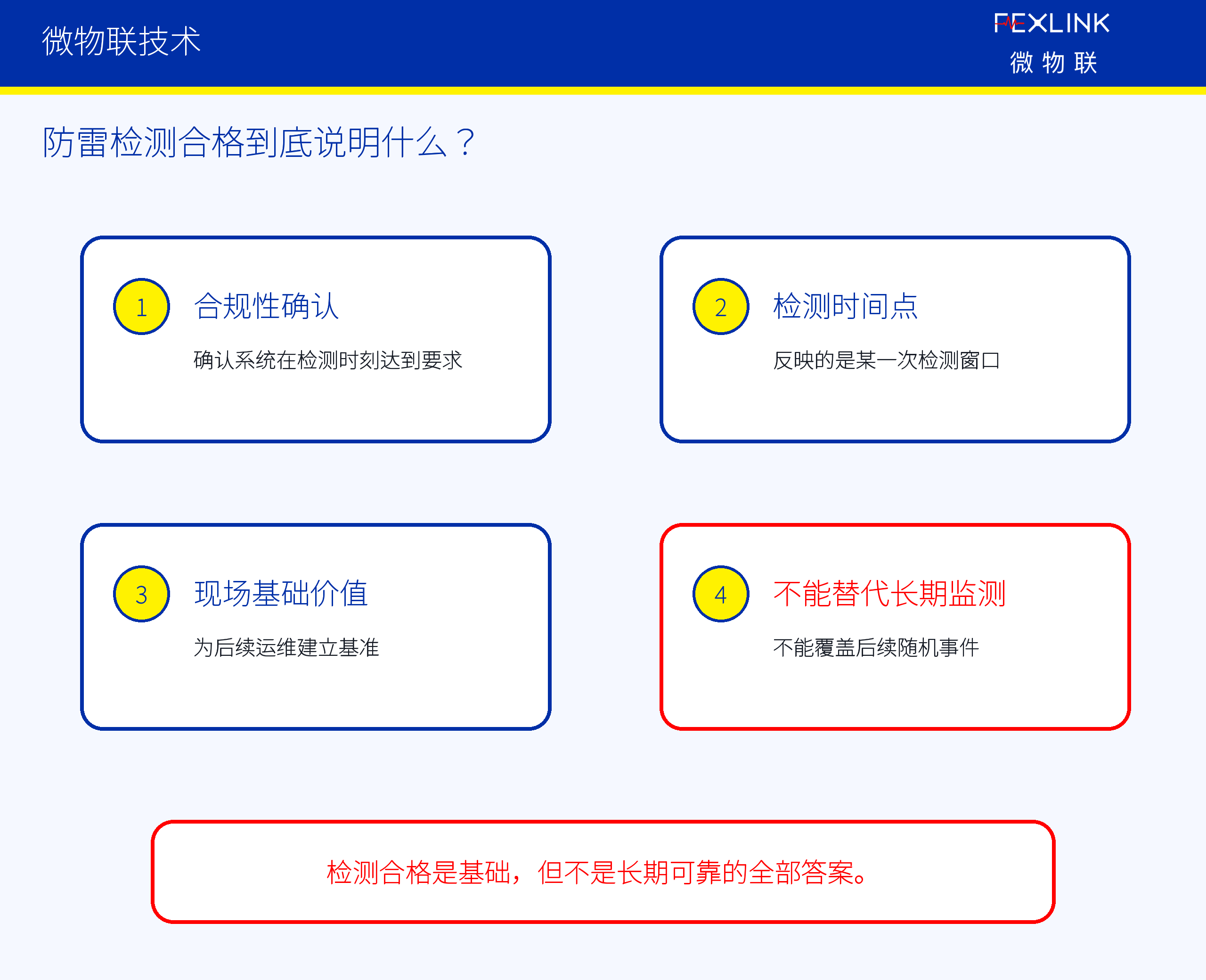
Lightning protection testing first solves the problem of "phased compliance". For example, whether the grounding resistance meets the design and specification requirements, whether the down-lead connection is reliable, whether the equipotential bonding is complete, whether the SPD installation location and wiring are standardized, and whether the lightning protection device meets the current site conditions.
These conclusions are valuable. They can prove that the lightning protection system meets the basic protection conditions at the time of inspection, and can also provide a basis for project acceptance, annual inspection, and rectification review.
But the detection conclusion has a natural boundary: it is a "time cross-section". Just like a physical examination of the equipment, if the physical examination result is qualified, it means that it was in good condition at that time, but it does not mean that it will not be affected by external impacts in the future, nor does it mean that it will not change in long-term operation.
What lightning protection systems really face are dynamic factors such as random lightning strikes, continuous surges, environmental corrosion, equipment aging and on-site construction. Therefore, it is easy to overestimate the coverage capacity of one test by only equating "passed test" with "long-term safety".
2. Why may risks still occur after passing the test?
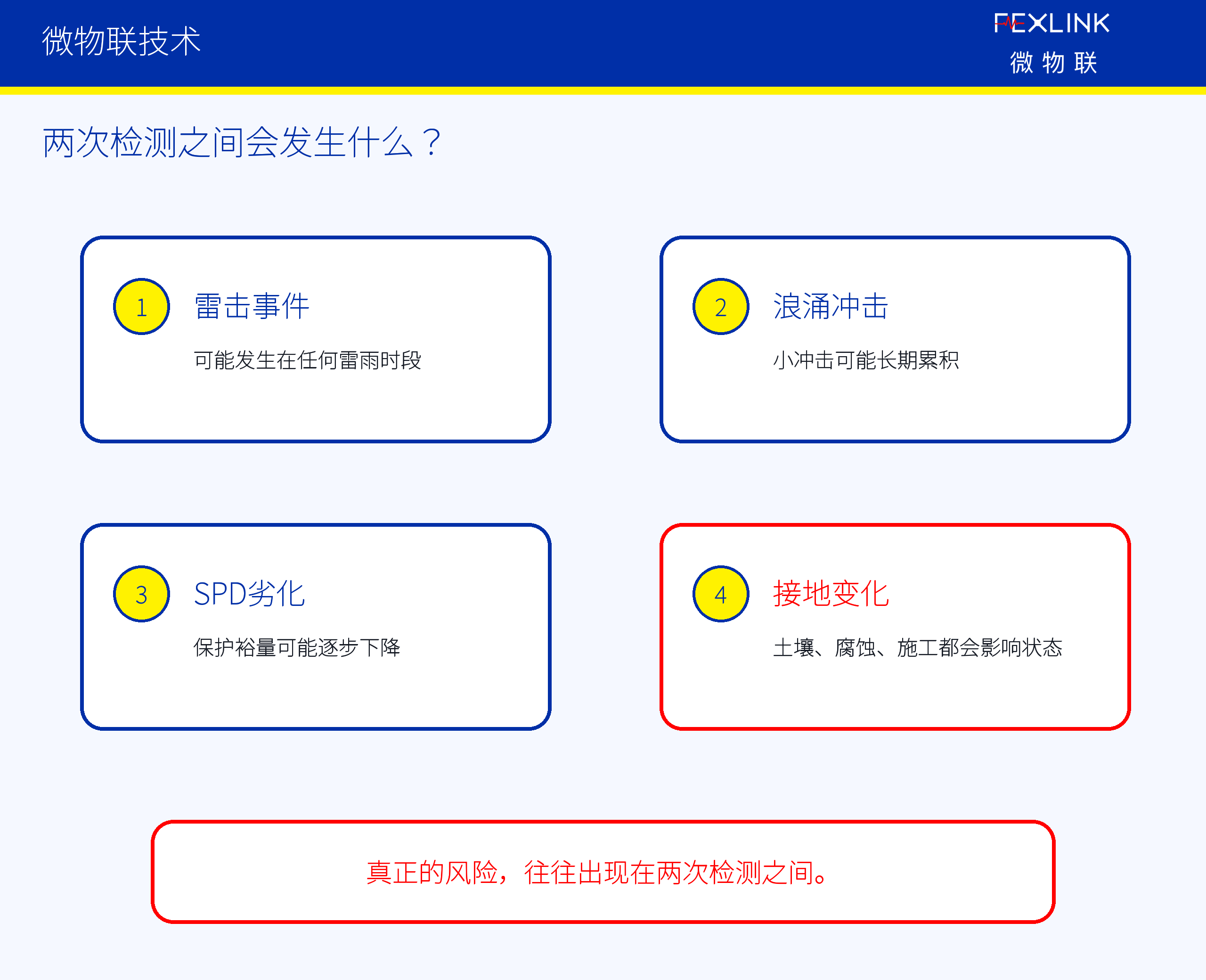
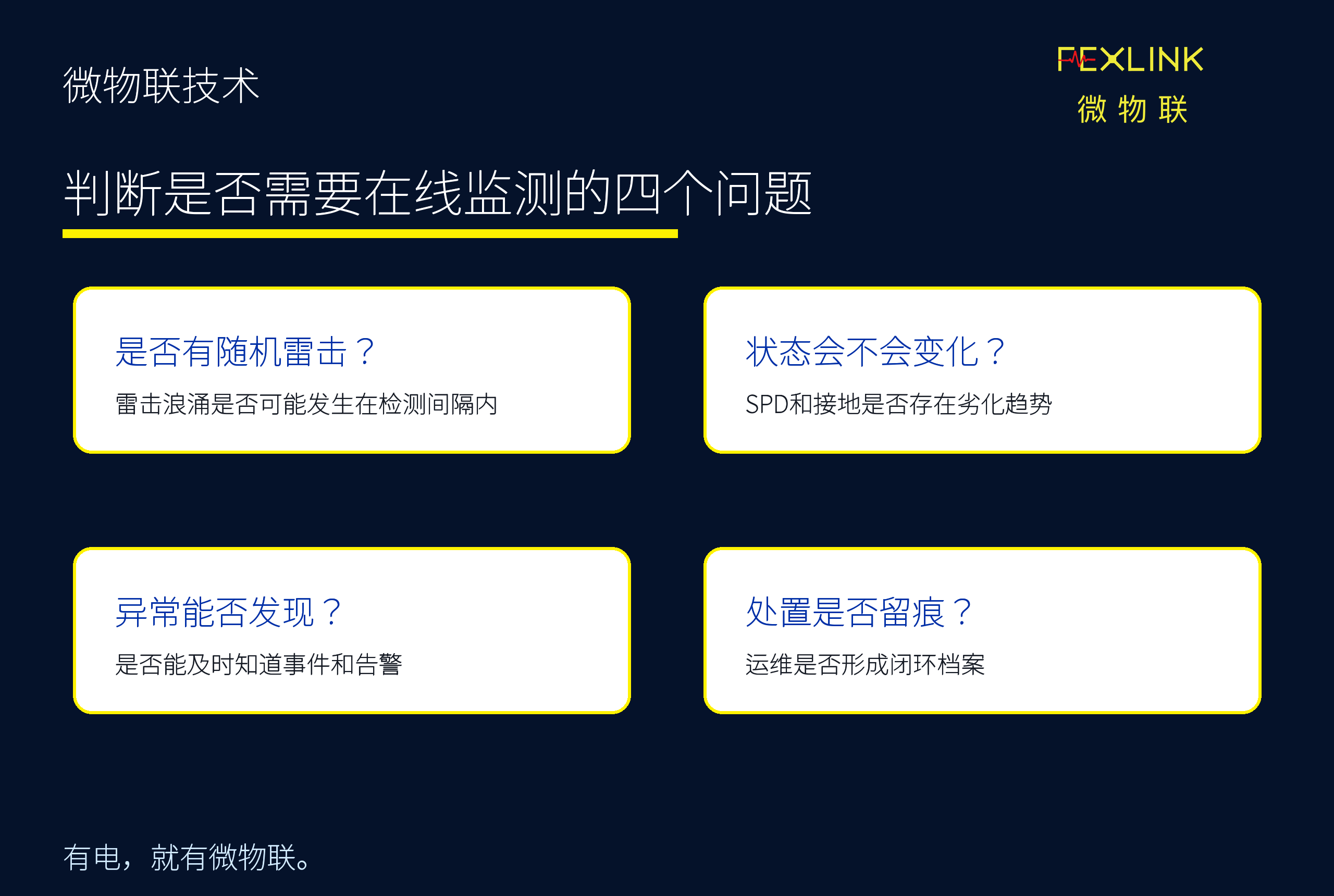
The first type of risk comes from lightning strikes and surge events. Thunderstorms do not occur according to the detection cycle. A site may just pass the inspection and experience severe thunderstorms a few days later; it may also be hit by induction mines or operational surges multiple times within a few months. Without online records, it is difficult to know on site what exactly the system has experienced.
The second type of risk comes from SPD degradation. SPD is not a device that will be effective forever after being installed. Under the influence of multiple surges, lightning strikes, long-term operating voltage and environmental influences, it may gradually experience increased leakage current, abnormal temperature rise, accelerated deterioration or even tripping failure. Just because it was normal during testing does not mean that it will still be normal after every subsequent impact.
The third type of risk comes from changes in grounding status. Grounding systems can be affected by soil moisture, corrosion, loose connections, construction excavation and ground grid aging. A qualified detection value can only indicate the grounding status at that time, but does not mean that subsequent grounding paths will always be stable.
The fourth type of risk arises from on-site operational changes. New equipment, line modifications, cabinet wiring adjustments, communication equipment replacement, temporary construction and maintenance operations may all change the actual working conditions of the original lightning protection system.
3. The blind spot of traditional testing is not “unprofessional” but “cyclical”
Traditional testing is not unprofessional, it solves the problem of specification confirmation at a specific moment. But it is naturally cyclical, while lightning strikes, surges, and changes in equipment status are random. Due to the different time logic between the two, a running blind spot will form.
Many live disputes occur in this blind spot. After the equipment is damaged, people will ask: Was there a lightning strike before the damage? Has the SPD deteriorated? Is there any abnormality in the grounding? Is the surge entering from the signal line? Has the lightning protector ever been activated?
Without online monitoring, these issues can often only rely on empirical inference. Experience is of course important, but in liability tracing, insurance claims, operation and maintenance review, and rectification decisions, experience can hardly replace data evidence.
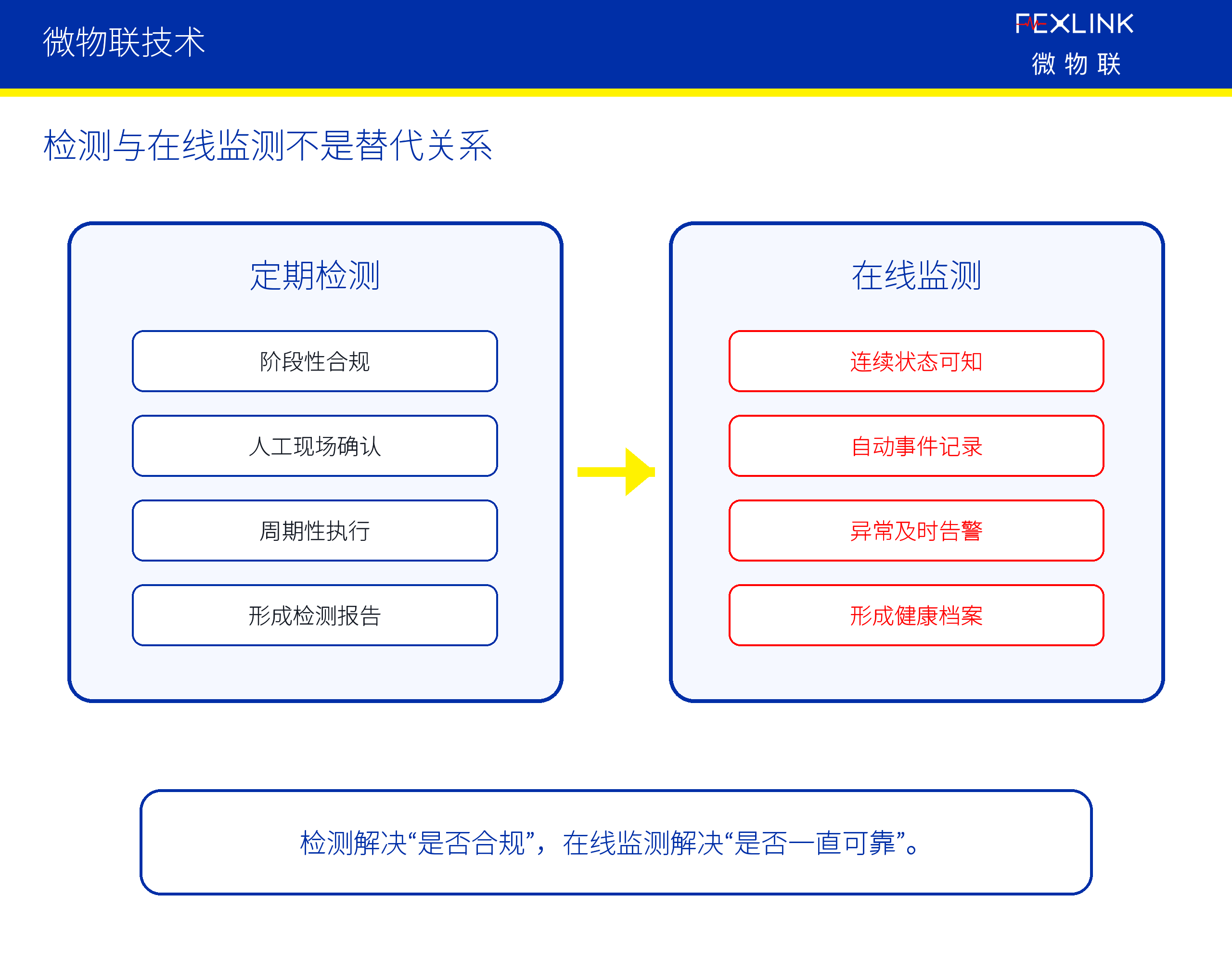
Therefore, test reports and online monitoring are not antagonistic. Detection provides the basis for compliance, and online monitoring provides the operational process. One answered "Was it qualified at the time?" and the other answered "What happened later?"
4. What exactly does online monitoring complement?
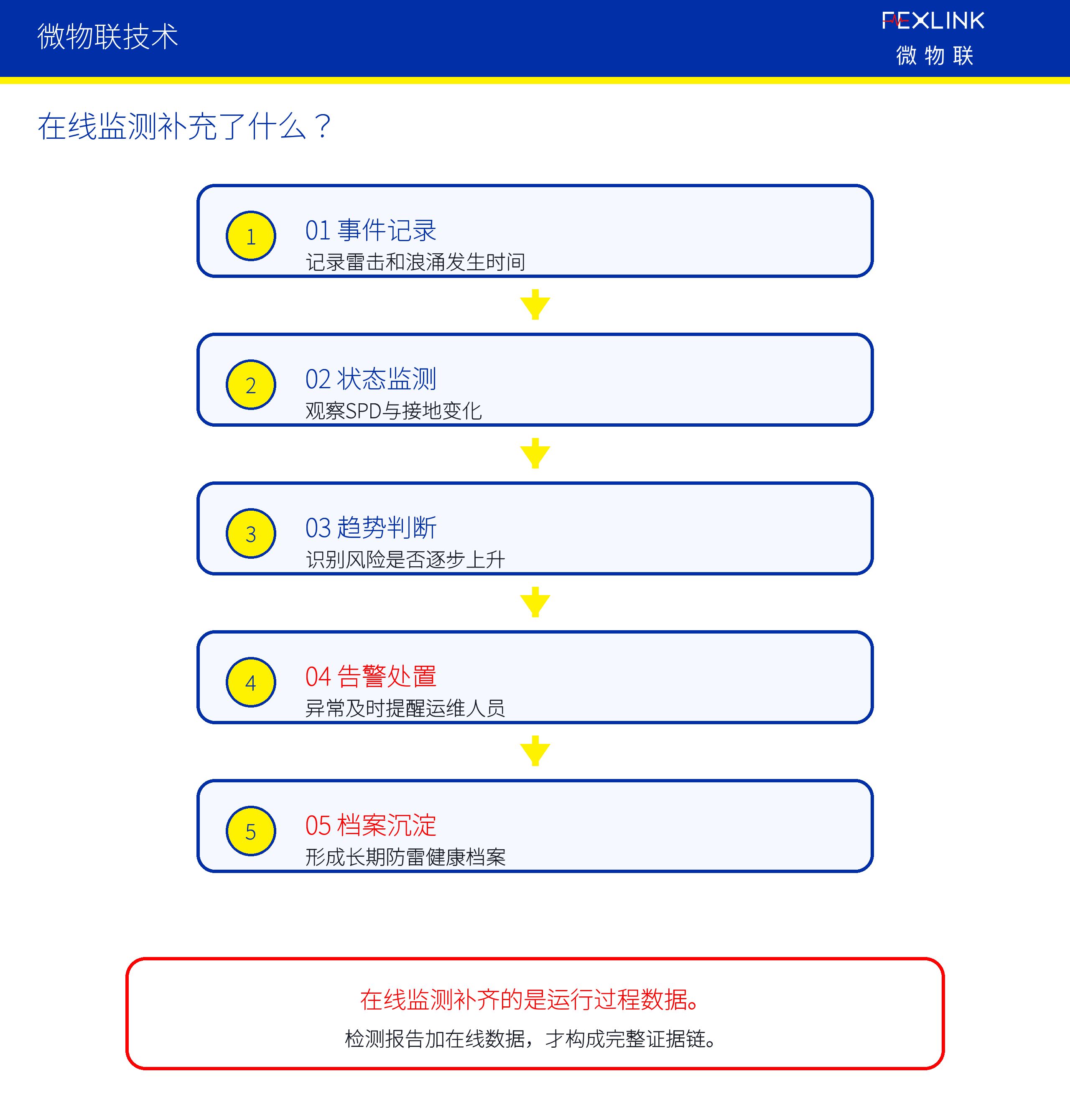
Online monitoring complements the operating process data of the lightning protection system. It can record lightning strikes and surge events, monitor SPD tripping, leakage current, temperature and degradation trends, track changes in grounding status, record alarm time and operation and maintenance results.
With this data, the lightning protection system is no longer just a device in a cabinet and an annual inspection report, but can continuously form event files, status files, and operation and maintenance files.
For example, after a thunderstorm, if the system records lightning current or surge events, and at the same time, the SPD leakage current increases, the grounding status changes suddenly, and the equipment communicates with alarms, the operation and maintenance personnel can put this information on the same timeline to judge the risk, instead of checking based on their feelings afterwards.
Online monitoring can also help operation and maintenance change from "average inspection" to "risk inspection". Which sites have experienced strong impacts, which SPD status is critical, which grounding point trends are abnormal, and which alarms have not closed the loop can all be used as the basis for inspection and maintenance priorities.
5. How does FEXLINK understand the relationship between lightning protection detection and online monitoring?
FEXLINK believes that lightning protection detection and online monitoring are not substitutes, but complementary relationships. Detection is the compliance basis of the lightning protection system, and online monitoring is the operation evidence of the lightning protection system.
A truly reliable digital lightning protection system should connect detection data, lightning strikes, SPD status, grounding status, equipment alarms and operation and maintenance records to form a complete evidence chain from project acceptance to long-term operation.
The focus of the FEXLINK digital lightning protection system is not to simply connect lightning protection equipment to the platform, but to allow the lightning protection system to continue to produce trusted data. Whether a lightning strike occurs, how big the surge impact is, whether the SPD is still valid, whether the grounding path is stable, and whether the alarm is processed, should all be recorded, judged and closed-loop.
This is also a key step for lightning protection operation and maintenance to move from “looking at reports” to “looking at status”.
Conclusion: Qualified testing is the foundation, long-term effectiveness is the goal
Qualifying lightning protection testing is very important, but it is not the whole story of lightning protection management. True lightning protection safety comes not only from one test result, but also from the long-term operation process where the status is visible, events can be traced, risks can be judged and treatments can be traced.
Lightning strikes and surges do not occur according to detection cycles, and SPD and grounding conditions do not remain unchanged forever. The significance of online monitoring is to clearly answer key questions such as what the lightning protection system has experienced, how its status has changed, and whether maintenance is needed between two inspections.
The lightning protection system has moved from "tested and qualified" to "long-term knowable", which is the value of digital lightning protection.
FEXLINK technology will continue to share content related to intelligent lightning protection, early warning of electrical safety, digital power distribution, energy supervision and industrial Internet of Things.
FEXLINK/FEXLINK uses data to reconstruct energy efficiency and electrical safety.
Where there is electricity, there is FEXLINK.