When talking about lightning protection systems, many people first think of SPDs, lightning rods, down conductors and lightning strike counters.
But there is another fundamental aspect that is often overlooked: the grounding system.
The grounding system is responsible for the discharge path of lightning current and surge energy. If the path status is abnormal, even if the front-end protection device exists, the protection effect may be affected.
More importantly, the grounding system does not stay the same forever after it is installed. It continues to change with environment, time, and engineering activities.
1. What role does the grounding system play in lightning protection?
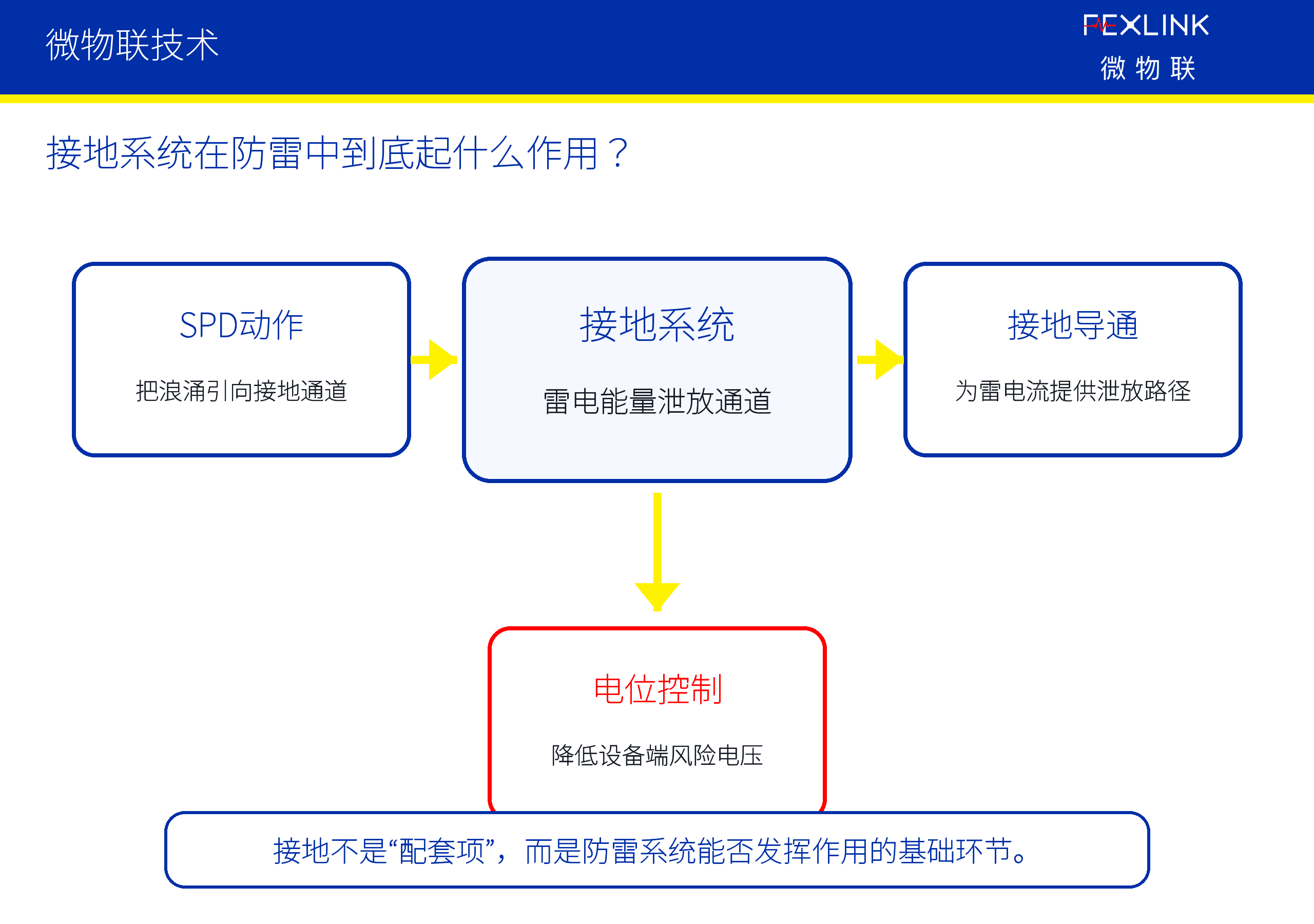
The grounding system can be understood as the energy dissipation basis of the lightning protection system.
When the SPD operates, the surge energy needs to enter the ground grid through the ground channel. If the grounding condition is good, the energy discharge path is relatively smooth, and equipment-side risks are easier to control.
If the ground resistance increases, the connection is loose, or the ground network is locally abnormal, the lightning current discharge capability may decrease.
Therefore, grounding is not a supporting item, but an important foundation for the lightning protection system to truly function.
2. Why does the grounding state change?
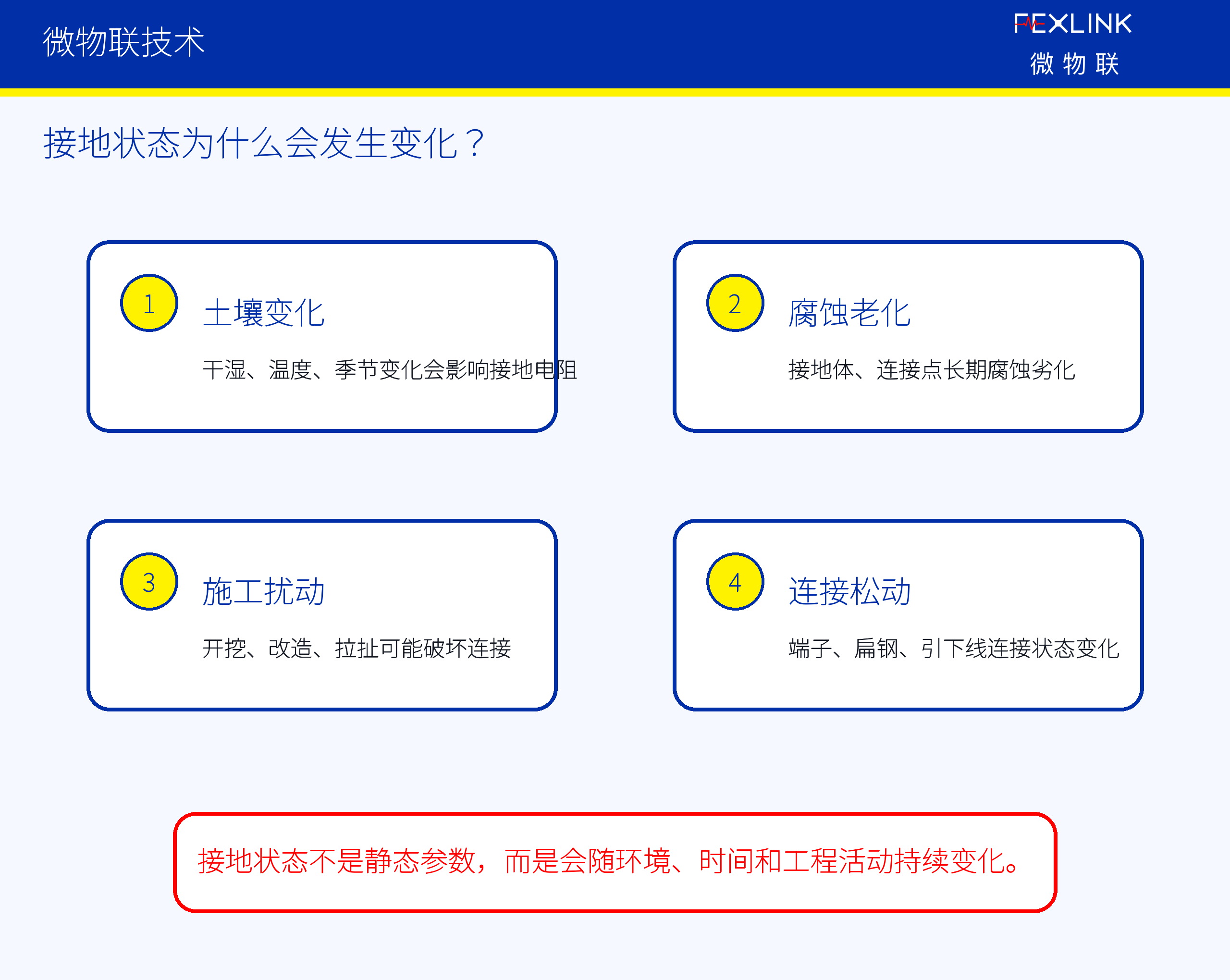
The problem in many sites is that grounding is viewed as a static result.
In fact, the grounding status will be affected by many factors. Soil moisture, temperature, and seasonal changes will affect the grounding resistance; the grounding body and connection points will corrode and age over time; on-site excavation, renovation, and construction disturbances may damage the connection; terminals, flat steel, and down-conductors may also become loose for a long time.
These changes may not necessarily lead to failure immediately, but they will gradually reduce the risk margin of the lightning protection system.
Therefore, the grounding status is more like an operating status than a fixed value on a test report.
3. What risks will abnormal grounding bring?
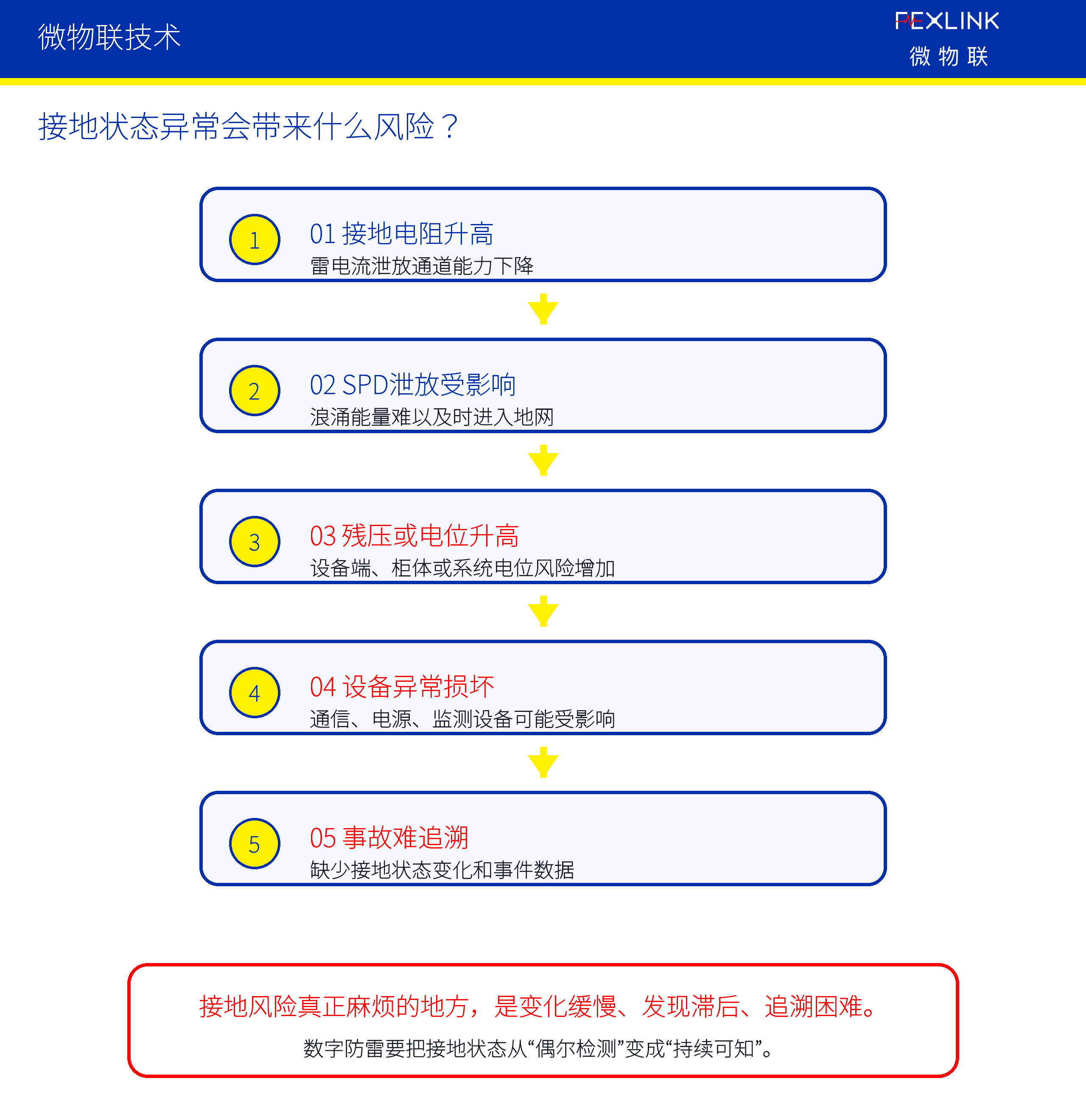
After the grounding state is abnormal, the first thing that is affected is the discharge ability of lightning current and surge energy.
When the grounding resistance increases or the connection status is abnormal, the relief channel after SPD operation may become worse, and the risk of residual voltage or system potential may increase.
This type of risk requires particular attention in scenarios with a large number of communication, power supply, automation, security, fire protection and monitoring equipment.
What’s even more troublesome is that without grounding status data, it’s difficult to trace back after the accident: Was the lightning strike too strong, has the SPD deteriorated, or has the grounding status changed?
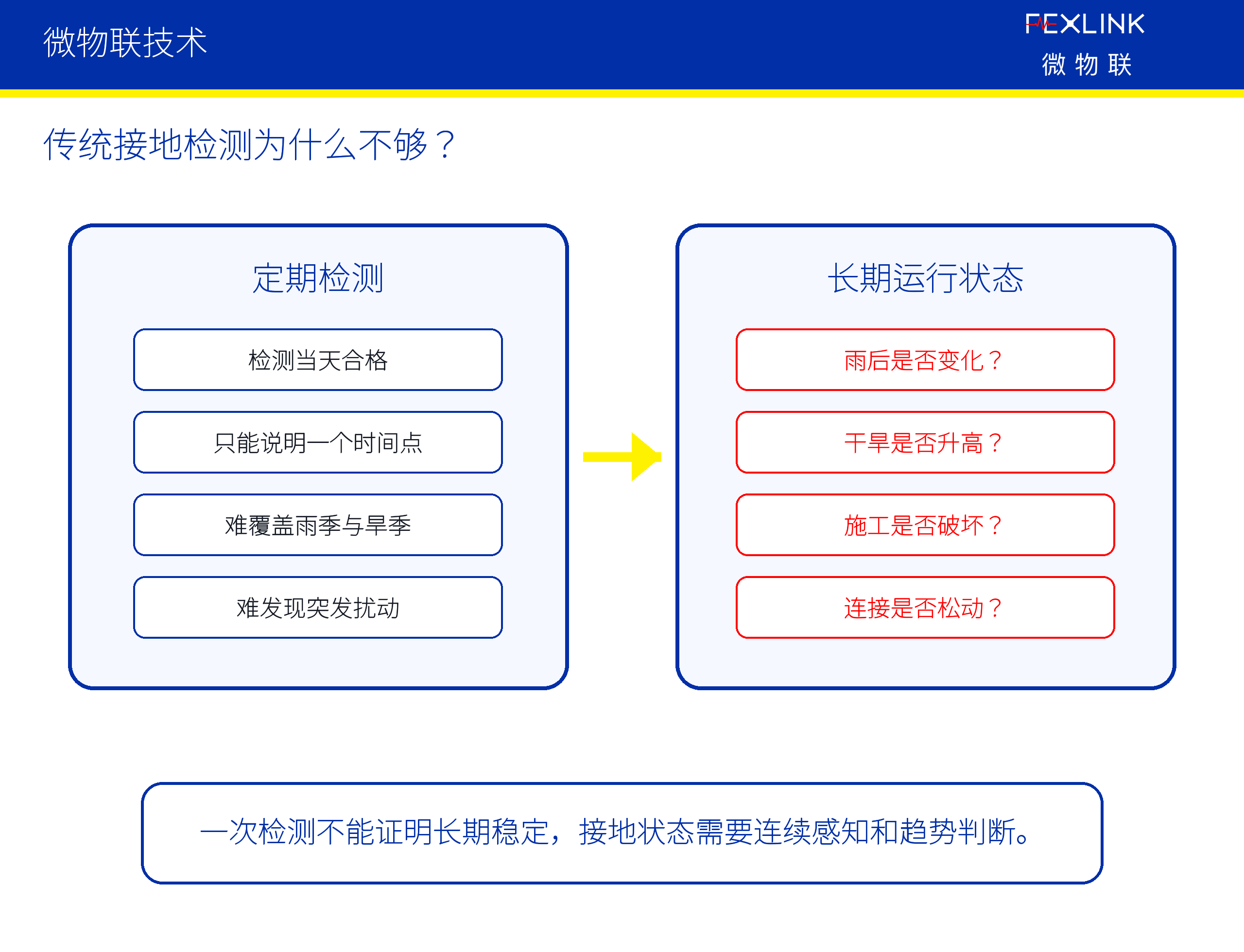
4. Why is traditional grounding detection not enough?
Traditional ground detection is valuable, but it more reflects the status of a certain detection moment.
Passing the test on the day does not mean that it will remain stable during rainy season, dry season, after construction, or after lightning strikes.
Many grounding problems do not always exist, but gradually appear after environmental changes, loose connections, or engineering disturbances.
Without continuous monitoring and trend judgment, the grounding status may remain invisible for a long time.
5. How does digital lightning protection sense the grounding status?
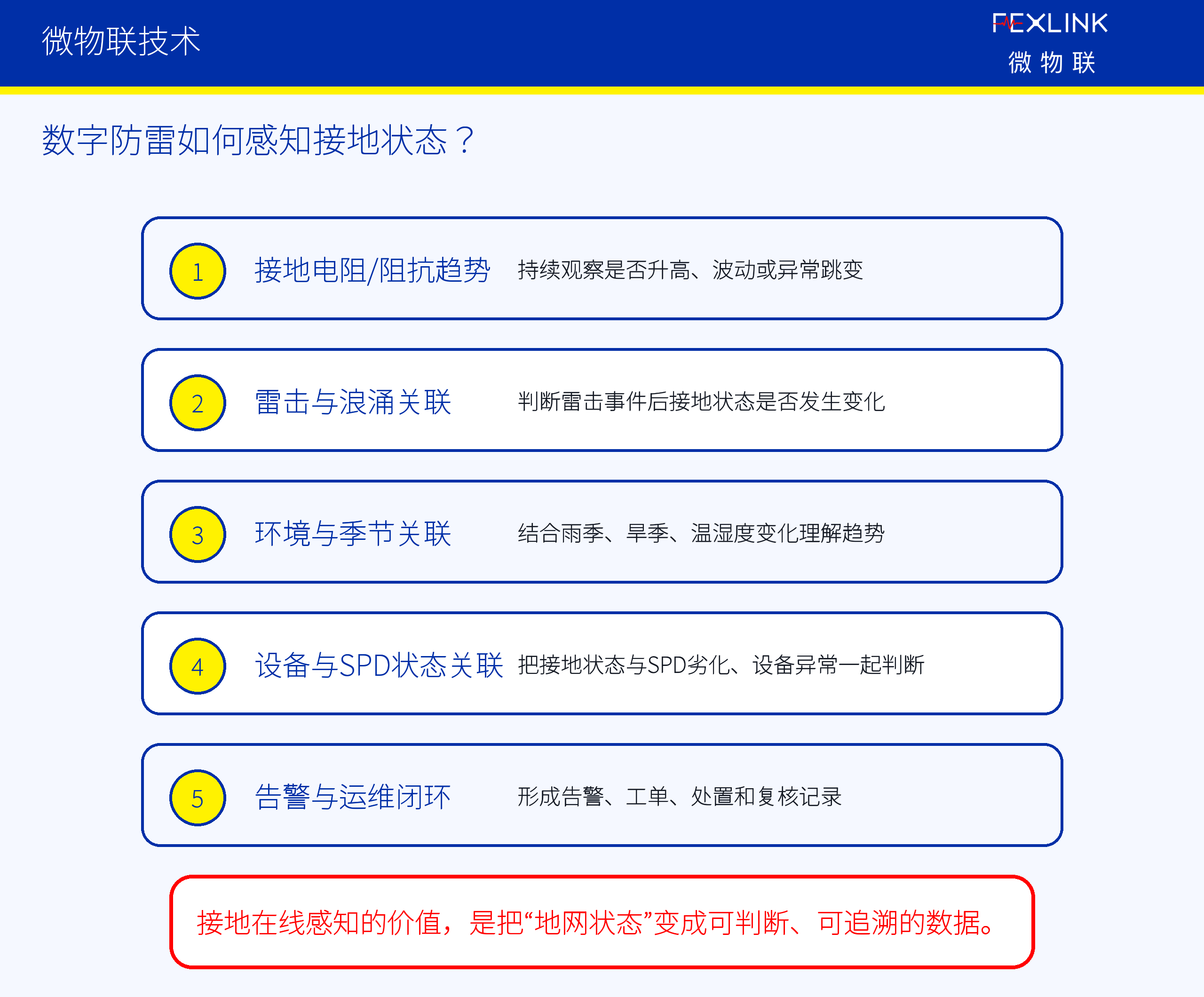
The purpose of digital lightning protection is not to replace all manual detection, but to change the grounding status from "occasionally detected" to "continuously perceptible".
Online grounding sensing should focus on at least five types of information: ground resistance or impedance trends, correlation between lightning strikes and surge events, environmental and seasonal changes, correlation between SPD and equipment status, and alarm and operation and maintenance closed loops.
With this data, grounding is no longer just a one-time qualified result, but a continuously updated operating status curve.
This can help operation and maintenance personnel detect trend changes earlier and provide a more complete data basis when reviewing incidents.
6. How does FEXLINK understand grounding status management?
FEXLINK believes that digital lightning protection cannot only look at SPD, nor can it only look at the number of lightning strikes.
A truly complete lightning protection state should pay attention to lightning strike events, SPD status, grounding status, equipment abnormalities and operation and maintenance handling at the same time.
The value of grounding online perception is to turn the status of the ground network into judgmentable and traceable data.
Only in this way can the lightning protection system move from "tested and qualified" to "long-term reliable and known".

Conclusion: Grounding is not a one-time test result, but a long-term operating status
It is a normal engineering fact that grounding systems will vary.
What is really important is not whether a certain test is qualified, but whether the grounding state is continued and reliable during long-term operation.
The problem that digital lightning protection needs to solve is to change the grounding state from invisible to perceptible, from occasional detection to trend judgment, and from second-guessing to data tracing.
Future lightning protection systems need to manage SPD, lightning strike events and grounding status at the same time.
FEXLINK technology will continue to share content related to intelligent lightning protection, early warning of electrical safety, digital power distribution, energy supervision and industrial Internet of Things.
FEXLINK/FEXLINK uses data to reconstruct energy efficiency and electrical safety.
Where there is electricity, there is FEXLINK.