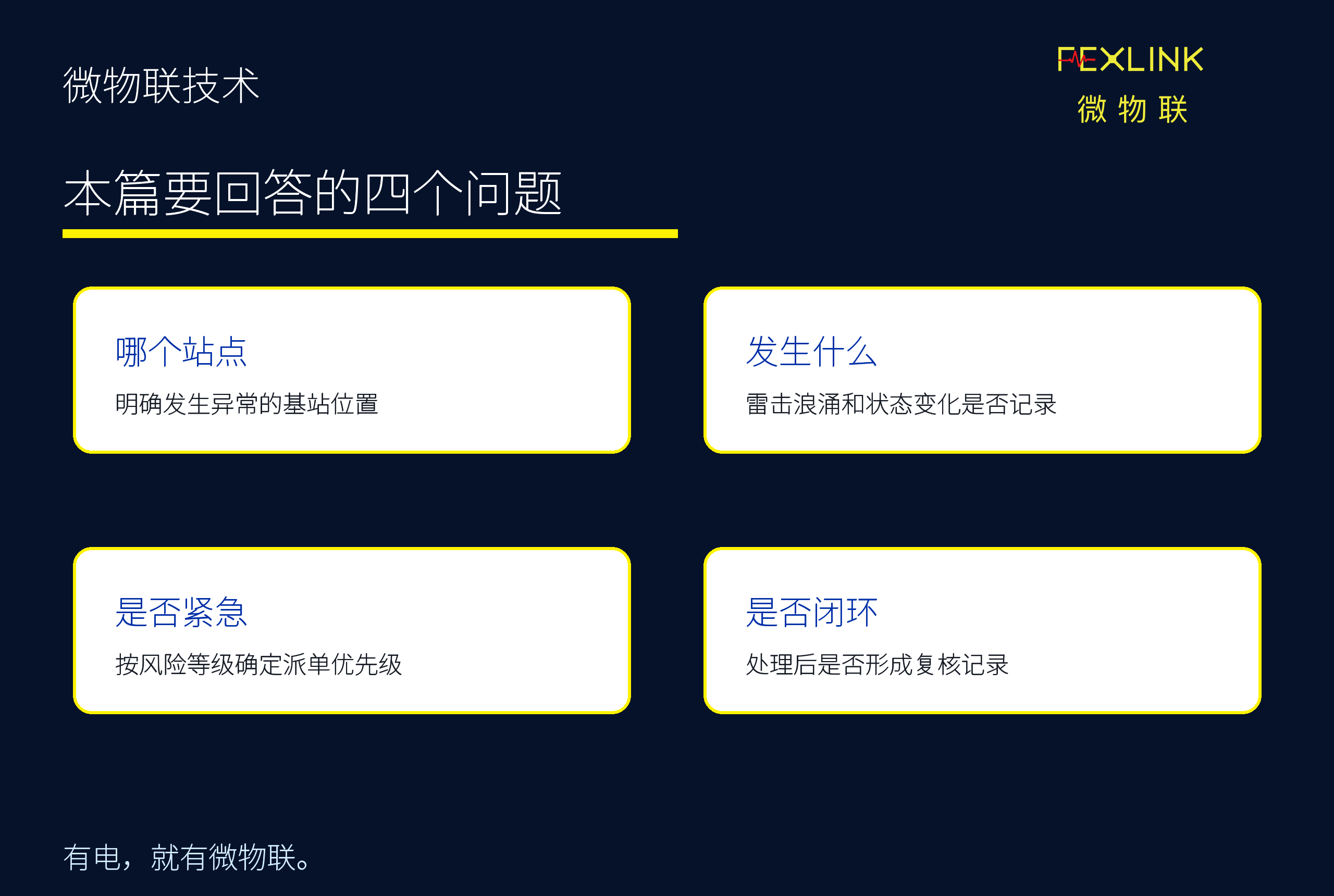
Beginning: Why this article must be explained clearly
Remote lightning protection status monitoring of communication base stations is not a matter of installing equipment, connecting a few wires, and uploading data to the platform. It is related to whether the on-site status can be continuously seen, whether anomalies can be identified in time, whether the reasons can be explained clearly afterwards, and whether operation and maintenance can truly form a closed loop.
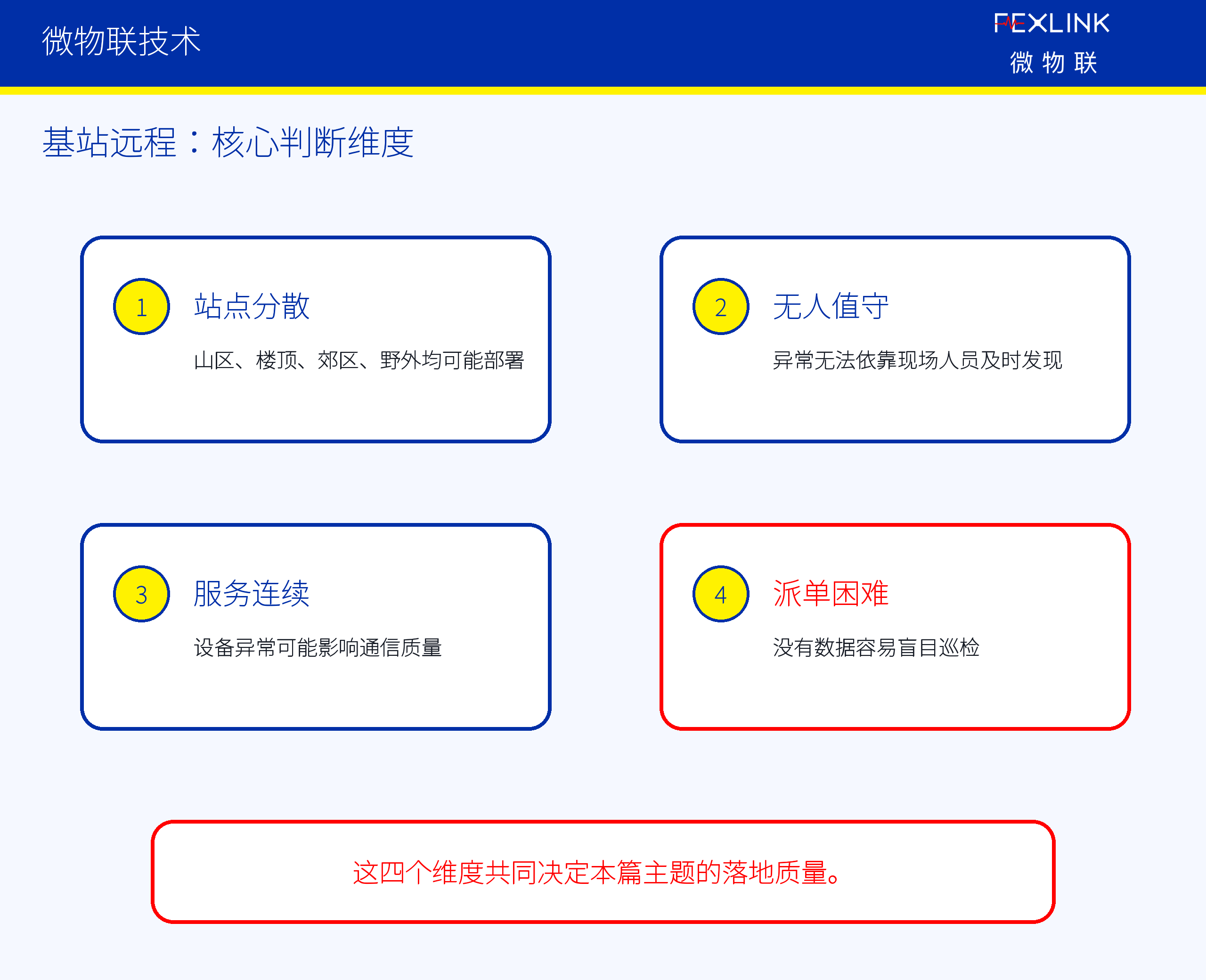
In mountain base stations, rooftop base stations, suburban base stations, field sites and unattended sites, lightning protection systems often do not exist in isolation. It is closely related to power supply, communications, grounding, equipment operation, on-site environment and manual operation and maintenance. If you only look at the status of a single device, it is easy to underestimate the risk, and it is also easy to encounter difficulties in tracing after a failure occurs.
Therefore, the focus of this article is not to introduce a concept, but to put remote lightning protection status monitoring of communication base stations into real engineering scenarios and explain: what problems it solves, what data it should look at, how to judge risks, how to translate it into operation and maintenance actions, and finally how to accumulate it into long-term management capabilities.
From the perspective of digital lightning protection, dispersed base stations can be transformed from invisible to remotely manageable. This sentence sounds simple, but it means that data collection, on-site adaptation, platform algorithms, alarm classification and operation and maintenance processes must be designed together. If any link is missing, the value of the system will be significantly weakened.
Looking further, the value of remote lightning protection status monitoring of communication base stations is not to light up a certain abnormality, but to understand on-site objects, event processes, status changes and disposal results in the same link. Only in this way will managers see not scattered alarms but an explainable risk structure.
In scenarios such as mountain base stations, rooftop base stations, suburban base stations, field sites, and unattended sites, the equipment conditions, grounding conditions, communication conditions, and maintenance conditions at different points vary greatly. If there is no unified data caliber, the same anomaly will be interpreted by different personnel at different sites, ultimately leading to inconsistent judgment, inconsistent handling, and inconsistent review.
Therefore, data definitions must be established simultaneously around the monitoring of base station power supplies, SPDs, grounding systems, communication equipment, transmission equipment and remote platforms. Which ones are real-time status, which ones are historical events, which ones are trend indicators, and which ones are disposal results, all need to be unified coding and unified caliber at the platform level.
From an engineering management perspective, lightning strike events, SPD status, grounding status, power supply abnormalities, communication alarms and site health files are not for display, but to support the continuous judgment of "where does the risk come from, how serious is it now, and what should be done next". Without such problem awareness, the more data there is, the easier it is to turn into information noise.
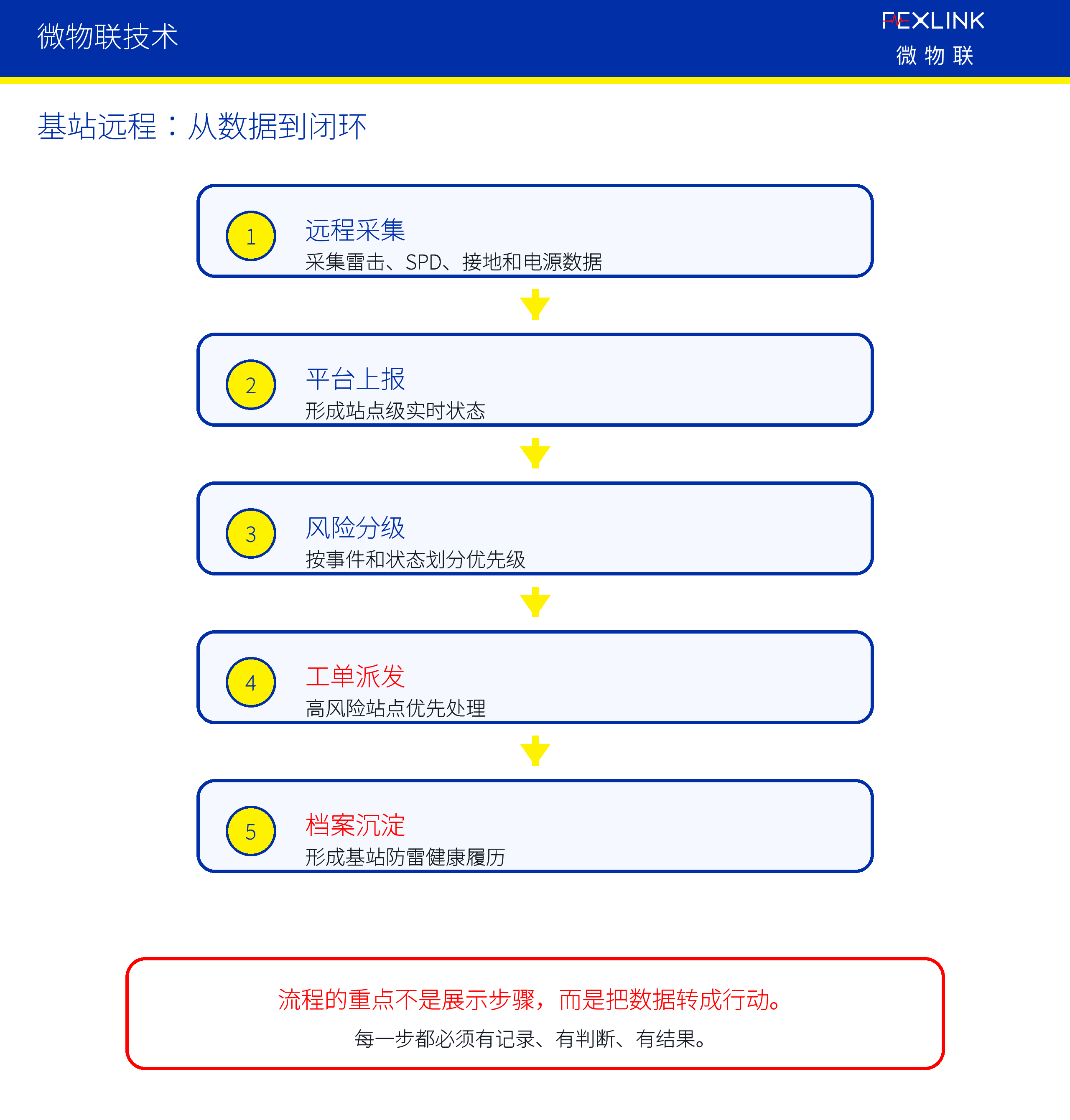
Therefore, remote collection, platform reporting, risk classification, work order dispatch and review and archiving should not be regarded as additional actions in the later stages of the project, but should be considered simultaneously during the project design stage. How to install equipment, how to report to the platform, how to handle it with personnel, and how to review the results all serve the same closed-loop goal.
Key Points:The core value of remote lightning protection status monitoring for communication base stations is real-time awareness of station power, SPD, grounding system, and communication equipment lightning protection status in unattended conditions. Base stations are numerous, widely distributed, and environmentally complex—manual inspection is costly, and lightning protection failure causes communication outages, so remote visible monitoring capability must be established.
1. What are the core shortcomings of traditional methods?
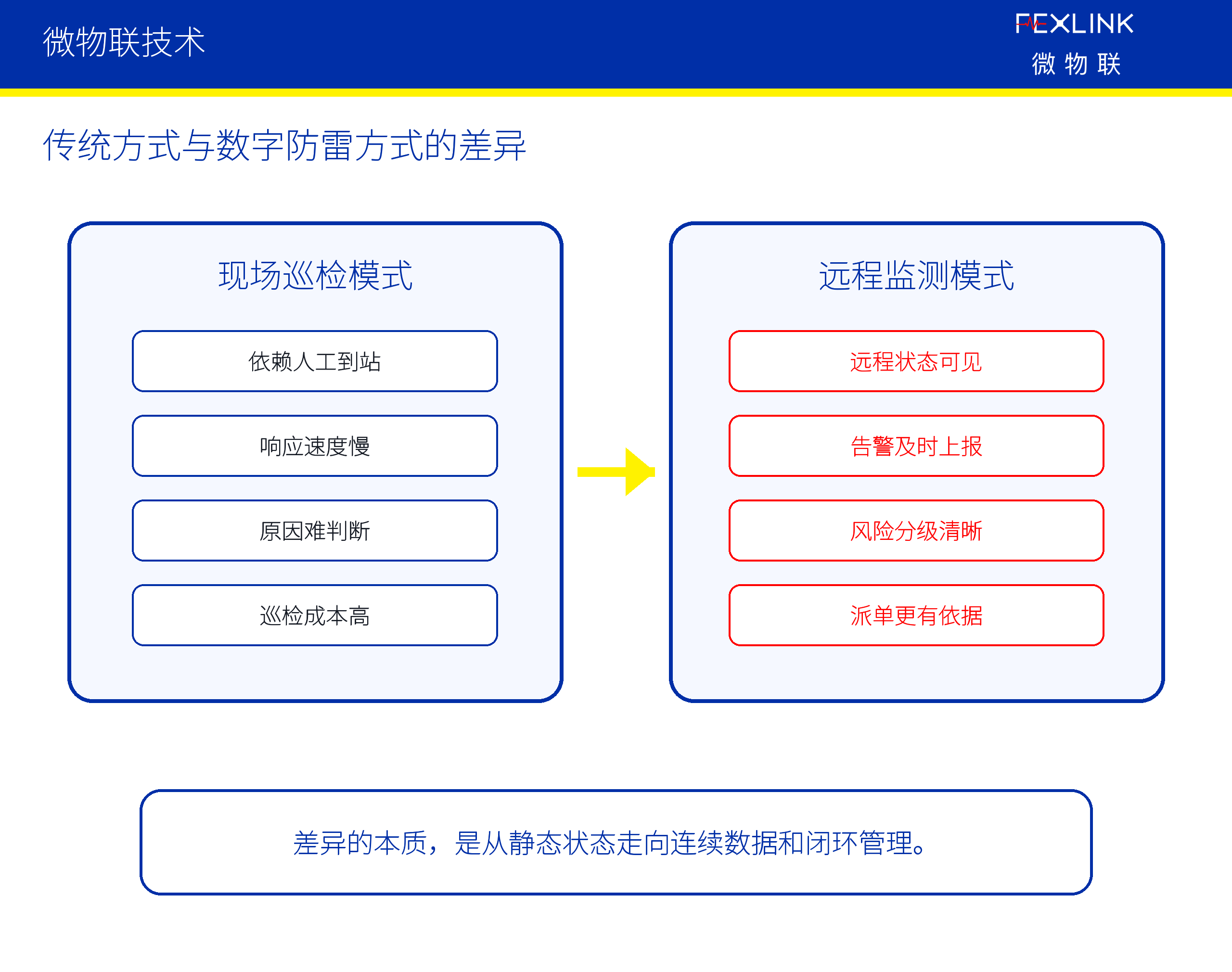
The biggest problem with the traditional approach is that lightning protection systems are often regarded as static systems. Once the equipment is installed, tested, and inspected, it is assumed that the system is in a reliable state. However, in actual sites, lightning surges are random, the SPD status will change, the grounding status will change, and the equipment operating status will also change.
Regarding remote lightning protection status monitoring of communication base stations, common pain points in traditional work are: scattered sites, unattended sites, high site access costs, and lack of basis for dispatching orders after abnormalities. This pain point is not unique to a certain project, but a problem that many sites will encounter in long-term operation and maintenance.
Specific to the engineering site, many risks are not exposed in the form of faults in an instant, but first appear as events, slight changes in status, and gradual accumulation of trends, and finally become equipment damage, communication abnormalities, shutdowns, or increased maintenance costs.
Without process data, operation and maintenance personnel can only see the results but not the process. The result is that it is difficult to tell clearly after a problem occurs: when did the risk begin, which link changed first, whether there have been early warning signals, and whether there have been unhandled alarms.
It is this process data and continuity judgment ability that digital lightning protection needs to complement. It does not negate traditional detection and manual inspection, but adds status knowability, trend judgment and result traceability on the basis of traditional protection.
Key Points:The traditional shortcoming at base stations is relying on maintenance contractor periodic inspections and lightning counters. Base stations are numerous, inspection cycles are long, and lightning counters only record frequency, not intensity or impact. Many stations are struck between inspection cycles, with SPD degradation or grounding anomalies undetected, until communication goes down and the impact is already done.
2. Which objects and data should be focused on?
Under this theme, the most critical monitoring objects include: base station power supply, SPD, grounding system, communication equipment, transmission equipment and remote platform. These objects each answer different questions and cannot be simply lumped together.
From the perspective of data types, what needs attention are: lightning strike events, SPD status, grounding status, power supply abnormalities, communication alarms and site health files. Status data answers what the current status is, event data answers what happened in the past, trend data answers whether risks are changing, and disposition data answers whether the problem has been resolved.
The problem with many systems is that they only collect a switch value or a count value and try to support all judgments. Such data granularity is obviously insufficient because it is difficult to explain the causes of risks and guide on-site operation and maintenance.
A truly effective data system should be able to string together "events, status, trends, impacts, and dispositions." For example, after a lightning surge event occurs, the system not only needs to know the existence of the event, but also needs to know whether the protection status has changed, whether the grounding status is abnormal, whether the equipment is accompanied by alarms, and whether to dispatch subsequent orders for processing.
Only when the data chain is complete can the platform transform from a display system to a judgment system. Otherwise, no matter how many charts there are, they will just move the on-site status to the screen and will not truly form risk analysis capabilities.
Key Points:Base station remote monitoring objects include station power, SPD, grounding systems, communication equipment, transmission equipment, and remote platforms. Data types cover SPD status, lightning events, grounding changes, equipment alerts, and communication status. Base stations are unattended—these data must be remotely collected and uploaded to grasp each station's lightning protection status in real time.
3. How to move from data to judgment
Regarding remote lightning protection status monitoring of communication base stations, data collection is only the first step. What is more important is to transform data into judgment. Judgment includes at least three levels: whether it is abnormal, how high the abnormality level is, and where the cause of the abnormality may come from.
The first level is status judgment. For example, whether a certain point is offline, whether the SPD is tripped, whether the grounding is abnormal, and whether the equipment alarms. This layer solves whether there are any problems.
The second level is trend judgment. For example, in the past period of time, whether there have been more lightning strikes, whether the grounding condition has continued to deteriorate, whether alarms have reoccurred, and whether the status has been restored after maintenance. This layer addresses whether the risk is developing.
The third level is correlation judgment. For example, whether the lightning strike event is adjacent to the equipment abnormal time, whether the SPD status change is accompanied by grounding abnormality, and whether the risk index drops after the work order is processed. This layer addresses reasons and priorities.
If the platform only makes first-level judgments, its value is relatively limited; if it can make trend and correlation judgments, digital lightning protection can be upgraded from an alarm tool to an operation and maintenance decision-making tool.
Key Points:Base station data judgment has three layers: status layer determines whether the station's lightning protection is normal, trend layer assesses whether SPD degradation and grounding changes are accumulating, cause layer locates whether alerts come from lightning, power, or equipment. Base stations are numerous—judgment must distinguish urgency and prioritize high-risk stations, avoiding scattered waste of limited O&M resources.
4. How to fall into the closed loop of operation and maintenance
When it comes to implementation, remote collection, platform reporting, risk classification, work order dispatch and review and archiving must be connected into a closed loop. In other words, from data generation to alarms, from alarms to work orders, from work orders to on-site disposal, from disposal to review and archiving, every step must be clearly recorded.
Many systems look good during the pilot phase because they have data, charts, and alerts on the big screen. But after it has actually been running for a period of time, problems will be exposed: does anyone read the alarm, is there a person responsible for dispatching the order, is there a standard action for processing, is there a basis for review, and is there long-term statistical analysis.
The value of the closed-loop operation and maintenance is to change risk management from "reminding" to "must handle and leave evidence". This is especially important for multi-site, multi-device, multi-responsible party scenarios.
Closing the loop can also reverse-optimize the system. Which alarms are often falsely reported, which sites have repeated anomalies, which equipment life is consumed faster, and which processing actions are more effective, can all be analyzed through long-term work orders and status data.
Therefore, the final delivery of digital lightning protection should not only include equipment and platforms, but also include operation and maintenance processes, alarm rules, responsibility mechanisms, and review mechanisms.
Key Points:O&M closure must link remote monitoring, alert grading, remote assessment, field disposal, and verification. Base stations are unattended—alerts must be remotely assessed first, then decide whether to dispatch personnel. Many stations have monitoring but no closure—alerts go unseen, seen but not dispatched, dispatched but not disposed—lightning protection risk accumulates.
5. Why must “explainability” be emphasized in such scenarios?
Digital lightning protection does not simply upload on-site data to the cloud, nor does it replace professional judgment with a red, yellow, and green status. The more security and operation and maintenance decisions are involved, the more the system needs to give explainable reasons.
For example, in mountain base stations, rooftop base stations, suburban base stations, field sites and unattended sites, if the platform only prompts "high risk", the operation and maintenance personnel still do not know where to check. The system needs to indicate whether the risk comes from lightning strikes, SPD status, grounding changes, equipment alarms, or unclosed work orders.
Explainability also helps build user trust. Engineers usually do not take immediate action because of a score or a color, but if the system can display event timelines, status change curves, associated equipment alarms and disposal suggestions, the basis for action will be much clearer.
In the future, the competitiveness of digital lightning protection platforms is not just how much data can be collected, but whether it can interpret the data into engineering language. Let on-site personnel understand it, allow managers to make decisions, and allow reviewers to have evidence. This is the real professional value of the system.
Key Points:Base station monitoring must be explainable. The system must explain which station, what equipment, and what cause the alert comes from, not just flag a station anomaly. Explainability lets remote O&M teams precisely determine disposal priority and provides assessment basis for maintenance contractor management, preventing inspections from becoming a formality.
Conclusion: Digital lightning protection should serve real projects instead of staying at the conceptual level
The final answer to the remote lightning protection status monitoring of communication base stations is not "whether there is a system", but whether the system can serve real projects stably in the long term. It must be able to detect status changes, explain risk sources, promote operation and maintenance actions, and precipitate the results.
Micro-IoT believes that the core of digital lightning protection is the continuous production of high-quality lightning protection data. Only by establishing a data link around the base station power supply, SPD, grounding system, communication equipment, transmission equipment and remote platform, and then forming a closed loop through the platform and operation and maintenance process, can the lightning protection system be truly moved from static installation to long-term management.
This is also the fundamental meaning of turning distributed base stations from invisible to remotely manageable. In the future, with the accumulation of data, digital lightning protection can further serve electrical safety early warning, equipment reliability management and intelligent energy operation and maintenance.
Micro-IoT/FEXLINK uses data to reconstruct energy efficiency and electrical safety.
Where there is electricity, there is micro-IoT.