 微物联研究院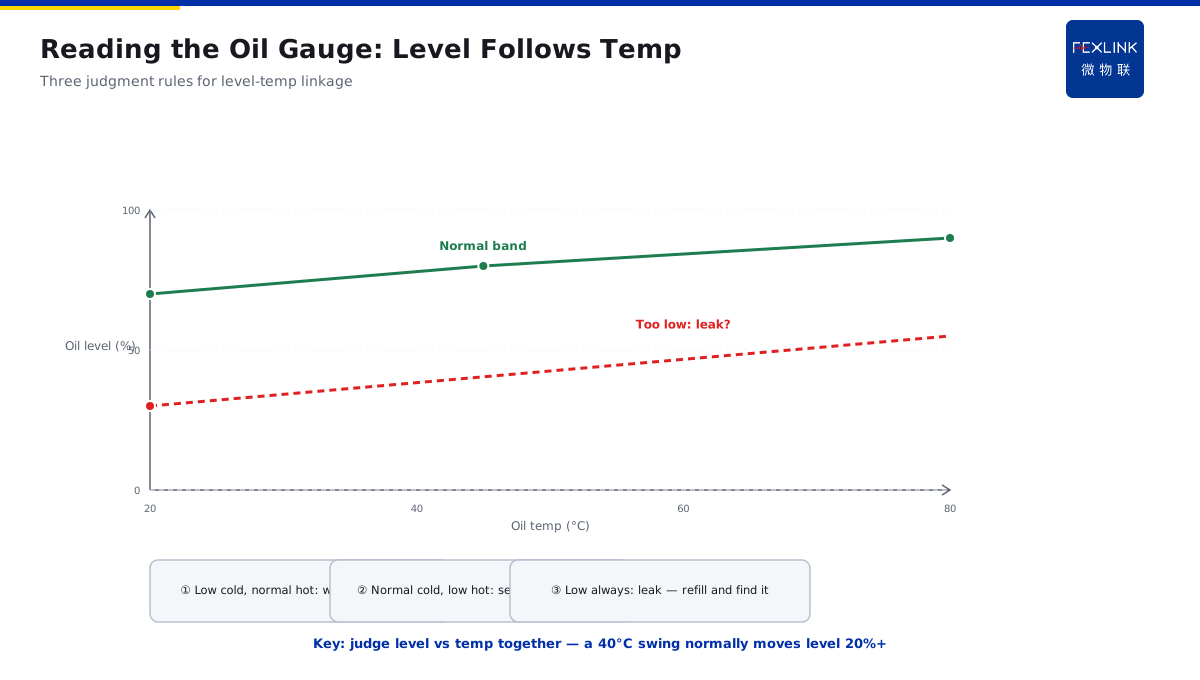
Direct Answer
A transformer's normal state is not "one fixed value," but "a range that varies with load and temperature."
Many operators do not know what "normal" looks like — worried when oil temp is high, worried when oil level is low, worried when sound is loud. Actually, these indicators all have common-sense ranges:
- Load rate: normal operation 30%-70%, short-term up to 100%;
- Top oil temp: normal 40-85°C, max 95°C;
- Oil level: varies with temperature, at 20°C at 1/2 of sight glass is normal;
- Sound: normal is even "hum," discharge is "crackle," loose parts is "rattle."
Key insight: transformer normal state is dynamic — high load = high oil temp, low load = low oil temp. Do not judge normal by a fixed value, build your own baseline.
At one industrial park substation, operators recorded oil temp daily. Summer noon oil temp 82°C, operators were very nervous, fearing failure. Then they checked historical data: every summer noon oil temp was 80-85°C, winter noon only 40-50°C — this is normal seasonal variation, not a fault. Without historical baseline, every summer heat is a false alarm.
1. Top Oil Temp Typical Curve vs Load
Transformer oil temp is not fixed, it follows load.
Typical curve:
- 2-6 AM: lowest load, oil temp 40-50°C;
- 8-10 AM: load rising, oil temp rises to 60-70°C;
- 12-2 PM: highest load, oil temp peak 80-85°C;
- 4-6 PM: load dropping, oil temp slowly falls;
- 8-10 PM: load rises again, oil temp rises a bit.
Key: oil temp curve shape should match load curve shape. If oil temp curve does not match load curve — e.g., low load but high oil temp — that is the real problem.
2. Normal Sound vs Abnormal Sound
Transformer sound is the most direct way to judge internal condition.
Normal sound
- Even "hum";
- Volume varies with load;
- No noise.
Abnormal sound 1: discharge
- "Crackling" or "snapping";
- Possible internal discharge;
- Must shut down immediately.
Abnormal sound 2: loose parts
- "Rattling" or "thumping";
- Possible core or coil loose;
- Schedule maintenance.
Abnormal sound 3: overload
- Sound noticeably louder;
- Accompanied by rising oil temp;
- Reduce load.
Key: listen to transformer sound once a day, better than reading ten reports. Sound changes = internal state changes.
3. Oil Level vs Temperature Relationship
Transformer oil level is not fixed, it expands and contracts with temperature.
Relationship:
- At 20°C: oil level at 1/2 of sight glass;
- At 40°C: oil level at 2/3;
- At 60°C: oil level at 3/4;
- At 80°C: oil level near full.
Key: oil level low — do not rush to add oil, check temperature first. If temperature is also low, low oil level is normal thermal expansion. If temperature is high but oil level still low, that is real oil shortage.
This is why FEXLINK ESE multi-function smart meter, besides electrical parameters, also tracks temperature and oil level trends together — temp rises and oil level rises = normal; temp rises but oil level does not = problem.
4. Three Most Important Daily Inspection Items
Daily transformer inspection, these three items are enough:
1. Oil temp
- Check top oil temp;
- Compare to same time yesterday;
- Compare to same period last year.
2. Sound
- Listen if sound is even;
- Any noise;
- Sound louder than usual.
3. Oil level
- Check sight glass;
- Does it match current temperature;
- Any oil leak.
Other items (gas relay, explosion vent, bushings) once a week is enough, no need daily.
5. Why Build Load-Segmented Baselines
Why build your own baseline? Because every transformer is different.
- Some transformers cool well, same load lower oil temp;
- Some cool poorly, same load higher oil temp;
- Some load curves are high morning low evening;
- Some are high noon low night.
Only with your own baseline do you know "what temp is high, what is low." Otherwise using others' standards on your transformer, either false alarms or missed faults.
FEXLINK platform helps you build this baseline:
- Records oil temp, load, oil level 24/7;
- Auto-generates load-temp correlation curve;
- Auto-alerts on baseline deviation.
With baseline, operators no longer judge "by feel" every day.
6. A Real Case
One factory substation, transformer oil temp summer 85°C, operators very nervous:
- Thought it was a fault, wanted to shut down;
- Then checked historical data: every summer noon oil temp was 82-85°C;
- Load was also highest in summer — this is normal seasonal variation;
- No shutdown, no fault, wasted anxiety.
Later installed online monitoring, built baseline:
- Summer noon oil temp 85°C = normal;
- Winter noon oil temp 50°C = normal;
- Alert only on baseline deviation ±10°C.
No more summer daily anxiety.
7. Three Common On-Site Mistakes
Mistake 1: oil temp over 85°C = panic. 85°C is max allowed temp, not "danger temp." Summer noon 82°C is normal.
Mistake 2: oil level low = add oil. Check temperature first. Low temp + low level = normal thermal expansion, no need to add oil.
Mistake 3: only look at absolute value, not trend. Oil temp 70°C may be fine, but 10°C higher than same time yesterday needs attention.
8. One Sentence to Remember
Transformer normal state is dynamic — high load high temp, low load low temp. Build your own baseline, then you can tell normal from abnormal.
Do not apply fixed values, compare to your own history.
9. Common Questions
Q: What oil temp is normal for transformer? A: Top oil temp 40-85°C is normal range. What exactly is normal depends on load — high load high temp. Compare to same time yesterday, same period last year, then you know if it is normal.
Q: How to judge if transformer sound is normal? A: Normal is even "hum." "Crackling" = discharge. "Rattling" = loose parts. Listen once a day, get familiar with your transformer's sound, when it changes you know.
10. Why This Is Becoming More Important
Transformers used to be staffed, checked several times a day, judged by experience. Now more and more substations are unmanned — no one listens to sound or checks oil level daily.
This is when online monitoring matters more. ESE multi-function smart meter + EST-22920-R multi-channel temperature controller does this for unmanned substations: monitors oil temp, load, oil level 24/7, auto-builds baseline, auto-alerts on deviation.
No staff on site does not mean no management. Just changed from "human watches" to "system watches."
Stay safe. Stay professional. Stay curious.
11. Quick Checklist
Before you worry about your transformer being abnormal, run through this checklist:
- Have you compared today's oil temp to same time yesterday?
- Have you compared this summer to last summer?
- Is the load curve shape matching the temp curve shape?
- Is the oil level consistent with current temperature?
- Does the sound match what you hear every day?
If you answered "no" to most of these questions, you are not ready to call it abnormal. You are guessing. And guessing on critical infrastructure causes either unnecessary shutdowns or missed faults.
The FEXLINK platform gives you all this data automatically. It sits on your transformer, samples every minute, and stores history for years. You can compare today to yesterday, this month to last month, this year to last year. You see the trend, not just the snapshot.
12. How to Build a Routine
A good transformer monitoring routine is not about reacting to every alarm. It is about knowing what normal looks like, then noticing when normal changes. Install monitoring on your critical transformers first. Set thresholds based on manufacturer ratings plus your own historical baseline. Let the platform watch 24/7.
When oil temp starts trending up beyond baseline, you get an alert. You check the load — is it really higher? If yes, that is expected. If load is normal but temp is rising, that is the anomaly. You schedule an inspection. You compare to last year. You decide whether to reduce load or plan maintenance.
This is condition-based transformer management. It saves money, reduces risk, and avoids the panic of "oil temp hit 85, must shut down."
Start today. Identify your most critical transformer. Install monitoring. Build your baseline. Then you can make smart decisions, not expensive guesses.
Final Thoughts
Transformers are the heart of your electrical system. If they fail, everything stops. That is why monitoring them matters so much.
But monitoring is not about staring at numbers. It is about understanding what normal looks like for your specific equipment. It is about building history. It is about trusting the trend, not the snapshot.
Do it smart. Do it early. Do it with data.
Your transformers will thank you. Your team will thank you. Stay safe, and keep monitoring.
See you in the next article. Take care, and remember: baseline is everything.