 微物联研究院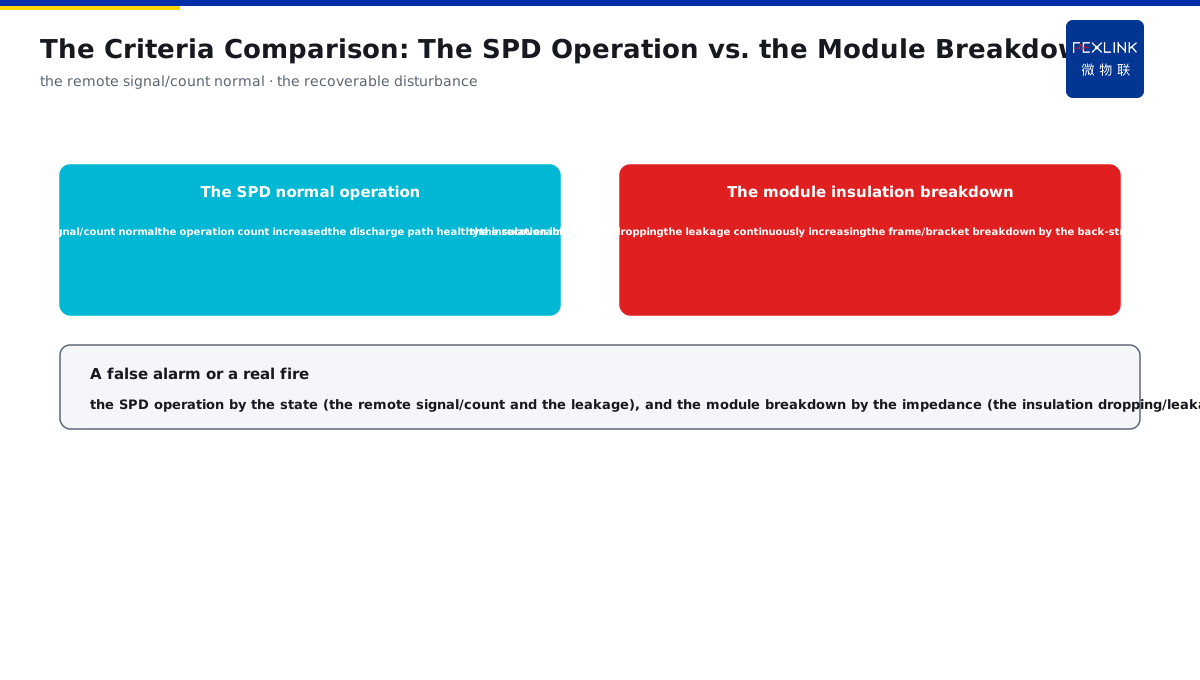
Direct Answer
After a thunderstorm, several inverters report the DC-insulation/surge fault at the same time — how to quickly distinguish whether the SPD has operated normally or is truly damaged? The answer: first look at the SPD state and the leakage — the SPD operating normally (the remote signal/count) with the leakage not climbing is mostly the recoverable surge disturbance; if accompanied by the abnormal earthing resistance, the module insulation impedance dropping and the leakage continuously increasing, it is likely the module frame/bracket breakdown by the back-strike; aligning the lightning-current event timestamp with the inverter alarm time quickly locks the causality.
At a PV plant, six inverters reported the insulation fault at the same time after the storm, and the operation team was ready to shut down in batches for the inspection. First the SPD state was checked: the operation count increased normally and the leakage did not climb — judged as the surge disturbance; then the lightning-current event timestamp was aligned with the alarm time, confirming that the multi-inverter alarms shared the same source of one strike; after the reset observation, the operation returned to normal, avoiding a needless shutdown. The key distinction: first look at the SPD state and the leakage — the SPD operating normally with the leakage not climbing is mostly the recoverable disturbance; accompanied by the abnormal earthing/insulation dropping/leakage climbing, it is likely the module breakdown; the timestamp alignment with the alarm time quickly locks the causality.
Why:
- The SPD operating normally: the remote signal/count normal;
- The leakage not climbing: mostly the recoverable disturbance;
- The module breakdown: the insulation dropping and the leakage increasing;
- The timestamp alignment: the event and the alarm locked.
Key insight: "After the storm, the batch alarms are first seen by the SPD — the normal operation with the leakage not climbing is mostly the recoverable disturbance; accompanied by the abnormal earthing/insulation dropping/leakage climbing, it is likely the module breakdown; the timestamp alignment quickly locates."
At a PV plant, the SPD was misjudged as damaged and the batch shutdown lost two days of generation; the recheck found the SPD operated normally and the leakage did not climb — actually the surge disturbance, restored by the reset. Lesson: the batch alarms are first seen by the SPD state and the leakage — the normal operation is mostly the recoverable disturbance, and do not rush to shut down and check the modules.
Overview: run "how the SPD-operation and the module-breakdown criteria differ → how the timestamp alignment locks the causality → how the earthing and the leakage trends are read → how the handling branches" as one batch-alarm diagnosis cognition. First look at the SPD state and the leakage: the SPD operating normally (the remote signal/count) with the leakage not climbing is mostly the recoverable surge disturbance; if accompanied by the abnormal earthing resistance, the module insulation impedance dropping and the leakage continuously increasing, it is likely the module frame/bracket breakdown by the back-strike. The four layers are unfolded below.
A "fire alarm and smoke detector" analogy: think of the post-storm batch alarms as the smoke detectors sounding together in the whole building. The alarm sounding (the batch inverter alarms) — first see whether "someone is smoking in the corridor" (the SPD operating normally, the surge disturbance, recoverable) or "a real fire" (the module insulation breakdown, truly damaged). How to distinguish? Look at the alarm's own state — the fire-alarm linkage records normal and no continuous smoke (the SPD count normal and the leakage not climbing), mostly a false alarm; if the smoke keeps spreading (the leakage continuously increasing) and the smoking point in the corner is clear (the insulation impedance dropping), that is the real fire. Add a "alarm time" comparison: the whole building sounding at the same moment (the multi-inverter alarms at the same timestamp) is more likely the linked response of the same source (one strike) than many units failing simultaneously. The fire-alarm analogy: the alarm sounding = the batch alarms, the corridor smoking = the SPD normal operation recoverable, the continuous smoke and the smoking point = the module breakdown truly damaged, and the simultaneous sounding = the same-source strike linkage — first look at the alarm state and the time, then decide whether to "fight the fire".
1. The Criteria Comparison: The SPD Operation vs. the Module Breakdown
Step one: first look at the criteria comparison between the SPD operation records and the module insulation breakdown.
The SPD normal operation:
- The remote signal/count normal;
- The operation count increased;
- The discharge path healthy;
- The recoverable disturbance.
The module insulation breakdown:
- The insulation impedance dropping;
- The leakage continuously increasing;
- The frame/bracket breakdown by the back-strike;
- The real-damage signal.
The criteria comparison:
- The SPD operation: the count/leakage normal;
- The module breakdown: the insulation/leakage abnormal;
- The SPD operation by the state;
- The module breakdown by the impedance.
Key insight: "The criteria comparison is clear — the SPD normal operation is seen by the remote signal/count and the leakage (recoverable), and the module breakdown is seen by the insulation impedance dropping and the leakage climbing (truly damaged) — divide the two types first, then dig deeper, and the misjudgment is costly."
2. The Timestamp Alignment: How to Lock the Causality
Step two: the alignment of the lightning-current event timestamp with the inverter alarm time.
The lightning-current timestamp:
- The FL records the strike moment;
- The event timestamp precise;
- Aligned with the alarm;
- The causality clear at a glance.
The alarm-time alignment:
- The inverter alarm moment;
- Compared with the strike time;
- The same-source alarms grouped;
- The abnormal alarms screened.
The locking method:
- The time-window comparison;
- The multi-unit same-source grouping;
- The causality chain built;
- The quick judgment.
Key insight: "The timestamp alignment locks the causality — the FL lightning-current timestamp is compared with the inverter alarm time, the multi-unit same-source alarms are grouped as one strike, and the abnormal alarms are screened for the deeper check."
3. The Trend Diagnosis: How the Earthing and the Leakage Are Read
Step three: the role of the earthing resistance and the leakage trend in the diagnosis.
The earthing-resistance trend:
- The abnormal earthing accompanied;
- The back-strike risk rising;
- The trend monitored;
- Linked with the alarm.
The leakage trend:
- The leakage continuously increasing;
- The module-degradation signal;
- Distinguished from the SPD leakage;
- Judged by the trend.
The linked diagnosis:
- The earthing + leakage linked;
- The trends corroborated;
- No misjudgment by the single value;
- The trend reveals the truth.
Key insight: "The trend diagnosis is linked — the abnormal earthing resistance is accompanied by the back-strike risk, and the leakage continuously increasing is the module-degradation signal; the earthing + leakage are linked and corroborated, no misjudgment by the single value, and the trend reveals the truth."
4. The Handling Branches: The Reset Observation vs. the Shutdown Module Check
Step four: the handling after distinguishing the two criteria.
The reset-observation branch:
- The SPD operating normally;
- The leakage not climbing;
- The reset then observed;
- No blind shutdown.
The shutdown-module-check branch:
- The insulation impedance dropping;
- The leakage continuously increasing;
- The shutdown and the module check;
- The strings checked one by one.
The handling principle:
- The data first, then the action;
- The recoverable not stopped by mistake;
- The truly damaged not left running;
- The generation loss minimized.
Key insight: "The handling branches into two ways — the SPD operating normally with the leakage not climbing takes the reset observation (no blind shutdown), and the insulation dropping/leakage climbing takes the shutdown module check (the strings one by one) — the data first, then the action, and the generation loss minimized."
5. Product Implementation: The Three-Piece Set Locks the Causality
WeiWuLian products give the batch-alarm diagnosis the evidence:
- FS surge-protective-device monitor: the SPD operation and the leakage records;
- FR earthing-resistance monitor: the abnormal earthing trend exposed;
- FL lightning-current monitor: the strike timestamp anchoring the causality;
- The three-piece-set linkage: the batch alarms quickly typed.
The design principle in one sentence: "FS sees the SPD, FR sees the earthing, and FL locks the time — the three-piece set linked, the batch alarms are typed quickly, with no needless stop and no running with the illness."
6. Common Understanding Misjudgments
- "The batch alarms = the batch damage": wrong. Mostly the same-source disturbance of one strike.
- "The SPD operated, so replace it": wrong. The normal operation needs no replacement.
- "The large leakage is the SPD failure": wrong. The leakage climbing may be the module breakdown.
- "Many alarms, so shut down": wrong. First the reset observation, then decide.
- "The single earthing value qualified is safe": wrong. The abnormal trend is what exposes the back-strike risk.
Scope and Limitations
This article explains the diagnosis of the post-storm inverter batch alarms (the criteria comparison, the timestamp alignment, the trend diagnosis and the handling branches), applicable to the PV-plant post-storm investigation. The specific protection follows GB/T 18802.11; this article explains only the diagnostic logic and the typing method. All cases are anonymized (a PV plant) and do not refer to any specific customer. Remember one sentence: first look at the SPD state and the leakage, then align the timestamp — the batch alarms are mostly a false alarm, and the real damage is never missed.