 微物联研究院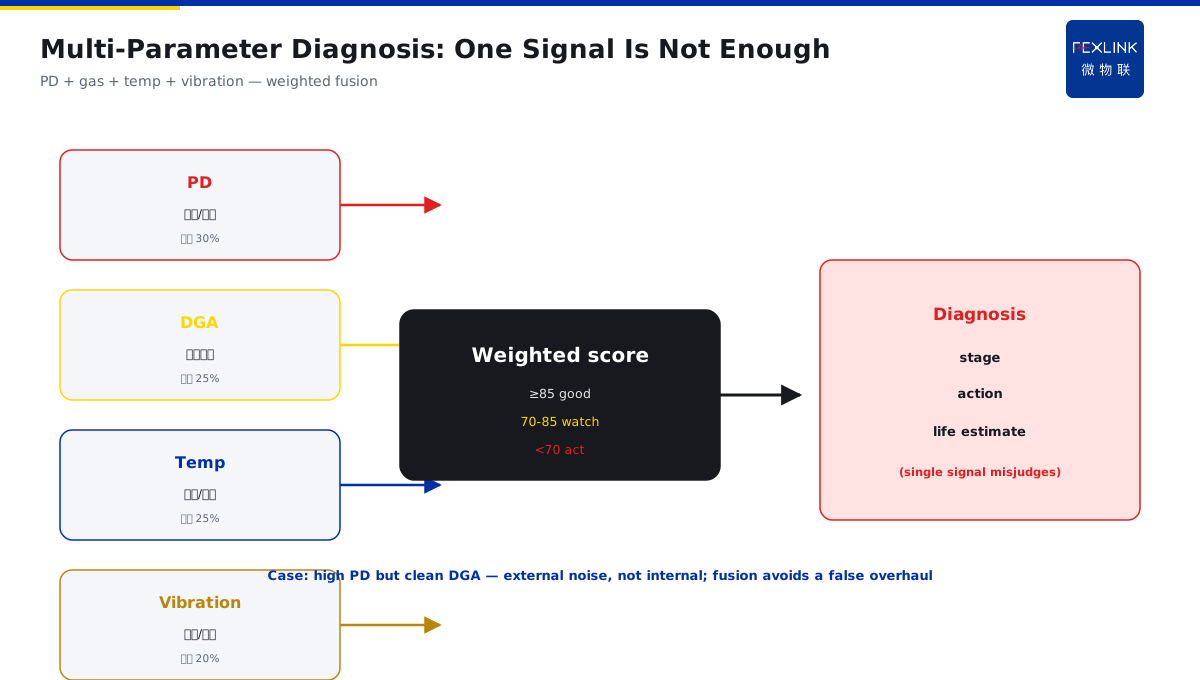
Direct Answer
Battery thermal runaway is hard to predict in advance. Operations teams want to know what signals appear before smoke — the answer is: voltage ripple, internal resistance change, and temperature anomaly. Read the three parameters together, and you can get hours of warning, much earlier than a single temperature threshold.
Many energy storage stations have this problem: batteries suddenly smoke and catch fire, with no warning beforehand. After the incident, they realize there were signals all along, but nobody was watching. Why? Because:
- Single temperature threshold is too late: by the time temperature hits 60°C alarm, there may be only minutes left before smoke;
- Voltage ripple changes earlier: as the battery internally degrades, voltage ripple grows first;
- Internal resistance changes earlier: as the battery ages, internal resistance slowly rises;
- Multi-parameter correlation: when all three go abnormal together, that is the real danger signal.
Key insight: battery thermal runaway does not happen "suddenly" — it develops over time. From normal to degradation to thermal runaway, it takes hours or even days. During this process, voltage, internal resistance, and temperature all change. Single parameters may look normal, but together the pattern becomes clear.
One energy storage station, a battery rack:
- Temperature stayed normal, around 45°C;
- But voltage ripple slowly grew;
- Internal resistance also slowly rose;
- Operations did not notice, because temperature had not alarmed;
- A few days later, thermal runaway and smoke.
If they had used multi-parameter correlation, they would have had hours of warning time to act.
1. Battery Degradation to Thermal Runaway Stages
From normal to thermal runaway, the battery goes through several stages:
Stage 1: Normal state
- Voltage stable;
- Internal resistance normal;
- Temperature normal.
Stage 2: Early degradation
- Voltage ripple starts growing;
- Internal resistance starts rising;
- Temperature still normal.
Stage 3: Mid degradation
- Voltage fluctuation obvious;
- Internal resistance clearly higher;
- Temperature starts rising (but not yet at alarm value).
Stage 4: Pre-runaway
- Voltage ripple very large;
- Internal resistance spikes;
- Temperature rises rapidly.
Stage 5: Thermal runaway
- Smoke;
- Fire;
- Explosion.
Key: the earlier the stage, the weaker the signal, but the longer the action window. By the time temperature alarms, you are already in stage 4, and the action window is only minutes.
2. Which Stage Do Voltage Ripple and Internal Resistance Appear
At which stage do voltage ripple and internal resistance changes appear?
Voltage ripple
- Starts growing in early degradation (stage 2);
- Because internal side reactions increase, voltage is no longer stable;
- This is the earliest electrical signal.
Internal resistance
- Starts rising in early degradation (stage 2);
- Because electrode materials degrade, ion transport resistance increases;
- Also a relatively early signal.
Temperature
- Starts rising in mid degradation (stage 3);
- Because heat accumulates to a certain level before temperature becomes obvious;
- Is the latest signal.
Key: voltage ripple and internal resistance are "early signals," temperature is a "late signal". If you only watch temperature, you miss the early warning window.
3. Why Single Temperature Threshold Is Too Late
Why is a single temperature threshold too late?
Because:
- Temperature is the result of heat accumulation;
- Heat must accumulate to a certain level before temperature becomes obvious;
- By the time temperature hits the alarm value, internal state is already severe;
- May only be minutes left before smoke.
Example:
- Internal side reactions start, generating heat;
- Heat slowly accumulates;
- Temperature from 25°C to 45°C may take days;
- From 45°C to 60°C may only take hours;
- From 60°C to smoke may only take minutes.
Key: temperature threshold alarm is an "end-stage signal," not an early signal. To find early warning, look at voltage and internal resistance.
4. Multi-Parameter Correlation Logic
How do you read multi-parameter correlation?
Single parameter abnormal:
- Voltage ripple high, but internal resistance and temperature normal → maybe BMS noise, not real danger;
- Internal resistance high, but voltage and temperature normal → maybe battery aging, not immediate thermal runaway;
- Temperature high, but voltage and internal resistance normal → maybe cooling problem, not thermal runaway.
Multiple parameters abnormal together:
- Voltage ripple growing + internal resistance rising + temperature increasing → all three moving, this is real pre-runaway;
- Warning at this point is high accuracy, few false alarms.
Key: single parameter may be noise, multi-parameter together is the real signal. Like a doctor diagnosing a patient: one abnormal test may be error, several abnormal together means real illness.
5. Warning Time Window and Action
How long is the warning window at different stages?
Stage 2 (early degradation):
- Warning window: hours to days;
- Action: schedule planned inspection, no need for emergency shutdown.
Stage 3 (mid degradation):
- Warning window: hours;
- Action: close monitoring, prepare emergency plan.
Stage 4 (pre-runaway):
- Warning window: minutes to tens of minutes;
- Action: immediate isolation, activate fire emergency plan.
FEXLINK-BMS battery management system monitors battery voltage, internal resistance, temperature, with multi-parameter correlation, provides hours to days of advance warning.
6. A Real Case
One energy storage station, a battery rack:
- BMS only watched temperature, 45°C was normal;
- But FEXLINK-BMS multi-parameter monitoring found: voltage ripple growing + internal resistance rising;
- System alerted: early degradation;
- Operations scheduled inspection: found internal side reactions already happening;
- Timely replacement, avoided thermal runaway incident.
If they only watched temperature, they might have waited until smoke to find out, and it would have been too late.
7. Three Common On-Site Mistakes
Mistake 1: only watch temperature, not voltage and internal resistance. Temperature is a late signal, early signals are in voltage and internal resistance.
Mistake 2: alarm on any single parameter abnormal. Single parameter may be noise, multi-parameter together is more accurate.
Mistake 3: wait until temperature alarm to act. By the time temperature alarms, it is already late, only minutes to act.
8. One Sentence to Remember
Battery thermal runaway develops over stages: early degradation → mid degradation → pre-runaway → thermal runaway. Voltage ripple and internal resistance are early signals, temperature is a late signal. Multi-parameter correlation gives you hours to days of advance warning.
Do not just watch temperature, watch multiple parameters together.
9. Common Questions
Q: Can battery thermal runaway really be predicted hours in advance? A: Yes. Through voltage ripple, internal resistance change, and temperature rise read together, you can detect early degradation hours to days before thermal runaway. Not waiting until smoke.
Q: Is measuring temperature alone not enough? A: No. Temperature is the result of heat accumulation, by the time temperature rises obviously, internal state is already severe. For early warning, you must look at voltage and internal resistance.
10. Why This Is Becoming More Important
As energy storage stations get bigger and more widespread, battery safety becomes more critical. A single thermal runaway incident can cause fire, explosion, and millions in damage. Nobody wants that.
That is why multi-parameter battery monitoring is not optional, it is essential. FEXLINK-BMS provides the full picture: not just what the temperature is, but what voltage and internal resistance are doing. Together, they tell you the real health status of your batteries.
Stay safe. Stay professional. Stay curious.
11. Quick Checklist
Before you trust your next battery safety setup, run through this checklist:
- Do you only monitor temperature, or do you also track voltage ripple and internal resistance?
- Do you read multiple parameters together, or do you alarm on any single abnormal value?
- Do you have a baseline for each battery rack, so you can see when things start changing?
- Do you know what stage your batteries are in right now?
- Do you have an emergency plan for when you get an early warning?
If you answered "no" to most of these, your battery safety program may be weaker than you think. You may be waiting until it is almost too late to react.
The FEXLINK platform helps you make battery safety proactive, not reactive. FEXLINK-BMS monitors all three parameters. The AI engine correlates them. The system gives you early warning, not last-minute panic.
12. How to Build a Routine
A good battery safety routine starts with baseline. When batteries are new, record their voltage ripple, internal resistance, and temperature under normal operating conditions. That is your baseline. Then compare every day to baseline. See when things start drifting.
Track the trend, not just the value. A single reading may be noise. A trend over weeks tells you the real story.
Set warning thresholds based on your baseline. For example, internal resistance rises 10% from baseline → warning. Ripple grows 20% → warning. Both together → higher alarm level. Thresholds are tuned over time.
Start today. Identify your oldest battery racks. Install multi-parameter monitoring. Build your baseline. Then you can make smart safety decisions, not emergency firefighting.
Final Thoughts
Battery thermal runaway is scary, but it is not inevitable. With the right monitoring, you can see it coming. You can act early. You can prevent the worst from happening.
Do it smart. Do it early. Do it with data.
Your batteries will thank you. Your operations team will thank you. Your insurance company will thank you. Stay safe, and keep monitoring.
See you in the next article. Take care, and remember: battery health tells a story — read it early, read it right.
That is all for this article. Good luck, and stay battery-safe. Until next time.