 微物联研究院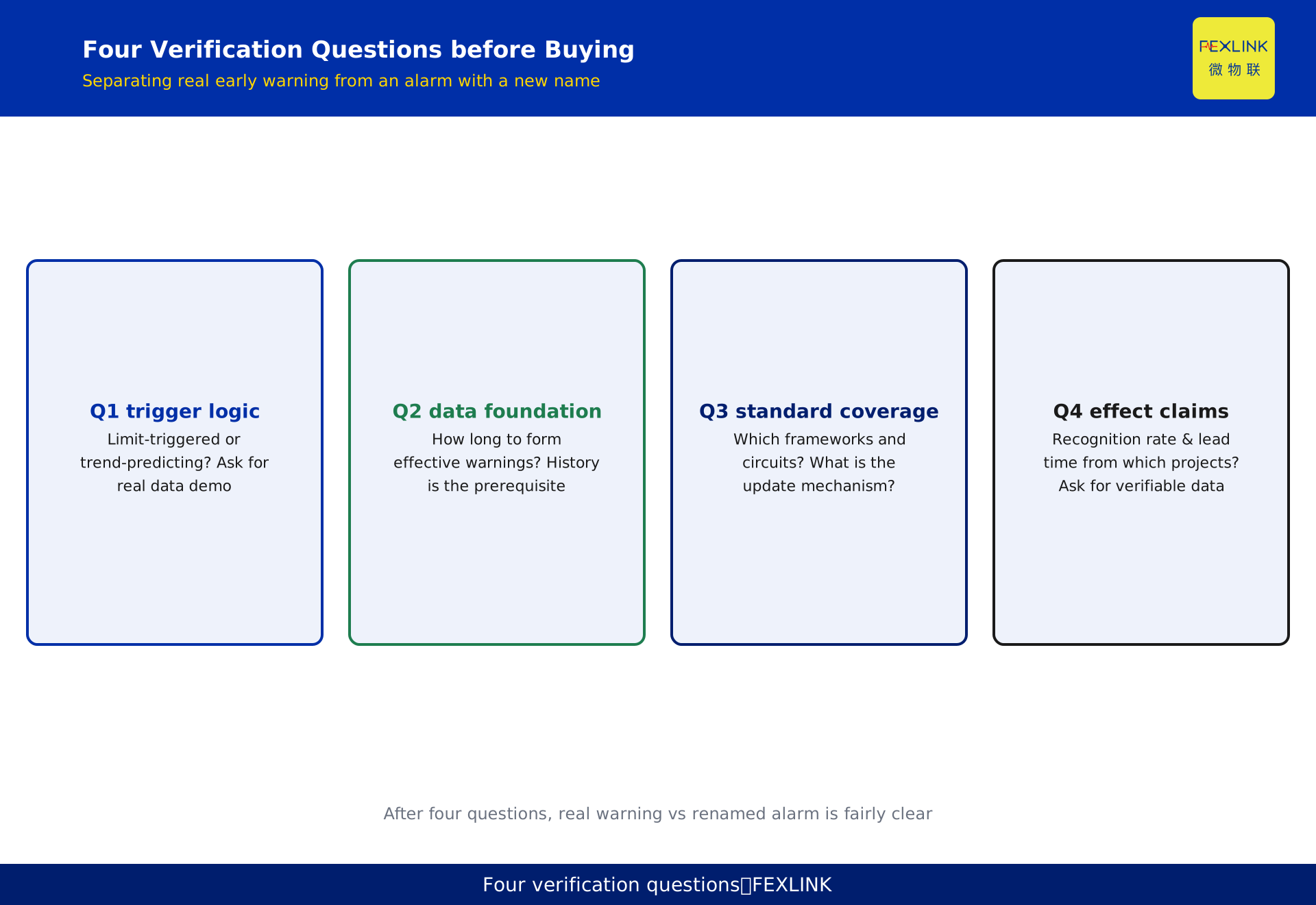
Direct Answer
Everything on the market is called an "electrical safety system," but alarm systems and hazard early-warning systems are two different things — and buying the wrong direction hurts more than buying the wrong brand. Direct answer: an alarm system triggers only when a parameter crosses its limit — it is "notification after the fact"; a hazard early-warning system reads trends and multi-dimensional correlations to identify hazards before limits are crossed — it is "prediction before the fact." Their trigger logic differs, their value differs, and so does the price gap. Before choosing, answer one question: do you want "a reminder before trouble" or "a notification when trouble happens"? The answer decides the category, and where the budget should go.
First, Understand the Two Trigger Logics
Both systems connect sensors and both monitor, but their trigger logic is opposite:
An alarm system is "limit-crossing triggered." Voltage above a threshold, current above a setting, temperature above a cap — the moment a parameter crosses the line, the system alarms. It answers "is something over-limit right now" and is essentially a rule comparator.
A hazard early-warning system is "trend-predicting." It does not just check whether a single point crossed a limit; it looks at how values drift over consecutive periods and how multiple parameters relate, and judges "this circuit is degrading" before numbers reach the limit. It answers "will something fail next" and is essentially a trend assessor.
The difference in trigger logic dictates different architectures: an alarm system needs threshold settings and instant comparison; an early-warning system needs historical data, trend algorithms, multi-parameter correlation analysis, and often standard-library compliance checks. The cost difference starts here.
The Alarm System's Boundary: It Rings Only When a Limit Is Crossed
An alarm system's value is "real-time, deterministic, simple" — when a threshold is reached, it rings; no algorithmic judgment, controllable false-alarm rate, quick deployment. But its boundary is just as clear:
It does not know "about to cross." When a parameter creeps slowly near its threshold, the alarm system stays silent until the final crossing. Yet most electrical hazards are gradual: insulation degradation, rising contact resistance, local overheating — they evolve for weeks or even months before reaching the limit point.
It cannot distinguish trends. The same crossing could be a momentary disturbance or sustained degradation. The alarm only says "limit crossed"; it does not say "this is sporadic or worsening," so follow-up judgment falls to people.
It does not explain causes. A temperature alarm — overload, poor contact, or ambient issues? The alarm system does not answer; investigation still starts from zero.
An alarm system fits the role of "bottom-line protection": it guards the last checkpoint and reports "a problem exists, know immediately." Expecting it to spot hazards early is beyond its capability.
The Core of an Early-Warning System: Trends and Multi-Dimensional Reading
A hazard early-warning system systematizes what experienced people do by intuition:
Trend reading. Changes across consecutive days at one monitoring point — even if every value stays below the limit — are themselves a signal. Trend algorithms identify gradual degradation, which a limit alarm cannot.
Multi-dimensional correlation. Normal temperature alone is not safety; temperature plus current changes plus leakage-current fluctuation, read together, reveal "contact resistance is growing." A single parameter crossing is the effect; multi-parameter correlation finds the cause.
Standard-library comparison. Mature systems embed standard frameworks (such as GB and IEC), automatically comparing monitored values with standard limits and interpretation rules to judge "still compliant or approaching a red line." This is closer to real hazard judgment than "set a threshold yourself."
Lead time. A useful quantified value for a good early-warning system is its "warning lead time" — raising the alert early in a hazard's evolution, leaving a window for handling. These effect indicators are vendor-disclosed data; real results vary by project, so treat them as reference, not promise.
Trend, correlation, standard comparison, and lead time — these four capabilities define the "predict-before-the-fact" position of an early-warning system. It sells not a single alarm but a time window.
When They Ring, What Each Means
The same "the system rang" means very different things:
An alarm rings = already over-limit. Either impact has occurred or is occurring; handling is "repair": arrive, confirm, fix, restore. The goal is to shorten downtime.
An early warning rings = about to degrade. Nothing is over-limit yet; handling is "prevention": schedule maintenance, replace a component, rebalance load, and kill the fault before it happens. The goal is to prevent the fault.
A useful analogy: an alarm system is a fire bell that rings after the fire starts; an early-warning system is an inspector who smells burning and notices abnormal temperature in advance. For electrical safety, the latter's window matters far more — electrical faults from hazard to accident usually leave an intervenable window, and handling a week early versus repairing afterward differs in cost by an order of magnitude.
Investment versus Value: Why the Price Gap
The price gap between the two categories maps to capability, not brand premium:
Alarm system cost structure: sensors, acquisition, threshold comparison logic, notification channels. Simple logic, fast implementation, naturally lower price.
Early-warning system cost structure: sensors, acquisition, historical data storage, trend algorithms, multi-dimensional correlation models, standard-library maintenance, continuous tuning. Every layer is R&D investment; the higher price is structural.
But judge investment by what it buys back, not by price: an alarm system buys "know immediately after something goes wrong"; an early-warning system buys "the fault does not happen." For electrical hazards, the loss of one unplanned outage often dwarfs the whole system price — the ROI difference hides in failure probability and failure losses.
Guidance: with a tight budget and a clear bottom-line-protection goal, an alarm system suffices; if the management goal is "eliminate hazards before they occur," the early-warning investment is where the money works hardest.
Choose by Management Goal: Three Typical Needs
State the management goal and the choice becomes clear:
Need one: "When something goes wrong, I must know immediately." Use an alarm system. Typical: a mature maintenance regime that only lacks real-time sensing; or non-critical circuits where a crossing notice is enough. Selection points: settable thresholds, reliable alarms, prompt notification.
Need two: "I want to find hazards early and reduce sudden failures." Use an early-warning system. Typical: critical circuits, important loads, places with past incidents. Selection points: trend capability, multi-dimensional reading, warning lead time, standard-library coverage.
Need three: "I want bottom-line protection and hazard prediction together." Use a combined alarm-plus-warning approach or a comprehensive system with both. Mature solutions deliver limit alarms and trend warnings on one platform — one acquisition, two judgments — covering both needs.
Match by management goal, not by budget — budget can be phased; a wrong goal means a wrong direction.
Four Verification Questions before Signing
Whichever category you lean toward, verify with four questions before contracting:
One — trigger logic: Is the system limit-triggered or trend-predicting? Ask for a demonstration with real data, and see "how many days in advance it identified a hazard," not a demo deck.
Two — data foundation: Trend judgment needs historical accumulation. How long after go-live does the system form effective warnings? Without enough history, trend algorithms spin idle.
Three — standard coverage: Which frameworks and circuit types does the built-in standard library cover? Are your critical circuits in scope? What is the update mechanism?
Four — effect claims: The recognition rate and lead time a vendor quotes — from which projects, and under what definitions? Ask for verifiable, anonymized project data.
After these four, it is fairly easy to tell a real early-warning system from "an alarm with a new name."
Two Common Mismatches
Two typical mismatches are worth checking against before selecting:
Mismatch one: paying alarm prices while expecting warning capability. Procurement decides on price, buys a pile of "limit-alarm" systems, and discovers at acceptance that they never warn early. This is the most common mismatch, rooted in unclear requirements — the tender should state capability clauses like "trend warning, lead time, multi-dimensional reading," not just "monitoring and alarm."
Mismatch two: buying a warning system and using it as an alarm. You buy a system with warning capability but configure only limit alarms, leaving trend capability idle. This wastes the most valuable capability. On deployment, configure warning rules and judgment models properly — not "installed, good enough."
Self-check is simple: ask "what is this system's core deliverable — a crossing notice, or hazard prediction before the fact?" A clear answer keeps selection on track.
Scope and Limitations
The alarm-versus-early-warning comparison in this article is based on the general capability boundaries of the two categories and common electrical-hazard management patterns; actual capabilities vary significantly across vendors, and "early warning" has no unified market standard — some products may package limit alarms as hazard warning, so rely on measured data and contract terms in selection. The early-warning capabilities described (trend reading, multi-dimensional correlation, standard-library comparison) follow common industry technical approaches; effect indicators such as "warning lead time" are vendor-disclosed data, not contractual commitments, and actual results vary by project. Scenarios are anonymized (a generic park, a generic factory, and similar references) and do not refer to any specific customer.